NAD+
NAD+ is a helper molecule in every cell, needed to turn food into energy. It is not a peptide. Levels are described as falling with age, and raising them is a big idea in longevity research. In human trials, blood levels rise reliably, but changes in health measures have been smaller and less consistent.
What it’s studied for
- Raising NAD+ levelsStudied in humans
In healthy middle-aged and older adults, the building block NR by mouth raised NAD+ in the blood. source
- Insulin responseStudied in humans
In overweight women with prediabetes, the building block NMN by mouth improved how muscle responds to insulin over 10 weeks. source
- EnergyReported by users
More energy and less fatigue are what users describe most often.
2 more uses studied
- LifespanStudied in animals or lab
In animal studies, raising NAD+ extended lifespan or healthy lifespan. Whether that carries over to people is unknown. source
- Heart and blood vesselsStudied in animals or lab
Animal studies link higher NAD+ to better heart and blood-vessel function. This has not been confirmed in people. source
 New here? Three things worth knowing first
What’s a peptidepeptideA short chain of amino acids. Proteins are long chains; peptides are short ones, usually under 50 amino acids.? A short chain of amino acids, the building blocks of protein. Many act like messengers in the body.
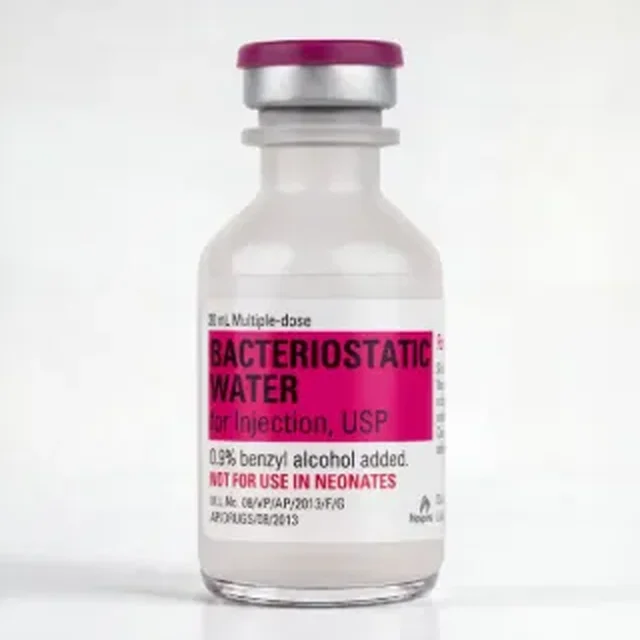
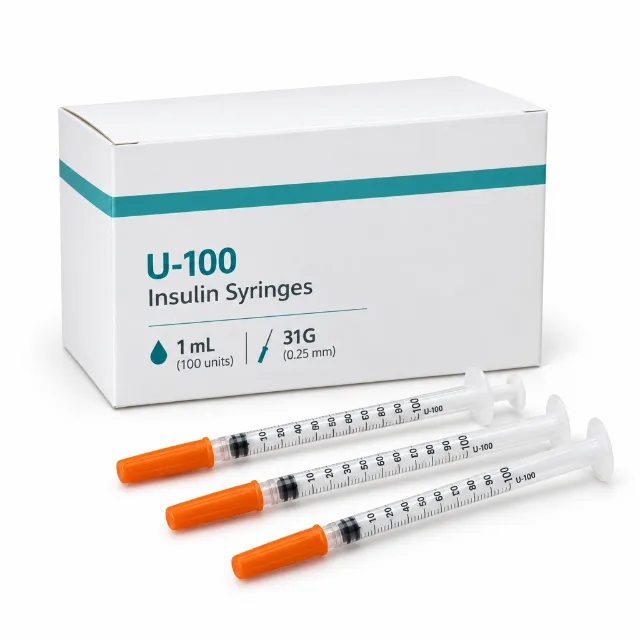
Why the vial has to be mixed. It ships as a dry powder. You add bacteriostatic waterbacteriostatic waterSterile water with a little benzyl alcohol that stops bacteria growing, so a mixed vial lasts days or weeks. Often called BAC water., and the amount you add decides how many unitsunitsMarks on an insulin syringe. On a U-100 syringe, 100 units = 1 mL. How many units equal a dose depends on how much water was added. on the syringe equal one dose. The calculator does that math.
SubcutaneoussubcutaneousUnder the skin, into the fat layer. The usual route for peptide injections. Often shortened to sub-Q. injection, Once daily. Subcutaneous means into the fat layer just under the skin. It uses a small insulin syringe. Any word with a dotted underline on this page opens a short definition.
Dosage guidelines
Under the skin, protocols open with 7 to 10 daily doses of 100 to 200 mg. After that, 50 to 100 mg runs 1 to 3 times a week. A cycle lasts 8 to 12 weeks, then 4 to 8 weeks off.
The doses below come from published reference protocols and, where they exist, the human trials. Tap a row to load it into the calculator.
Figures reviewed against their sources in October 2026. Where a trial or approved label sets a schedule, it is shown first; where a label sets one fixed dose, the FAQ below says so.
Subcutaneous loading. 100 to 200 mg a day for 7 to 10 days in a row. It opens an 8 to 12 week cycle, to refill low levels first.
Restoring depleted levels at the start of a cycle · 100–200 mg, once daily · 7–10 consecutive days, at the start of an 8–12 week cycle
| Step | Dose per injection | Draw to | |
|---|---|---|---|
| 1 | 100 mg (100,000 mcg) | 40 units | |
| 2 | 200 mg (200,000 mcg) | 80 units |
Doses marked “between 5-unit marks” sit between the 5-unit lines on a 1 mL syringe; the 1-unit lines on a 0.5 mL or 0.3 mL syringe make them easier to read.
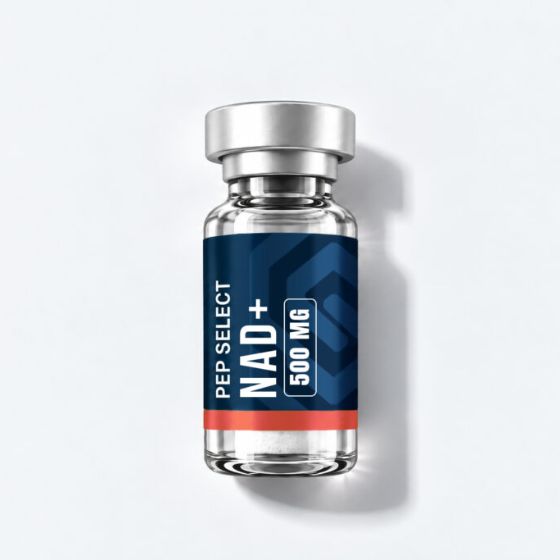
Units are for a 500 mg vial mixed with 2 mL of water. Change the vial in the calculator
Full protocol details
Other forms: Oral precursors. Niacin (vitamin B3): 100–250 mg a day at first, 500–1,000 mg a day as the standard range. Its flush of redness, warmth and itching lasts 20–30 minutes. NMN: 250–500 mg a day at first, 500–1,000 mg a day as the standard range; its regulatory status is uncertain, and much of it may be converted to niacin in the gut. NR: 250–500 mg a day at first, 500–1,000 mg a day as the standard range; it is sold as a dietary supplement and raises the same gut conversion question. Oral NAD+ itself is poorly absorbed. Mixing the injectable: NAD+ takes far more water than most peptides, and the usual 2 mL is too little, because it can crystallize or fall out of solution when too concentrated. It usually comes in a 10 mL vial, which leaves room for the extra water. Water is run down the inside of the vial and swirled, not shaken. Once mixed it is kept at 2–8 °C, out of light, not frozen, and used within 14 days; a cloudy or discolored solution, or one with particles, is discarded. The dry powder keeps at room temperature or in the fridge, dry and dark. Oral NMN breaks down with heat or moisture.
Subcutaneous loading
Restoring depleted levels at the start of a cycle
- Dose
- 100–200 mg
- How often
- Once daily
- Route
- Subcutaneous
- How long
- 7–10 consecutive days, at the start of an 8–12 week cycle
- Break
- 4–8 weeks off after the cycle
Subcutaneous maintenance
After the loading days
- Dose
- 50–100 mg
- How often
- 1–3 times a week
- Timing
- Morning preferred, since late doses may disturb sleep; no fasting needed
- Route
- Subcutaneous
- How long
- 8–12 weeks on
- Break
- 4–8 weeks off
The off-period is described as essential, to avoid suppressing NAMPT. Exercise is described as the way to keep NAD+ up during the break.
Intramuscular
- Dose
- 50–100 mg
- How often
- 1–3 times a week
- Route
- Intramuscular
- How long
- 8–12 weeks on
- Break
- 4–8 weeks off
Described as absorbed slightly faster than under the skin.
Cycle
7–10 consecutive days, at the start of an 8–12 week cycle; 4–8 weeks off after the cycle
When a step up happens
User reports describe stepping up only after progress has stalled for two weeks or more, and only if the previous step was tolerated. Everyone is different.
Peptide calculator
Already filled with this vial. Change anything you like.
How much is in your vial?
Check the label. The most common strengths:
Every 10 units = 16.667 mg.
60 units. 3 mL of BAC water
How the vial is mixed
The powder has to be dissolved in bacteriostatic (BAC) water before use. For a 500 mg vial this page uses 2 mL, which puts the usual dose on a round syringe mark: every 10 units is 25 mg.
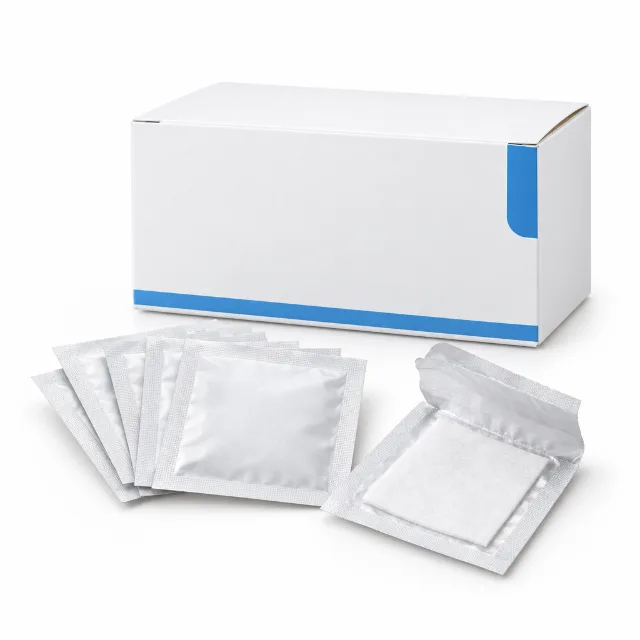
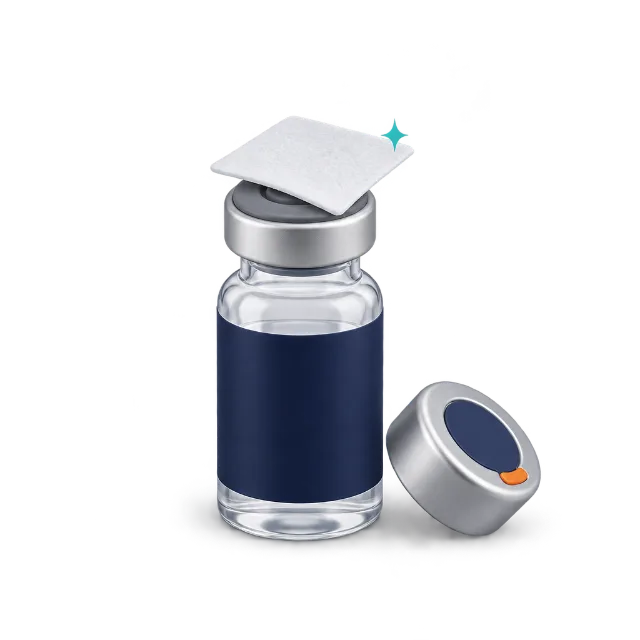 STEP 1Wipe both topsAlcohol pad on the peptide vial and the BAC water vial.
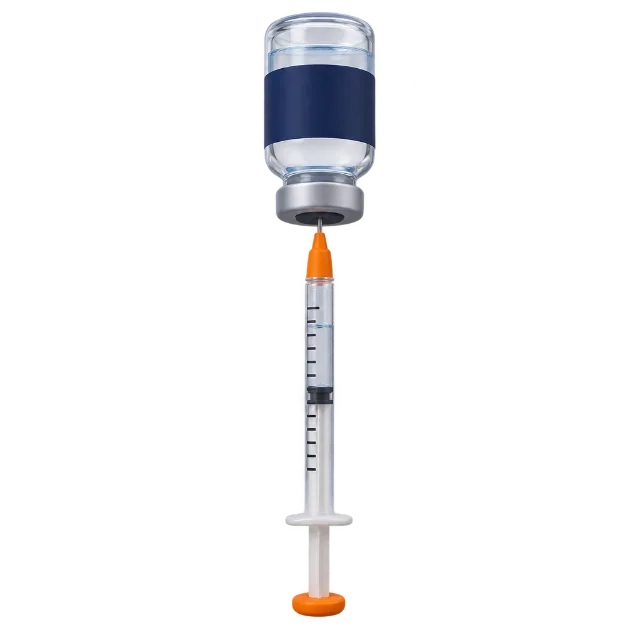 STEP 2Draw 2 mL of waterThat’s 2 full 1 mL syringes.
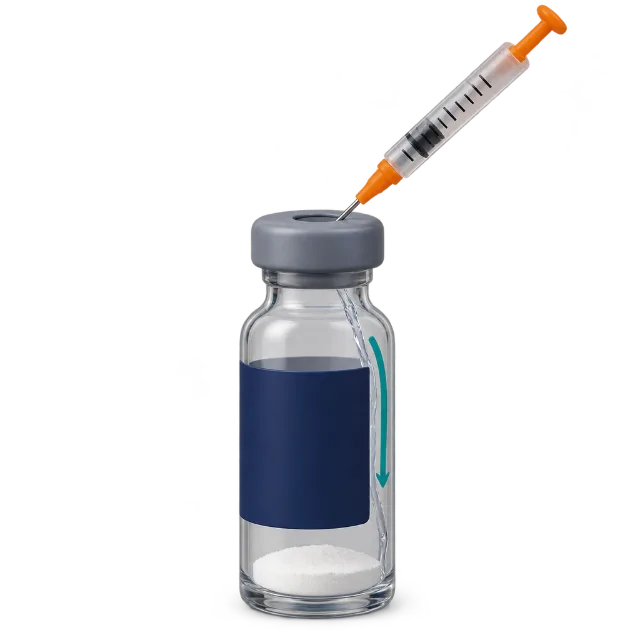 STEP 3Add it slowlyAim at the glass wall, not at the powder.
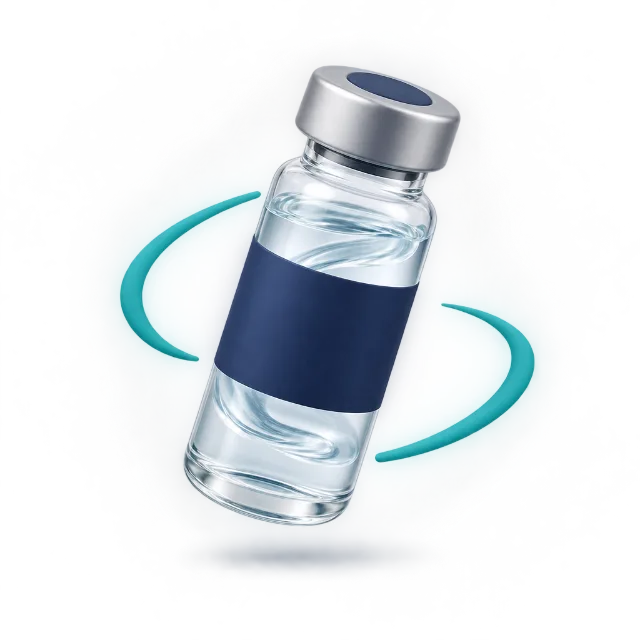 STEP 4Swirl, don’t shakeRoll gently until clear. Refrigerate after.
What to watch for
- Stinging, redness or tenderness at the injection site; users say it stings more than most peptidesStudied in humans
- Nausea, headache or tirednessStudied in humans
- Flushing or warmth, mainly with niacinStudied in humans
- Trouble sleeping or feeling anxious when the dose goes up fastReported by users
Not for anyone with active cancer, since tumors also use NAD+, or with severe liver or kidney disease or a known allergy. Talk to a doctor first, especially if pregnant or breastfeeding, on metformin, or with a heart condition or bleeding disorder.
Reasons to get medical help right away: trouble breathing, swelling of the face or throat, chest pain, fainting, or any severe or worrying reaction.
Full side-effect list and who should avoid it
In published research
- Oral NMN and NR at up to 1,000–2,000 mg a day appear safe in short- and medium-term studies, with no significant toxicity at standard doses
- Little data beyond 12 months
- A 750 mg IV infusion over 6 hours in a small human pilot: no adverse events recorded
- Common: flushing or warmth (mainly niacin), nausea, headache, tiredness, stomach upset, and injection-site redness, tenderness or stinging
- Side effects depend on dose and on how fast it is given, and mostly pass quickly
What users report
- Injected NAD+ stings more than other peptides
- Mild nausea at higher doses
- Insomnia, anxiety or tiredness when the dose goes up quickly
- Flushing, nausea, chest tightness or cramping when an IV infusion runs too fast
Not for
- Active cancer (the effect on cancer metabolism is unclear, and tumors also use NAD+)
- Severe liver disease
- Severe kidney disease
- Known allergy or hypersensitivity
Use caution with
- Pregnancy or breastfeeding
- Bleeding disorders (injected forms)
- Heart conditions
- Medicines that affect cellular metabolism
- Gout or high uric acid, since niacin raises uric acid
- Niacin alongside blood-pressure medicines, blood thinners or diabetes medicines
- Metformin, where a doctor's input is described
- No interactions are established for injected NAD+
- Chest pain, trouble breathing or signs of an allergic reaction are the points at which medical help is described
How the body handles it
- No half-life figure is given for injected NAD+
- During a 6-hour IV infusion, blood NAD+ did not rise for the first 2 hours and was about 4 times baseline at the end
- Intramuscular injection is described as absorbed slightly faster than injection under the skin
- Once mixed, stable for 14 days at 2–8 °C
Supplies
What 12 weeks of the schedule above takes, counted dose by dose.
By clicking this link, WikiPep may receive a commission.
Stacking
The community pairs NAD+ with SS-31 and MOTS-c, which are described as working on cell energy from other sides. None of these pairings has been tested in a trial.
- SS-31Reported by users
SS-31 is described as fixing the cell’s power plants, and NAD+ as the fuel they then use. Where damage is bigger, repair is described as coming first.
- MOTS-cReported by users
MOTS-c is described as the signal to make more energy, and NAD+ as the fuel that signal draws on. Both are run in cycles.
- 5-Amino-1MQReported by users
It blocks an enzyme that throws away one of NAD+’s building blocks. That is described as leaving more to recycle into NAD+.
Also used alongside it, with no interactions described: Epithalon, creatine, GLP-1 drugs, growth-hormone peptides, and nutrients such as TMG, quercetin, apigenin and resveratrol.
Talk to a doctor before combining it with: metformin, and niacin alongside blood-pressure medicines, blood thinners or diabetes medicines.
Go deeper
Every study, community report and source behind this page.
What the studies show15 findings, each with its evidence label
Status, October 2026. NAD+ is not an FDA-approved drug. As of FDA's May 14, 2026 list, 'Nicotinamide Adenine Dinucleotide (NAD)' is in Category 1 (under evaluation) of the 503A bulk substances nominated for compounding. Source
How it works
NAD+ works as a shuttle. In its oxidized form (NAD+) it picks up electrons from food molecules during glycolysis and the Krebs cyclecycleA planned period of use followed by a break, written as weeks on / weeks off., becoming NADH. NADH then hands those electrons to the electron transport chain and turns back into NAD+. In healthy cells the free NAD+ outnumbers NADH by about 700 to 1.
Three reasons are given for the decline with age. Enzymes that consume NAD+, called CD38 and PARPs, become more active with age and inflammation. NAMPT, the enzyme of the salvage pathway that recycles used NAD+ and supplies about 80% of it, works less efficiently. And damaged mitochondria recycle NAD+ poorly, which lowers levels further and creates a feedback loop.
NAD+ is also the fuel for two families of maintenance enzymes. The sirtuins (SIRT1 through SIRT7) need it to work and are linked to DNA repair, inflammation, the building of new mitochondria, insulin sensitivity and the body clock. The PARP enzymes use NAD+ up as they repair damaged DNA.
Benefits
Each one carries an evidence label, so you can see how much is actually known.
Cellular energy
More energy and less fatigue are the most common things users describe, by every route.
Insulin sensitivity
In overweight or obese women with prediabetes, the precursor NMN at 250 mg a day for 10 weeks improved insulin sensitivity in muscle. source
Mental clarity
Users describe sharper thinking and less brain fog. The reasoning offered is the brain's high energy demand; it has not been tested directly.
DNA repair and cell maintenance
The DNA-repair and sirtuin enzymes need NAD+ to work, which is the reasoning behind this one. No study is cited showing that raising NAD+ changes DNA repair in people.
Heart and blood vessels
Preclinical work, mostly animal studies, links higher NAD+ to better blood-vessel and heart function, including blood pressure. These results have not been confirmed in people. source
Use in addiction-recovery settings
Some clinics give NAD+ during recovery from substance dependence and withdrawal, under medical supervision. No controlled study is cited for this use.
Lifespan and healthspan
In animal studies, raising NAD+ with precursors extended lifespan or healthy lifespan. Whether this carries over to people is unknown. source
What the science shows
Precursors raise blood NAD+ (human, 2018)
Studied in humansIn healthy middle-aged and older adults, daily NR was well tolerated and raised blood NAD+. How much tissue levels change is less clear. source
Muscle insulin sensitivity (human, 2021)
Studied in humansOverweight or obese women with prediabetes took NMN 250 mg a day for 10 weeks. Insulin sensitivity in muscle improved compared with placeboplaceboAn inactive version given to some trial participants so the real effect can be measured fairly.. source
NMN meta-analysis (human, 2024)
Studied in humansA systematic review and meta-analysis of randomized NMN trials found blood NAD levels rose significantly. Most clinical outcomes, including body composition, physical performance and metabolic markers, did not differ from control. source
The gut conversion problem (animal and lab, 2024)
Studied in animals or labOral NR and NMN fed NAD+ production largely by an indirect route. Gut bacteria converted them to nicotinic acid, a form of niacin, which then cycled between the gut and the liver. This may explain why oral precursors behave much like niacin. source
Niacin, the oldest precursor
UnknownNiacin (vitamin B3) is the least expensive precursor and has the longest record of human use. It is described as the best-proven option for people who tolerate its flush. No study is cited here comparing it directly with NMN or NR.
Direct NAD+ by IV (human, 2019)
Studied in humansA pilot in 11 healthy men (8 given NAD+, 3 given saline) tracked a 6-hour, 750 mg IV infusion. Blood NAD+ did not rise for at least the first 2 hours, then reached about 4 times baseline by the end, which the authors read as fast early uptake by tissues. No adverse events were recorded. Rigorous controlled trials of NAD+ injected under the skin are few. source
Possible NAMPT suppression
UnknownThere is a concern that long-term precursor use lowers NAMPT, the enzyme the body uses to recycle its own NAD+, even while NAD+ breakdown products rise. The human data behind it is limited, and the concern is the reasoning behind cycling.
Animal studies
Studied in animals or labRaising NAD+ in animals improved metabolic, heart and blood-vessel measures and, in some studies, extended lifespan. Human trials so far show higher blood levels with smaller and less consistent changes in outcomes. source
What the community reports5 user reports, a timeline and 8 pairings
What to expect
Users describe more energy, especially with injections, and sometimes better sleep and sharper thinking. The change is described as larger when starting levels are very low.
Reported by usersUsers describe energy that holds steady and faster recovery from exercise.
Reported by usersThe effects on cells, such as DNA repair and sirtuin activity, are not something people feel directly.
UnknownLevels are described as drifting back to baseline over weeks to months, with no withdrawal or rebound.
Reported by usersOne limit is built into the chemistry: turning precursors into usable NAD+ takes ATP, so cells with damaged mitochondria may get less from them. That is the reasoning behind running SS-31 first where mitochondrial damage is significant.
What people report
Gathered from user communities. Anecdotal: useful for what to expect, not proof.
Energy and mental clarity
More energy and clearer thinking by every route. Injections are described as faster and stronger than oral precursors.
The injection sting
Injections under the skin sting or burn more than most peptides. Users describe a slower injection, a slightly larger needle and letting the solution warm to room temperature as making it easier.
Mixed results with oral NMN and NR
Some people notice a clear change, others very little. This fits the gut conversion finding and differences in gut bacteria between people.
Sleep
Some sleep better. Others sleep worse when the dose comes late in the day, which is why morning doses are the norm.
Niacin flush
The flush of redness, warmth and itching is described as fading with steady use. People describe beginning at 100–250 mg and building up.
Stacking
How it is described alongside other compounds.
SS-31
Described as working together: SS-31 restores the machinery and NAD+ supplies the fuel it can then use. Where damage is significant, repair comes first, because turning precursors into NAD+ itself takes ATP.
MOTS-c
MOTS-c is described as the signal to make more energy and NAD+ as the fuel that signal draws on. Both are cycled: NAD+ 8–12 weeks on and 4–8 weeks off.
Cellular energy protocol
A two-phase framework. Repair, weeks 1–8: SS-31 with NAD+ (injected, or niacin), 5-amino-1MQ and creatine. Optimize, weeks 5–12: MOTS-c takes SS-31's place, NAD+ and creatine continue, and 5-amino-1MQ is optional. The overlap reflects SS-31 running 4 to 8 weeks before MOTS-c takes over.
Epithalon
Described as complementary: Epithalon on the telomere side, NAD+ on mitochondria and DNA repair.
5-Amino-1MQ
It blocks NNMT, an enzyme that turns nicotinamide into a waste product the body excretes. With NNMT blocked, more nicotinamide is left for the salvage pathway to recycle into NAD+.
Creatine
Described as working on the same energy system, through the phosphocreatine store that refills ATP, and on the building of new mitochondria.
GLP-1 drugs, growth-hormone peptides
No interactions described. Growth-hormone peptides keep their own fasting window.
TMG, quercetin, apigenin, resveratrol
Named as companion nutrients. TMG is a methyl donor, since NAD+ metabolism uses up methyl groups. Quercetin and apigenin inhibit CD38, one of the enzymes that consumes NAD+. Resveratrol activates sirtuins, with mixed human evidence.
Common questions9 questions
Common questions
What is the difference between NAD+, NMN and NR?
NAD+ is the active molecule. NMN is one step away from it, and NR is converted to NMN and then to NAD+. NAD+ itself is poorly absorbed by mouth, which is why precursors are the oral forms.
Are injections better than oral supplements?
Injections bypass the gut, but whether they raise NAD+ inside cells more than precursors do is debated. Some researchers think precursors enter cells more easily.
Why not just niacin?
For people who tolerate the flush, niacin is described as the cheapest and best-proven option. NMN and NR are mainly a way to avoid the flush.
Why do protocols cycle NAD+?
Long, unbroken use is described as possibly suppressing NAMPT, the enzyme the body uses to make its own NAD+, which could leave levels lower after stopping. Protocols run 8–12 weeks on and 4–8 weeks off.
Does NAD+ help if mitochondria are damaged?
It is described as offering limited benefit, because turning precursors into NAD+ takes ATP. That is why SS-31 is run first where damage is significant.
What time of day do protocols describe?
Morning, because late-day doses are described as disturbing sleep.
How is it stored?
The dry powder keeps at room temperature or in the fridge, dry and dark. Once mixed it is kept at 2–8 °C, out of light, not frozen, and used within 14 days.
What does “minimum effective dose” mean?
It is the lowest dose that still produces the effect someone is after. User reports describe starting there and staying there for as long as it keeps working, rather than climbing toward the top of the range. Side effects tend to rise with dose, and the top of each range on this page is a ceiling people report, not a target.
When does the dose go up?
There is no trial schedule for NAD+. User reports describe staying on a dose while it is still working, and moving up only after progress has stalled for two weeks or more and side effects have settled. There is no prize for getting to the top dose fast. These are not quick fixes: most of what people report builds over weeks, not days.
Source material7 studies and documents
References
- Yoshino M, et al. Science. 2021;372(6547):1224-1229. pubmed.ncbi.nlm.nih.gov/33888596/…
- Martens CR, et al. Nat Commun. 2018;9(1):1286. pubmed.ncbi.nlm.nih.gov/29599478/…
- Li H, et al. Crit Rev Food Sci Nutr. 2024. www.tandfonline.com/doi/full/10.1080/10408398.20…
- Liu L, et al. Sci Adv. 2024. www.science.org/doi/10.1126/sciadv.adr1538…
- Grant R, et al. Front Aging Neurosci. 2019;11:257. www.frontiersin.org/journals/aging-neuroscience/…
- Yoshino J, Baur JA, Imai SI. Cell Metab. 2018;27(3):513-528. pubmed.ncbi.nlm.nih.gov/29514064/…
- Covarrubias AJ, et al. Nat Rev Mol Cell Biol. 2021;22(2):119-141. pubmed.ncbi.nlm.nih.gov/33353981/…
Related
What is NAD+?
NAD+ is a coenzyme, not a peptidepeptideA short chain of amino acids. Proteins are long chains; peptides are short ones, usually under 50 amino acids.: a small helper molecule that hundreds of enzymes need in order to work. Every cell uses it to make energy, to repair DNA and to run many everyday metabolic reactions. In the mitochondria it carries electrons to the chain that makes most of the body's ATP, about 90% by the usual estimate. The body holds only about 100 g of ATP at any moment and recycles roughly its own weight in ATP each day, so that supply line never stops. NAD+ levels are described as falling with age. People raise them in three main ways: oral precursors the body converts into NAD+ (niacin, NMN and NR), injections of NAD+ itself under the skin or into the muscle, and exercise. NAD+ is not an FDA-approved drug. As of the FDA's May 14, 2026 list, nicotinamide adenine dinucleotide is in Category 1 (under evaluation) of the bulk substances nominated for 503A compounding. NR is sold as a dietary supplement, while NMN's standing as a supplement has been disputed since 2022. A simple way to place it among the other mitochondrial compounds: NAD+ is described as the fuel, MOTS-c as the signal to make more energy, and SS-31 as the repair crew for the machinery itself.
What people look into NAD+ for
Every line carries an evidence label, so you can see how much is actually known.
Cellular energy: More energy and less fatigue are the most common things users describe, by every route.
Reported by usersInsulin sensitivity: In overweight or obese women with prediabetes, the precursor NMN at 250 mg a day for 10 weeks improved insulin sensitivity in muscle.source
Studied in humansMental clarity: Users describe sharper thinking and less brain fog. The reasoning offered is the brain's high energy demand; it has not been tested directly.
Reported by usersDNA repair and cell maintenance: The DNA-repair and sirtuin enzymes need NAD+ to work, which is the reasoning behind this one. No study is cited showing that raising NAD+ changes DNA repair in people.
UnknownHeart and blood vessels: Preclinical work, mostly animal studies, links higher NAD+ to better blood-vessel and heart function, including blood pressure. These results have not been confirmed in people.source
Studied in animals or labUse in addiction-recovery settings: Some clinics give NAD+ during recovery from substance dependence and withdrawal, under medical supervision. No controlled study is cited for this use.
UnknownLifespan and healthspan: In animal studies, raising NAD+ with precursors extended lifespan or healthy lifespan. Whether this carries over to people is unknown.source
Studied in animals or labMix and measure: a 500 mg vial
Go deeper
How it works, in plain words
NAD+ works as a shuttle. In its oxidized form (NAD+) it picks up electrons from food molecules during glycolysis and the Krebs cyclecycleA planned period of use followed by a break, written as weeks on / weeks off., becoming NADH. NADH then hands those electrons to the electron transport chain and turns back into NAD+. In healthy cells the free NAD+ outnumbers NADH by about 700 to 1.
What did the study measure?
No single study is featured for NAD+; the human trials are linked from the uses above.
Sources
Side effects and who should avoid it
Side effects and limits, stated plainly. If anything here applies to you, talk to a doctor first.