Glutathione
Glutathione is a small molecule every cell makes, and the most common antioxidant inside cells. It is not an FDA-approved drug. The liver makes most of it, and levels fall with age. Plain glutathione by mouth is poorly absorbed, so this page mostly covers the injectable form.
What it’s studied for
- Oxidative stressStudied in humans
In people with diabetes, 500 mg a day by mouth for six months raised glutathione. A marker of DNA damage went down. source
- Skin toneStudied in humans
In small trials, 250 to 500 mg a day by mouth lowered skin melanin, the pigment that darkens skin. Results were mixed across body sites. source
- Immune cellsStudied in humans
In a small trial in healthy adults, liposomal glutathione by mouth raised one kind of immune-cell activity by up to 400% in two weeks. source
2 more uses studied
- Parkinson’s researchStudied in humans
Small trials of glutathione by IV gave mixed results. A 2020 review of seven trials found a modest gain in movement scores. source
- EnergyReported by users
Users describe steadier energy. This has not been measured in trials.
 New here? Three things worth knowing first
What’s a peptidepeptideA short chain of amino acids. Proteins are long chains; peptides are short ones, usually under 50 amino acids.? A short chain of amino acids, the building blocks of protein. Many act like messengers in the body.
Why the vial has to be mixed. It ships as a dry powder. You add bacteriostatic waterbacteriostatic waterSterile water with a little benzyl alcohol that stops bacteria growing, so a mixed vial lasts days or weeks. Often called BAC water., and the amount you add decides how many unitsunitsMarks on an insulin syringe. On a U-100 syringe, 100 units = 1 mL. How many units equal a dose depends on how much water was added. on the syringe equal one dose. The calculator does that math.
SubcutaneoussubcutaneousUnder the skin, into the fat layer. The usual route for peptide injections. Often shortened to sub-Q. injection, 3 times a week. Subcutaneous means into the fat layer just under the skin. It uses a small insulin syringe. Any word with a dotted underline on this page opens a short definition.
Dosage guidelines
Under the skin, protocols describe 100 to 200 mg three times a week for 8 to 12 weeks, then 4 weeks off. Into the muscle, protocols describe once a week, starting at 200 mg and going up every 4 weeks.
The doses below come from published reference protocols and, where they exist, the human trials. Tap a row to load it into the calculator.
Figures reviewed against their sources in October 2026. Where a trial or approved label sets a schedule, it is shown first; where a label sets one fixed dose, the FAQ below says so.
Subcutaneous, conservative. 100 mg three times a week for 8 to 12 weeks, then 4 weeks off. No studies have tested doses under the skin.
100 mg, 3 times a week · 8–12 weeks
| Step | Dose per injection | Draw to | |
|---|---|---|---|
| 1 | 100 mg (100,000 mcg) | 100 units |
Doses marked “between 5-unit marks” sit between the 5-unit lines on a 1 mL syringe; the 1-unit lines on a 0.5 mL or 0.3 mL syringe make them easier to read.
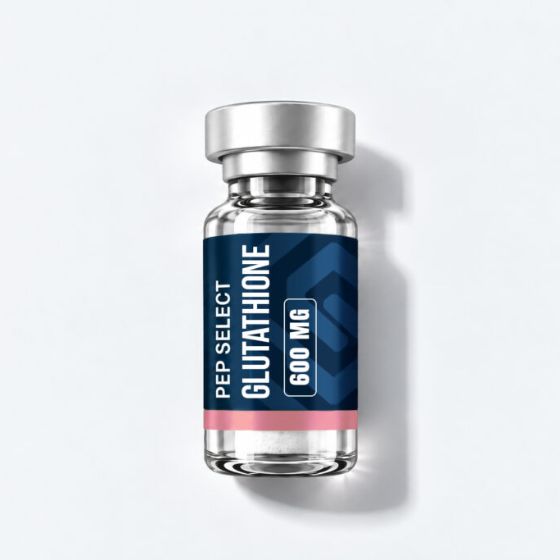
Units are for a 600 mg vial mixed with 6 mL of water. Change the vial in the calculator
Full protocol details
Other protocols described
- Subcutaneous, standard. 200 mg three times a week for 8 to 12 weeks, then 4 weeks off. Weekly totals usually land between 300 and 1,000 mg.
- Subcutaneous, intensive. 200 mg daily or 5 times a week, over a shorter 4 to 8 weeks.
- Intramuscular, maintenance. 400 to 600 mg once a week, cycled 8 to 12 weeks on and 4 weeks off.
- Intramuscular, maximum. The top of the ladder: 800 to 1,000 mg once a week.
- Liposomal, by mouth. 500 mg a day, or 1,000 mg on the high end, by mouth. Described as continuing through breaks from injections.
- NAC as a precursor. 600 mg of NAC a day, or 600 mg twice a day on the high end. The body turns NAC into its own glutathione.
- Nebulized. 300 to 600 mg breathed in as a mist, tested only in small pilots in cystic fibrosis and emphysema. Listed as unsuitable for anyone with asthma.
- Doses used in studies. Studies gave 250 to 1,000 mg a day by mouth, and 600 to 1,400 mg per dose by IV. In practice, doses begin low and rise.
Mixing in the protocols: 600 mg vial + 12 mL bacteriostatic water · 50 mg/mL: 100 mg = 2.0 mL; 200 mg = 4.0 mL; 300 mg = 6.0 mL.
Other forms: Glutathione dissolves only to about 20–50 mg/mL in water, so 2–3 mL for a 600 mg vial (200–300 mg/mL) is too little. Mixing is described as running the water down the vial wall and swirling rather than shaking, adding water up to 12 mL in total if flakes remain after 30 minutes. Volumes this large are often split across two sites or given into the muscle. After mixing it is kept at 2–8 °C, out of light, not frozen, and used within 14 days. A fresh solution is described as clear to very pale yellow; cloudy, deeper yellow or brown solution, particles or a strong sulfur smell are signs it has degraded. At room temperature it loses about 10–15% a month, and 0–5% a month below 15 °C. One manufacturer's product mixed with sterile water lasts 8 hours at room temperature or 48 hours in the fridge.
Subcutaneous, conservative
- Dose
- 100 mg
- How often
- 3 times a week
- Route
- Subcutaneous
- How long
- 8–12 weeks
- Break
- 4 weeks off between injectable cycles
There are no dose-finding studies for subcutaneous use; these figures come from clinical practice.
Subcutaneous, standard
- Dose
- 200 mg
- How often
- 3 times a week
- Route
- Subcutaneous
- How long
- 8–12 weeks
- Break
- 4 weeks off between injectable cycles
Weekly totals are typically 300–1,000 mg.
Subcutaneous, intensive
- Dose
- 200 mg
- How often
- Daily or 5 times a week
- Route
- Subcutaneous
- How long
- 4–8 weeks
Intramuscular, starting
- Dose
- 200 mg
- How often
- Weekly
- Route
- Intramuscular
- How long
- 4 weeks
Increased every 4 weeks based on tolerance and response.
Intramuscular, maintenance
- Dose
- 400–600 mg
- How often
- Weekly
- Route
- Intramuscular
- How long
- Ongoing
- Break
- 8–12 weeks on, 4 weeks off for injectables
Intramuscular, maximum
- Dose
- 800–1,000 mg
- How often
- Weekly
- Route
- Intramuscular
- How long
- As needed
Liposomal, by mouth
- Dose
- 500 mg (standard) or 1,000 mg (high)
- How often
- Daily
- Route
- Oral
- How long
- Ongoing
Oral forms are described as continuing through injectable off-periods.
NAC as a precursor
Raising the body's own production
- Dose
- 600 mg NAC (standard) or 600 mg twice daily (high)
- How often
- Daily
- Route
- Oral
- How long
- Ongoing
Nebulized
- Dose
- 300–600 mg in a buffered solution
- Route
- Nebulizer
Studied in small pilots in cystic fibrosis and emphysema. Listed as unsuitable for anyone with asthma.
Doses used in studies
Clinical research
- Dose
- Oral 250–1,000 mg a day for 4 weeks to 6 months; liposomal 500–1,000 mg a day for 4 weeks; IV 600 mg twice daily for 30 days or 1,400 mg three times a week for 4 weeks; IV for skin 1,200 mg twice a week for 6 weeks; intranasal 300–600 mg a day for 3 months
Titration in practice starts at 100–300 mg a week by injection or 250–500 mg a day by mouth, then rises.
Cycle
8–12 weeks; 4 weeks off between injectable cycles
When a step up happens
User reports describe stepping up only after progress has stalled for two weeks or more, and only if the previous step was tolerated. Everyone is different.
Peptide calculator
Already filled with this vial. Change anything you like.
How much is in your vial?
Check the label. The most common strengths:
Every 10 units = 20 mg.
50 units. 3 mL of BAC water
How the vial is mixed
The powder has to be dissolved in bacteriostatic (BAC) water before use. For a 600 mg vial this page uses 6 mL, which puts the usual dose on a round syringe mark: every 10 units is 10 mg.
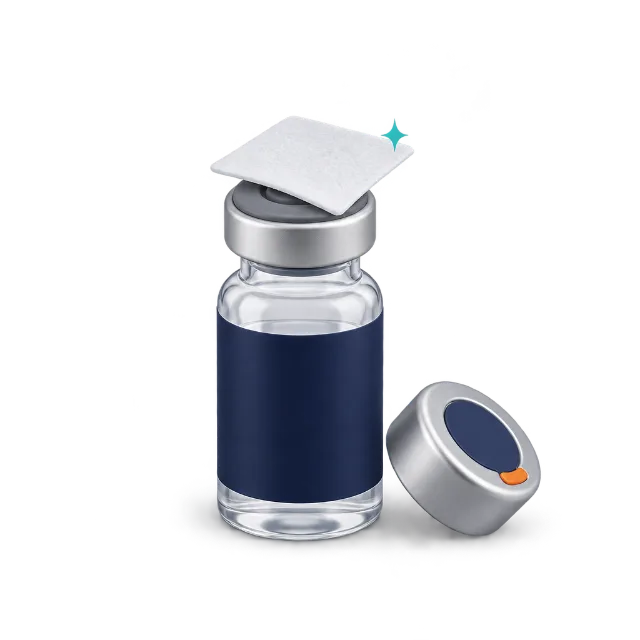 STEP 1Wipe both topsAlcohol pad on the peptide vial and the BAC water vial.
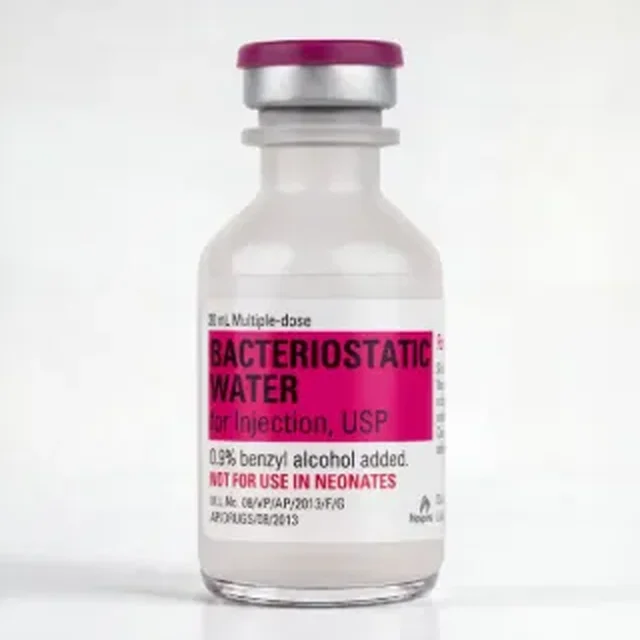
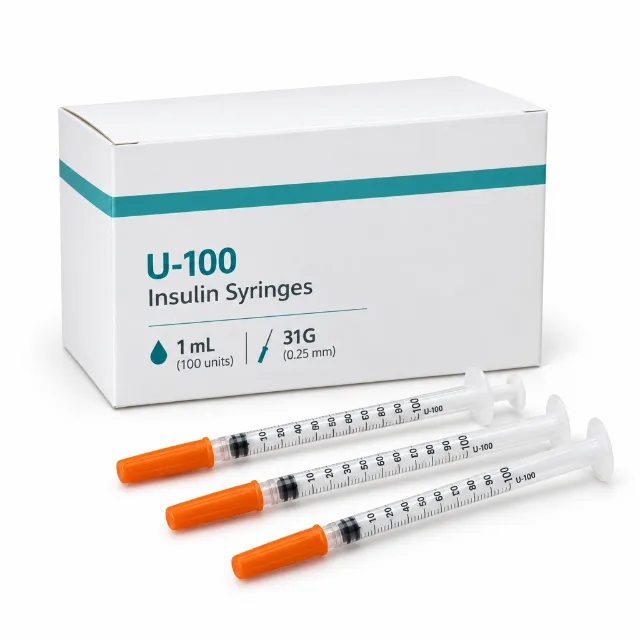
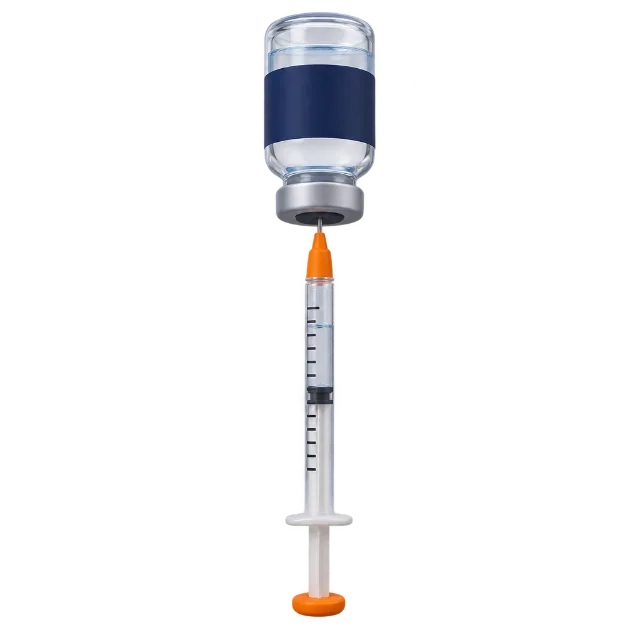 STEP 2Draw 6 mL of waterThat’s 6 full 1 mL syringes.
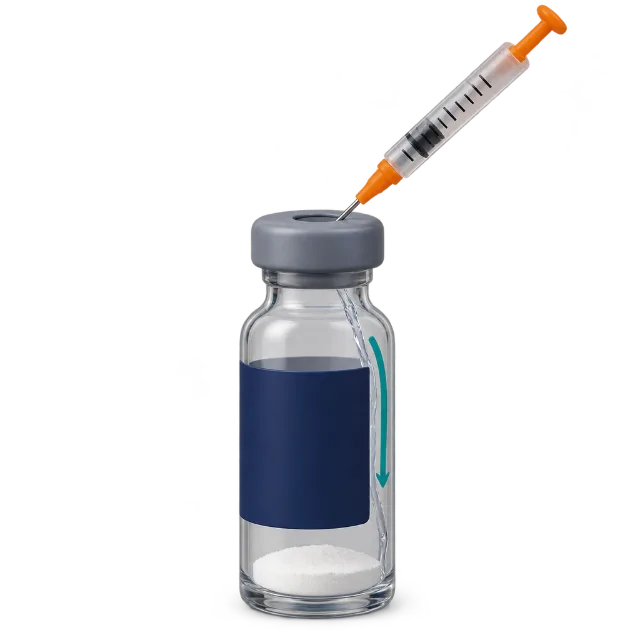 STEP 3Add it slowlyAim at the glass wall, not at the powder.
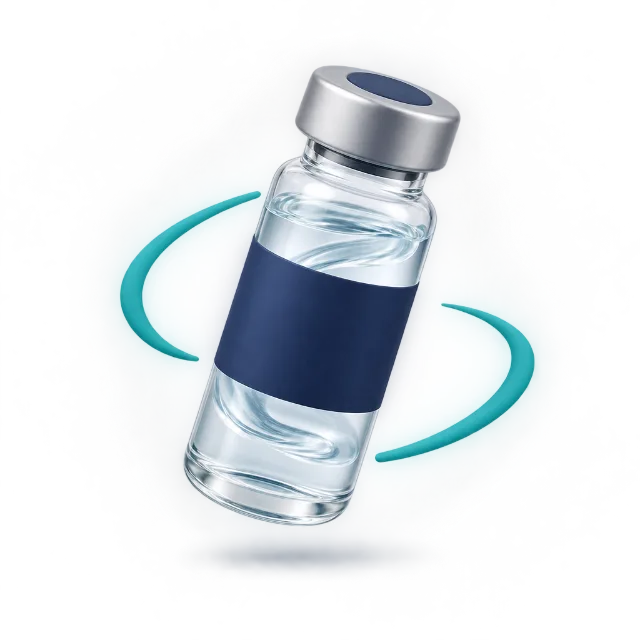 STEP 4Swirl, don’t shakeRoll gently until clear. Refrigerate after.
What to watch for
- Pain, redness or lumps at the injection site, more than with most peptidesReported by users
- Mild nausea or tiredness in the first weekReported by users
- Liver problems and rare severe allergic reactions with high-dose IV infusionsStudied in humans
- Tightening of the airways when inhaled by people with asthmaStudied in humans
- Unwanted skin lighteningReported by users
Not for anyone allergic to glutathione. Inhaled glutathione is not for anyone with asthma, especially with sulfite sensitivity. Talk to a doctor first, especially with asthma, pregnancy, chemotherapy, nitrate heart medicines, or liver or kidney problems.
Reasons to get medical help right away: trouble breathing, swelling of the face or throat, chest pain, fainting, or any severe or worrying reaction.
Full side-effect list and who should avoid it
In published research
- Oral, 250–1,000 mg a day for up to six months: well tolerated, no serious adverse events
- IV, 1,400 mg three times a week for four weeks: well tolerated, no dropouts
- IV, 1,200 mg twice a week: 32% adverse events, including liver problems and one anaphylaxis
- Nebulized in asthma: airway narrowing, FEV1 down 19% (sulfites)
- FDA warning about compounded injections made from supplement-grade material
What users report
- Common: injection-site pain, redness and lumps (more than with most peptides), mild nausea, tiredness in the first week
- Less common: headaches, dizziness, detox-type reactions, unwanted skin lightening
- Forum reports only: mood changes and irritability
- Rare, with high-dose unregulated IV infusions: anaphylaxis, liver problems, whole-body inflammatory reactions
- Mostly dose-related and temporary
Not for
- Known allergy to glutathione
- Asthma, especially with sulfite sensitivity (nebulized glutathione in particular; other routes are a question for a doctor)
Use caution with
- Pregnancy or breastfeeding
- Liver or kidney impairment
- Active chemotherapy
- Nitroglycerin or other nitrates
- Medicines cleared by conjugation in the liver
- Zinc status: low and high zinc both affect glutathione, so long-term injectable use is described with zinc monitoring
How the body handles it
- No half-life has been published for injected glutathione
- A healthy cell holds about 90% reduced GSH to 10% oxidized GSSG
- Plain oral glutathione is poorly absorbed
Supplies
What 12 weeks of the schedule above takes, counted dose by dose.
By clicking this link, WikiPep may receive a commission.
Stacking
The community pairs glutathione with NAC, vitamin C and NAD+, which are described as feeding or refilling it. None of these pairings has been tested in a trial.
- NACReported by users
The body turns NAC into its own glutathione. Some people use it alongside the injected form.
- Vitamin CReported by users
Vitamin C and glutathione are described as refreshing each other after use.
- NAD+Reported by users
NAD+ is described as helping make energy, and glutathione as clearing up the waste that energy-making leaves behind.
Also used alongside it, with no interactions described: alpha-lipoic acid, SS-31 and MOTS-c, and thymosin alpha-1.
Talk to a doctor before combining it with: chemotherapy or nitroglycerin, since glutathione takes part in how the liver handles drugs.
Go deeper
Every study, community report and source behind this page.
What the studies show18 findings, each with its evidence label
Status, October 2026. Glutathione is not an FDA-approved drug; it is sold orally as a dietary supplement, and as of FDA's May 14, 2026 list it sits in Category 1 (under evaluation) of the 503A bulk substances nominated for compounding. Source
How it works
The sulfur group on its cysteine gives up electrons to neutralize reactive oxygen molecules. An enzyme, glutathione reductase, then uses NADPH to turn the spent GSSG back into active GSH.
In the liver, enzymes called glutathione S-transferases attach glutathione to some drugs, metals and toxins so the body can excrete them. This is the chemistry that handles NAPQI, the harmful breakdown product of acetaminophen, and it is why acetylcysteine (NAC), a glutathione building block, is the hospital antidote for acetaminophen overdose.
Glutathione also regenerates vitamins C and E, and is involved in the work of immune cells such as lymphocytes, NK cells and macrophages, most noticeably when levels are low. It is also present in mitochondria, where cells make energy.
Plain glutathione taken by mouth is poorly absorbed. Injection, liposomal capsules and NAC (which the body turns into glutathione) are the alternatives people use.
Benefits
Each one carries an evidence label, so you can see how much is actually known.
Oxidative stress
In a trial in people with diabetes, 500 mg a day by mouth for six months raised glutathione and lowered 8-OHdG, a marker of DNA damage from oxidation. source
Conjugation chemistry
The body attaches its own glutathione to some toxins and metals, such as arsenic, so they can be excreted. No study cited here measured whether adding glutathione changes that.
Immune markers
In a small trial in healthy adults, liposomal glutathione raised NK-cell activity by up to 400% and lymphocyte growth by up to 60% within two weeks. Effects are described as smaller in people whose levels were not low. source
Skin tone
In small placeboplaceboAn inactive version given to some trial participants so the real effect can be measured fairly.-controlled trials, 250–500 mg a day by mouth lowered the skin's melanin index. Results were mixed across body sites. source
Parkinson's research
Small trials of IV glutathione gave mixed results. A 2020 review of seven randomized trials found a modest improvement in motor scores, with no change in thinking or mood. source
Mitochondria and energy
Glutathione is present in mitochondria, and users describe steadier energy. This has not been measured in trials.
What the science shows
Oral glutathione for six months (human, 2015)
Studied in humans54 healthy adults took 250 mg a day, 1,000 mg a day or placeboplaceboAn inactive version given to some trial participants so the real effect can be measured fairly. for six months in a double-blind trial. At the high dose, glutathione rose 30–35% in red cells, plasma and lymphocytes and 260% in cheek cells. NK-cell activity more than doubled by three months. source
Liposomal glutathione (human, 2018)
Studied in humans12 healthy adults took 500 mg or 1,000 mg of liposomal glutathione daily for four weeks. By two weeks levels were up 40% in whole blood, 25% in red cells, 28% in plasma and 100% in immune cells. The oxidation marker 8-isoprostane fell 35%. NK-cell activity rose up to 400% and lymphocyte growth up to 60%. The two doses did not differ. source
Diabetes (human, 2022)
Studied in humans354 people took part (250 with diabetes, 104 without). 125 people with diabetes took 500 mg a day by mouth for six months. Glutathione rose (Cohen's d = 1.01) and 8-OHdG fell (d = -1.07). HbA1c stayed more stable, most clearly in people over 55. 44 were lost to follow-up. source
IV glutathione in Parkinson's (human pilot, 2009)
Studied in humans21 people (11 on glutathione, 10 on placebo) received 1,400 mg IV three times a week for four weeks. Motor scores improved 2.8 points more than placebo, which was not significant (P = 0.32). It was well tolerated, and the difference was gone during eight weeks of follow-up. source
IV glutathione in early Parkinson's (human, open-label, 1996)
Studied in humans9 people with early, untreated Parkinson's received 600 mg IV twice a day for 30 days. All improved, with disability scores down 42%, lasting 2–4 months after stopping. There was no control group. source
Parkinson's meta-analysis (2020)
Studied in humansSeven randomized trials with 450 participants together showed a modest improvement in motor scores (effect size -0.48, P = 0.02), with no difference in thinking, mood or daily activities and no increase in adverse events. source
Skin, 500 mg a day (human, 2012)
Studied in humans60 people took 500 mg a day by mouth, in divided doses, or placebo for four weeks. The melanin index fell at all six sites measured but beat placebo at only two: the right face and the sun-exposed left forearm. No adverse effects. source
Skin, 250 mg a day (human, 2017)
Studied in humans250 mg a day by mouth for 12 weeks lowered the melanin index and improved elasticity, wrinkles and smoothness compared with placebo. Both the reduced and oxidized forms worked. source
NAC and glycine in older adults (human, 2011)
Studied in humans8 adults aged 60–75 had 46.2% less red-cell glutathione than 8 adults aged 30–40. After 14 days of NAC plus glycine, their glutathione rose 94.6%, its production rate rose 78.8%, and oxidative stress returned to normal. source
Inhaled glutathione in asthma (human, 1997)
Studied in humansIn 8 people with mild asthma, nebulized glutathione narrowed the airways (FEV1 down 19%, airway resistance up 61%) and caused cough and breathlessness, put down to sulfites. A pre-treatment with salbutamol blocked it. source
Intranasal glutathione in Parkinson's (human, 2015)
Studied in humans300–600 mg a day by nose for three months was tolerable. The trial was not designed to show a benefit, and none was shown. source
Skin-lightening review (2025)
Studied in humansIn one study reviewed, 32% of people on 1,200 mg IV twice a week had adverse events, including liver problems and one anaphylaxis. The review names IV as the riskiest route and oral and topical as the safest. source
What the community reports6 user reports, a timeline and 7 pairings
What to expect
With liposomal glutathione, blood levels rose within a week and peaked at two weeks: 40% in whole blood, 25% in red cells and 100% in immune cells.
Studied in humansSome users describe clarity and energy, especially with injections. Others describe a 'detox reaction', and injection-site reactions are common.
Reported by usersUsers describe steadier energy and early symptoms fading.
Reported by usersIn one trial, 500 mg a day by mouth lowered the melanin index over four weeks.
Studied in humansWith 1,000 mg a day by mouth, blood levels rose within the first month and NK-cell activity had doubled by three months.
Studied in humansUsers describe visible skin brightening and changes they attribute to immune function.
Reported by usersWith 1,000 mg a day by mouth, levels peaked at 30–35% above baseline in red cells and plasma.
Studied in humansLevels are described as returning to baseline over weeks to months, with no withdrawal or rebound.
Reported by usersWhat people report
Gathered from user communities. Anecdotal: useful for what to expect, not proof.
Energy and clarity
Some people on weekly IV infusions for about two months describe milder fatigue, joint pain and brain fog; others notice nothing. Some describe clearer thinking within days of starting injections.
Skin
Gradual brightening over 4–8 weeks, stronger at higher doses, fading after stopping.
'Glut flu'
Headache, fatigue and irritability in the first days or weeks, described as more common with a high toxic load and usually gone within 1–2 weeks or at a lower dose.
Feeling worse
Some describe irritability, mood changes, dizziness or headaches.
Injections
The main complaints are injection-site pain and the large volumes involved.
Oral forms
Liposomal glutathione is described as more consistent than plain capsules, and NAC as a cheaper alternative.
Stacking
How it is described alongside other compounds.
NAD+
Described as complementary: NAD+ is involved in energy production and glutathione in clearing its byproducts.
NAC
Supplies the building block for the body's own glutathione, alongside the injected form.
Vitamin C
The two regenerate each other, and vitamin C is involved in glutathione production.
Alpha-lipoic acid
Regenerates glutathione and works in both water- and fat-soluble parts of the cell.
SS-31 and MOTS-c
Described as complementary: general antioxidant activity alongside compounds aimed at the mitochondria.
Thymosin Alpha-1
Described as working on immune function by a different route.
Chemotherapy and nitroglycerin
No combinations are known to be off-limits, but because glutathione takes part in drug processing in the liver, these are combinations to check with a prescriber.
Common questions10 questions
Common questions
Why inject glutathione rather than take it by mouth?
Plain oral glutathione is mostly broken down in the gut. Liposomal glutathione (a 40% rise in whole blood within two weeks at 500 mg a day) and NAC are the oral alternatives.
Does glutathione lighten skin?
Small trials at 250–500 mg a day by mouth found a lower melanin index, through effects on tyrosinase and a shift toward lighter pheomelanin. Results varied by body site, and the change is gradual and fades after stopping.
Is NAC an alternative to injectable glutathione?
NAC is cheaper and gives the body what it needs to make its own glutathione. Injections are described for cases where production may be impaired, and many people use both.
Can glutathione levels be measured?
Yes, with lab tests. Fatigue, frequent illness, brain fog and slow recovery are often linked to low levels, but they are vague signs with many causes, so a doctor is the one to interpret results.
Is it used long term?
Many people do. Injectables are described in cycles of 8–12 weeks on and 4 weeks off, with oral forms continuing, and zinc levels checked during long-term injectable use.
Why won't the powder fully dissolve?
There is too little water for its 20–50 mg/mL solubility. 6–12 mL per 600 mg vial is the range described; 12 mL (50 mg/mL) is the volume that stays within that solubility.
Why 14 days after mixing instead of 28?
Its sulfur group oxidizes quickly in solution, so 14 days is the practical limit.
Is IV glutathione safe?
It was tolerated in several small trials, but one skin study had a 32% adverse event rate. In studies it was given under medical supervision.
What does “minimum effective dose” mean?
It is the lowest dose that still produces the effect someone is after. User reports describe starting there and staying there for as long as it keeps working, rather than climbing toward the top of the range. Side effects tend to rise with dose, and the top of each range on this page is a ceiling people report, not a target.
When does the dose go up?
There is no trial schedule for Glutathione. User reports describe staying on a dose while it is still working, and moving up only after progress has stalled for two weeks or more and side effects have settled. There is no prize for getting to the top dose fast. These are not quick fixes: most of what people report builds over weeks, not days.
Source material13 studies and documents
References
- Richie JP, Nichenametla S, Neidig W, et al. Eur J Nutr. 2015;54(2):251-263. pubmed.ncbi.nlm.nih.gov/24791752/…
- Sinha R, et al. Eur J Clin Nutr. 2018;72(1):105-111. pubmed.ncbi.nlm.nih.gov/28853742/…
- Kalamkar S, Acharya J, Madathil A, et al. Antioxidants. 2022;11(5):1026. pubmed.ncbi.nlm.nih.gov/35624883/…
- Hauser RA, Lyons KE, McClain T, et al. Mov Disord. 2009;24(7):979-983. pubmed.ncbi.nlm.nih.gov/19230029/…
- Sechi G, Deledda MG, Bua G, et al. Prog Neuropsychopharmacol Biol Psychiatry. 1996;20(7):1159-1170. pubmed.ncbi.nlm.nih.gov/8938817/…
- Arjinpathana N, Asawanonda P. J Dermatolog Treat. 2012;23(2):97-102. pubmed.ncbi.nlm.nih.gov/20524875/…
- Weschawalit S, Thongthip S, Phutrakool P, et al. Clin Cosmet Investig Dermatol. 2017;10:147-153. pubmed.ncbi.nlm.nih.gov/28490897/…
- Sekhar RV, Patel SG, Guthikonda AP, et al. Am J Clin Nutr. 2011;94(3):847-853. pubmed.ncbi.nlm.nih.gov/21795440/…
- Marrades RM, Roca J, Barbera JA, et al. Am J Respir Crit Care Med. 1997;156(2):425-430. pubmed.ncbi.nlm.nih.gov/9279219/…
- Mischley LK, Leverenz JB, Lau RC, et al. Mov Disord. 2015;30(12):1696-1701. pubmed.ncbi.nlm.nih.gov/26230671/…
- Alzahrani TF, et al. Cureus. 2025;17(1):e78045. pubmed.ncbi.nlm.nih.gov/39980969/…
- US Food and Drug Administration. Human drug compounding notice. June 2019. www.fda.gov/drugs/human-drug-compounding/fda-hig…
- Wang HL, et al. Exp Ther Med. 2021;21(2):125. doi.org/10.3892/etm.2020.9557…
Related
What is Glutathione?
Glutathione is a tripeptide made of glutamate, cysteine and glycine. The body makes it mainly in the liver. It switches between an active, reduced form (GSH) and a used, oxidized form (GSSG); a healthy cell holds about 90% GSH to 10% GSSG. Levels fall with age. In one study, older adults had 46.2% less glutathione in their red blood cells than younger adults. Stress, alcohol, acetaminophen, toxins and poor diet are also linked to lower levels. Glutathione is not an FDA-approved drug. It is sold by mouth as a dietary supplement, made into injections by compounding pharmacies on prescription, and sold as a research compound. As of the FDA's May 14, 2026 list, it sits in Category 1 (under evaluation) of the substances nominated for 503A compounding. In 2019 the FDA raised concerns about compounded injections made from supplement-grade glutathione contaminated with endotoxin.
What people look into Glutathione for
Every line carries an evidence label, so you can see how much is actually known.
Oxidative stress: In a trial in people with diabetes, 500 mg a day by mouth for six months raised glutathione and lowered 8-OHdG, a marker of DNA damage from oxidation.source
Studied in humansConjugation chemistry: The body attaches its own glutathione to some toxins and metals, such as arsenic, so they can be excreted. No study cited here measured whether adding glutathione changes that.
UnknownImmune markers: In a small trial in healthy adults, liposomal glutathione raised NK-cell activity by up to 400% and lymphocyte growth by up to 60% within two weeks. Effects are described as smaller in people whose levels were not low.source
Studied in humansSkin tone: In small placeboplaceboAn inactive version given to some trial participants so the real effect can be measured fairly.-controlled trials, 250–500 mg a day by mouth lowered the skin's melanin index. Results were mixed across body sites.source
Studied in humansParkinson's research: Small trials of IV glutathione gave mixed results. A 2020 review of seven randomized trials found a modest improvement in motor scores, with no change in thinking or mood.source
Studied in humansMitochondria and energy: Glutathione is present in mitochondria, and users describe steadier energy. This has not been measured in trials.
Reported by usersMix and measure: a 600 mg vial
Go deeper
How it works, in plain words
The sulfur group on its cysteine gives up electrons to neutralize reactive oxygen molecules. An enzyme, glutathione reductase, then uses NADPH to turn the spent GSSG back into active GSH.
What did the study measure?
No single study is featured for Glutathione; the human trials are linked from the uses above.
Sources
Side effects and who should avoid it
Side effects and limits, stated plainly. If anything here applies to you, talk to a doctor first.