MOTS-c
MOTS-c is a small peptide the body makes more of during exercise and fasting, and it is not FDA-approved. In animal and lab studies, it flipped the same energy switch inside cells that exercise flips, so people call it an exercise mimic.
What it’s studied for
- Blood sugarStudied in animals or lab
In animal studies, including older animals, it improved how well the body handled blood sugar. source
- Physical performanceStudied in animals or lab
Animals treated late in life ran better and had a stronger grip than untreated animals. source
- Weight on a high-fat dietStudied in animals or lab
Animals on a high-fat diet gained less weight, without eating less. source
1 more use studied
- HeartStudied in animals or lab
In an animal study of heart injury, the damaged area was nearly three quarters smaller. source
 New here? Three things worth knowing first
What’s a peptidepeptideA short chain of amino acids. Proteins are long chains; peptides are short ones, usually under 50 amino acids.? A short chain of amino acids, the building blocks of protein. Many act like messengers in the body.
Why the vial has to be mixed. It ships as a dry powder. You add bacteriostatic waterbacteriostatic waterSterile water with a little benzyl alcohol that stops bacteria growing, so a mixed vial lasts days or weeks. Often called BAC water., and the amount you add decides how many unitsunitsMarks on an insulin syringe. On a U-100 syringe, 100 units = 1 mL. How many units equal a dose depends on how much water was added. on the syringe equal one dose. The calculator does that math.
SubcutaneoussubcutaneousUnder the skin, into the fat layer. The usual route for peptide injections. Often shortened to sub-Q. injection, 3 times a week (Monday, Wednesday, Friday). Subcutaneous means into the fat layer just under the skin. It uses a small insulin syringe. Any word with a dotted underline on this page opens a short definition.
Dosage guidelines
Three times a week, usually in the morning. Protocols describe 5 to 10 mg a week in total. Cycles run 4 to 8 weeks, with equal time off.
The doses below come from published reference protocols and, where they exist, the human trials. Tap a row to load it into the calculator.
Figures reviewed against their sources in October 2026. Where a trial or approved label sets a schedule, it is shown first; where a label sets one fixed dose, the FAQ below says so.
Standard protocol. 5 to 10 mg a week, split into three morning doses. Cycles run 4 to 8 weeks, then equal time off.
General use; drawn from clinic and community practice, not from trials · 5–10 mg a week, split into 3 injections (about 1.67–3.33 mg each), 3 times a week (monday, wednesday, friday) · 4–8 week cycles
| Step | Dose per injection | Draw to | |
|---|---|---|---|
| 1 | 1,750 mcg (1.75 mg) rounded to the nearest 5-unit mark; the source says 1,670 mcg | 35 units | |
| 2 | 3,250 mcg (3.25 mg) rounded to the nearest 5-unit mark; the source says 3,330 mcg | 65 units |
Doses marked “between 5-unit marks” sit between the 5-unit lines on a 1 mL syringe; the 1-unit lines on a 0.5 mL or 0.3 mL syringe make them easier to read.
Units are for a 10 mg vial mixed with 2 mL of water. Change the vial in the calculator
Full protocol details
Other protocols described
- Training. The same 5 to 10 mg a week in three doses, described for training performance.
- Longevity and wellness. The same 5 to 10 mg a week in three doses, described for healthy aging. Cycles run 4 to 8 weeks.
- Repair, then optimize (with SS-31). Four weeks of SS-31 come first. Then MOTS-c runs at 10 mg a week for weeks 5 to 12, both with NAD+.
- Together (with SS-31). SS-31 and MOTS-c side by side for 8 weeks, then MOTS-c and NAD+ alone through week 12.
- MOTS-c first. MOTS-c at 10 mg a week with NAD+, rechecked at 4 to 8 weeks. SS-31 joins if tiredness remains.
- Doses used in studies. No human dosing study exists for MOTS-c itself. A close analog was tested at 25 mg a day for 4 weeks.
Mixing in the protocols: 5 mg vial + 1 mL bacteriostatic water · 5 mg/mL (1 mL bacteriostatic water per 5 mg).
Mixing in the protocols: 10 mg vial + 2 mL bacteriostatic water · 5 mg/mL (1 mL bacteriostatic water per 5 mg).
Standard protocol
General use; drawn from clinic and community practice, not from trials
- Dose
- 5–10 mg a week, split into 3 injections (about 1.67–3.33 mg each)
- How often
- 3 times a week (Monday, Wednesday, Friday)
- Timing
- Morning on an empty stomach, or 30 minutes before training; not late in the day, because of sleep
- Route
- Subcutaneous
- How long
- 4–8 week cycles
- Break
- Equal time off
Blood levels return to baseline within hours, so a once-weekly dose covers only a few of the week's 168 hours. That is the reasoning behind at least 3 doses a week, timed before the day's highest energy demand.
Training
Training performance
- Dose
- 5–10 mg a week, split into 3 injections (about 1.67–3.33 mg each)
- How often
- 3 times a week
- Route
- Subcutaneous
Metabolic
Metabolic goals, including insulin resistance
- Dose
- 10–15 mg a week, split into 3 injections (about 3.33–5 mg each)
- How often
- 3 times a week
- Route
- Subcutaneous
Longevity and wellness
General healthy aging
- Dose
- 5–10 mg a week, split into 3 injections (about 1.67–3.33 mg each)
- How often
- 3 times a week
- Route
- Subcutaneous
- How long
- 4–8 week cycles
Repair, then optimize (with SS-31)
Significant mitochondrial dysfunction
- Dose
- MOTS-c 10 mg a week split over three days, after SS-31
- How often
- MOTS-c 3 times a week; NAD+ 100 mg three times a week
- Route
- Subcutaneous
- How long
- Weeks 1–4 SS-31 1–2 mg daily with NAD+; weeks 5–12 MOTS-c 10 mg a week split into 3, with NAD+
- Break
- 4–8 weeks off after the 12 weeks; repeated 2–3 times a year
Together (with SS-31)
Moderate age-related decline in active adults
- Dose
- MOTS-c 10 mg a week split over three days, alongside SS-31
- How often
- MOTS-c 3 times a week; SS-31 once daily; NAD+ 100 mg three times a week
- Route
- Subcutaneous
- How long
- Weeks 1–8 SS-31 1–2 mg daily, MOTS-c 10 mg a week split into 3, and NAD+; weeks 9–12 MOTS-c and NAD+ only
- Break
- 4–8 weeks off after the 12 weeks; repeated 2–3 times a year
MOTS-c first
Younger or healthy adults
- Dose
- MOTS-c 10 mg a week split over three days
- How often
- MOTS-c 3 times a week; NAD+ 100 mg three times a week
- Route
- Subcutaneous
- How long
- Reassessed at weeks 4–8; SS-31 1–2 mg daily for 4–8 weeks is added if fatigue remains
- Break
- Maintenance: 4 weeks off every 12–16 weeks
Doses used in studies
Research
- Dose
- Animal studies 5–15 mg/kg, into the abdomen or under the skin, typically 3 times a week; the CB4211 analog trial 25 mg a day under the skin for 4 weeks
No human dose-finding exists for native MOTS-c. Scaling between species is described as putting human-equivalent doses about 10 times below a straight weight conversion, and 5–10 mg a week is described as a conservative starting range.
Cycle
4–8 week cycles; Equal time off
When a step up happens
User reports describe stepping up only after progress has stalled for two weeks or more, and only if the previous step was tolerated. Everyone is different.
Timing: Morning on an empty stomach, or 30 minutes before training; not late in the day, because of sleep.
Peptide calculator
Already filled with this vial. Change anything you like.
How much is in your vial?
Check the label. The most common strengths:
Every 10 units = 1 mg.
16.7 units. 1 mL of BAC water
How the vial is mixed
The powder has to be dissolved in bacteriostatic (BAC) water before use. For a 10 mg vial this page uses 2 mL, which puts the usual dose on a round syringe mark: every 10 units is 500 mcg.
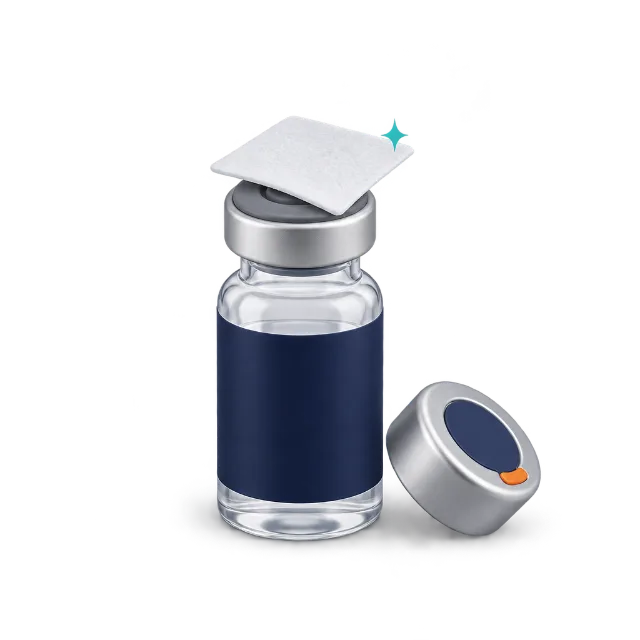 STEP 1Wipe both topsAlcohol pad on the peptide vial and the BAC water vial.
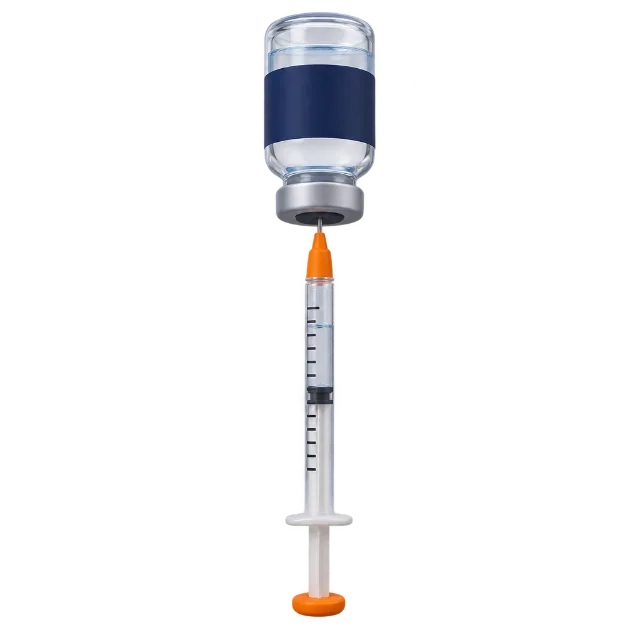 STEP 2Draw 2 mL of waterThat’s 2 full 1 mL syringes.
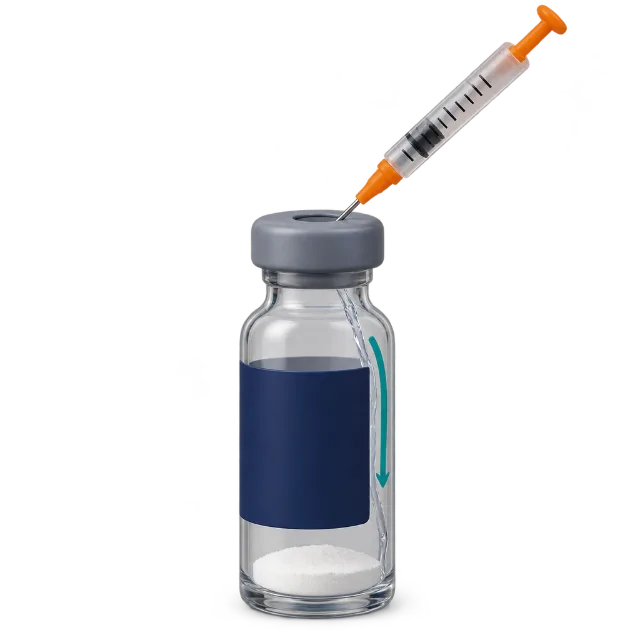 STEP 3Add it slowlyAim at the glass wall, not at the powder.
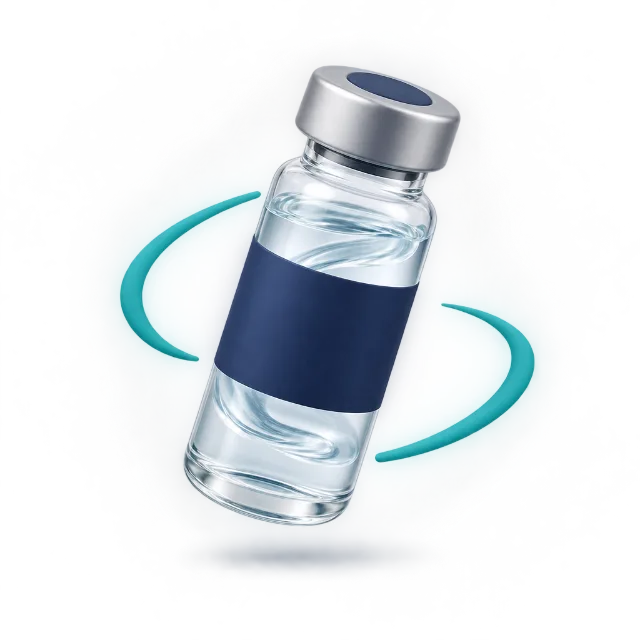 STEP 4Swirl, don’t shakeRoll gently until clear. Refrigerate after.
What to watch for
- Mild injection-site reactions, the only common side effectside effectAn unwanted effect that happens alongside the intended one. in trials of a close analogStudied in humans
- Tiredness early on, headache or appetite changesReported by users
- Poor sleep when dosed late in the dayReported by users
- Palpitations, less oftenReported by users
- Low blood sugar alongside diabetes medicine, in theoryUnknown
Not for anyone with active cancer or tumors, type 1 diabetes, or an allergy to the peptide. Talk to a doctor first, especially alongside diabetes medicine or during pregnancy or breastfeeding. It is banned in tested sport.
Reasons to get medical help right away: trouble breathing, swelling of the face or throat, chest pain, fainting, or any severe or worrying reaction.
Full side-effect list and who should avoid it
In published research
- CB4211 analog trials (85 people in total): no serious adverse events
- Only injection-site reactions occurred in more than 10% of people in those trials, usually mild and passing
- Long-term dosing in animals: no changes in liver, kidney, blood-fat or heart markers
What users report
- Most users report none
- Injection-site reactions, early tiredness, appetite changes in either direction, headache
- Less often: palpitations, poor sleep when dosed late, stomach upset, cramps
- Usually gone within days
Theoretical concerns
- Low blood sugar alongside diabetes medication, because both lower glucose
Not for
- Active cancer or tumors
- Type 1 diabetes (risk of low blood sugar; not studied)
- Known allergy to the peptide
Use caution with
- Type 2 diabetes on medication (additive lowering of blood sugar)
- Pregnancy or breastfeeding
- Serious chronic illness
- A history of cancer
- Competitive athletes: on the WADA prohibited list (S4.4) since 2024
- Signs of allergy, symptoms of low blood sugar, or persistent or unusual symptoms are the points at which a doctor's input is described
How the body handles it
- After exercise-driven rises, blood levels return to baseline within about 4 hours
- Exercise raised blood levels about 50% and muscle levels about 12-fold
- No half-life figure has been published for injected MOTS-c
Supplies
What 12 weeks of the schedule above takes, counted dose by dose.
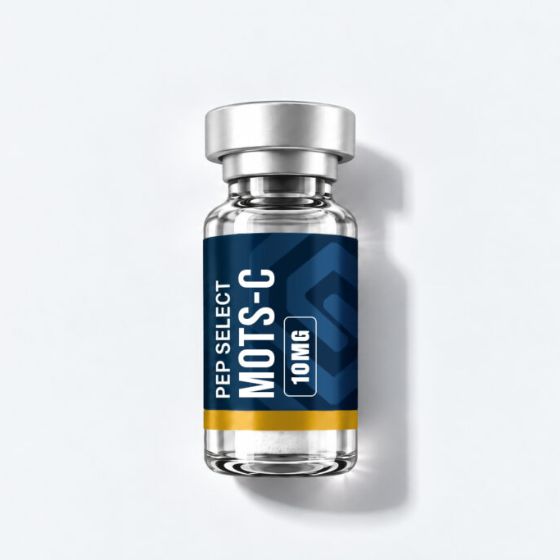

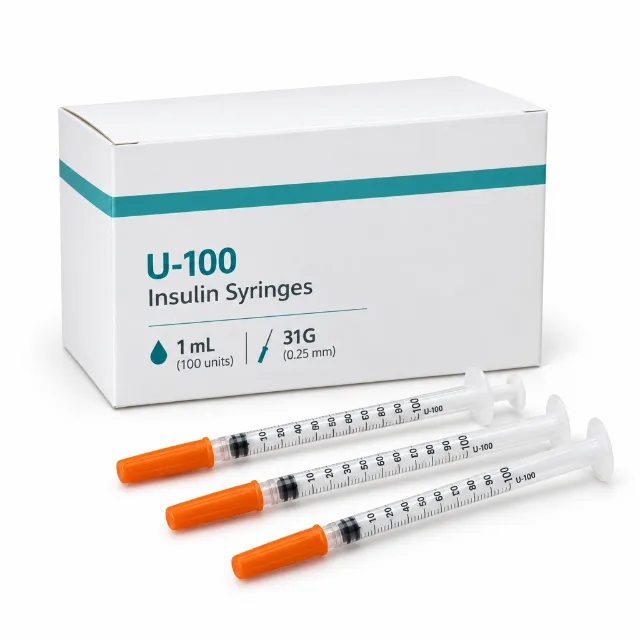
By clicking this link, WikiPep may receive a commission.
Stacking
The community pairs MOTS-c with other compounds aimed at the cell’s energy supply, but no pairing has been tested in a trial.
- SS-31Reported by users
SS-31 is described as repairing the cell’s power plants, while MOTS-c sends the signal to make more energy. Where damage is significant, SS-31 is described as coming first.
- NAD+Reported by users
NAD+ is described as the fuel that MOTS-c’s energy signal draws on. NAD+ is usually run in cycles with breaks.
- GLP-1 drugsReported by users
Described as a good match: GLP-1 drugs act on how much people eat, and MOTS-c on how cells use energy.
Also used alongside it, with no interactions described: 5-Amino-1MQ, growth-hormone peptides, BPC-157, TB-500 and testosterone therapy.
Talk to a doctor before combining it with: diabetes medicine, because both can lower blood sugar.
Go deeper
Every study, community report and source behind this page.
What the studies show23 findings, each with its evidence label
Status, October 2026. MOTS-c is not FDA-approved. In April 2026 the FDA removed it from the Category 2 compounding list, and on July 23, 2026 an FDA advisory committee narrowly recommended it for the 503A bulks list. That vote is not binding, and the FDA has not yet added it. It is also banned in sport by WADA. Source
How it works
In lab studies MOTS-c slowed the folate cyclecycleA planned period of use followed by a break, written as weeks on / weeks off., which let a molecule called AICAR build up. AICAR switches on AMPK, the cell's energy sensor, the same switch that exercise and fasting flip. The downstream effects seen in animals were more sugar taken into muscle without insulin, more fat burned for fuel, new mitochondria and easier switching between fuels. That pattern is why it is often called an exercise mimetic.
Under metabolic stress, lab work found it moved into the cell's nucleus within about 30 minutes, a step that depended on AMPK. There it worked with NRF2 to switch on genes for the cell's own antioxidant defenses.
Its main target appears to be muscle. In human samples, exercise raised MOTS-c in muscle about 12-fold (11.9-fold in a 2021 study), while blood levels rose about 50% and were back to baseline within about 4 hours.
A 2026 animal study found mitochondria worked more efficiently without making more respiratory protein, so existing mitochondria ran better rather than more being built. Free radicals and oxidative protein damage fell, through AMPK and PGC-1α raising antioxidant enzymes, with NRF2 as a second route. Lab work also links it to lower levels of the inflammatory signals IL-6, IL-1β and TNF-α.
Benefits
Each one carries an evidence label, so you can see how much is actually known.
Insulin sensitivity and glucose tolerance
In animal studies, including older animals, MOTS-c improved insulin sensitivity and how well blood sugar was cleared. source
Weight gain on a high-fat diet
Animals on a high-fat diet gained less weight on MOTS-c, and their appetite was not suppressed. source
Physical performance
Animals treated late in life, from an age roughly equal to 70 human years, ran better and had stronger grip and better stride than untreated animals. source
Levels fall with age
In people, blood MOTS-c was about 11% lower at ages 45 to 55 than at 18 to 30, and about 21% lower at 70 to 81. This is an observation about natural levels, not a treatment result. source
Heart
In an animal model of blocked and restored blood flow, damaged heart tissue was 73% smaller. Another animal study found it reversed heart dysfunction caused by high altitude, through the clean-up of damaged mitochondria. source
Bone
Lab and animal work found more activity in bone-building cells and less formation of the cells that break bone down. source
Muscle under steroid stress
In human muscle cells grown in the lab and exposed to the steroid dexamethasone, MOTS-c fully kept muscle-fiber size, with growth signaling up and a breakdown marker down. source
Liver
In animal studies it reduced liver injury from an acetaminophen overdose. Liver enzymes also fell in a small human trial of the analog CB4211, covered under the science below. source
What the science shows
Discovery (animal and lab, 2015)
Studied in animals or labThe study that identified MOTS-c. In animals it limited insulin resistance linked to age and to a high-fat diet, and limited diet-induced weight gain. source
Moving into the nucleus (lab, 2018)
Studied in animals or labUnder stress MOTS-c entered the nucleus and worked with NRF2. Cells making extra MOTS-c held up under glucose and serum deprivation; cells with a version that could not enter the nucleus did not. source
Exercise and aging (animal and human samples, 2021)
Studied in animals or labExercise raised muscle MOTS-c 11.9-fold. Animals treated three times a week from an age equal to about 70 human years had better grip, stride and walking. In human samples across ages 18 to 30, 45 to 55 and 70 to 81, blood levels fell with age while muscle levels rose. source
Muscle levels in older men (human, 2020)
Studied in humansOlder men had higher MOTS-c in muscle than younger men, and the levels were linked to muscle-fiber type. source
A limit: damaged mitochondria (lab, 2020)
Studied in animals or labMOTS-c did not rescue cells carrying the 3243 A>G mitochondrial DNA mutation. This finding is the reasoning behind running SS-31 first where mitochondrial damage is significant. source
CB4211 phase 1a/1b (human, analog, 2021)
Studied in humansPhase 1a gave single and repeated rising doses to 65 healthy adults with no serious side effects. Phase 1b gave 25 mg a day under the skin for 4 weeks to 20 people with obesity and fatty liver: ALT fell 21% against a 4% rise on placeboplaceboAn inactive version given to some trial participants so the real effect can be measured fairly., AST fell 28%, fasting glucose fell 6%, weight trended down, and about 36% had liver fat drop by more than 30%. The most common side effectside effectAn unwanted effect that happens alongside the intended one. was a mild, passing injection-site reaction. CB4211 is a modified analog, so these results do not transfer directly to MOTS-c. source
Bone (lab and animal, 2023)
Studied in animals or labMOTS-c increased the activity of bone-building cells and reduced the formation of bone-resorbing cells driven by RANKL. source
Insulin-producing cells (animal, 2025)
Studied in animals or labTreated animals showed less aging of the pancreatic islet cells that make insulin. The same work found lower blood MOTS-c in people with type 2 diabetes. source
Ovarian tumors (lab and animal, 2024)
Studied in animals or labMOTS-c slowed ovarian tumor progression in lab and animal models, and low natural levels were linked to poorer outlook in patients. source
Cancer-related bone pain (animal, 2024)
Studied in animals or labMOTS-c eased bone pain caused by cancer, acting through AMPK in the spinal cord. Long-term dosing showed no changes in liver, kidney, blood-fat or heart markers. source
Steroid-induced muscle loss (human cells, 2026)
Studied in animals or labIn human muscle cells exposed to dexamethasone, MOTS-c fully kept muscle-fiber size. Akt growth signaling went up and the breakdown marker MURF1 went down. source
Heart injury (animal, 2026)
Studied in animals or labAfter blood flow to the heart was blocked and restored, the area of damaged tissue was 73% smaller with MOTS-c. source
High-altitude heart dysfunction (animal, 2026)
Studied in animals or labMOTS-c reversed heart dysfunction caused by high altitude, through PINK1/Parkin, the pathway that clears damaged mitochondria. source
Acetaminophen liver injury (animal, 2026)
Studied in animals or labMOTS-c reduced liver injury from an acetaminophen overdose, acting through MAPK signaling. source
Mitochondrial efficiency (animal, 2026)
Studied in animals or labMitochondria became more efficient with no rise in respiratory protein, and free radicals and oxidative damage fell. The effect depended on PGC-1α and AMPK: animals lacking them did not respond. source
What the community reports4 user reports, a timeline and 6 pairings
What to expect
Users describe a lift in energy, especially when it is taken before training.
Reported by usersUsers describe better training performance and steadier energy.
Reported by usersUsers describe easier fat loss while keeping muscle, better insulin sensitivity on lab tests, more endurance and faster recovery, with fewer energy crashes while eating in a deficit.
Reported by usersIn 20 people with obesity and fatty liver, 25 mg a day of the analog CB4211 lowered the liver enzymes ALT by 21% and AST by 28%, and fasting glucose by 6%. This was CB4211, not MOTS-c itself.
Studied in humansMOTS-c is described as sending the signal, while AMPK and healthy mitochondria do the work. Active, healthier users report stronger effects. Non-responders are described as more often older, sedentary or metabolically unwell, with damaged mitochondria, lack of exercise or infrequent dosing given as the usual reasons.
What people report
Gathered from user communities. Anecdotal: useful for what to expect, not proof.
Energy
A lift in energy within about 30 minutes, especially before training, better endurance, and fewer afternoon crashes while eating in a deficit.
Fat loss
Described as metabolic help rather than dramatic. It is often mentioned alongside retatrutide or semaglutide.
Non-responders
Many people notice little. They are more often older, sedentary or metabolically unwell; active, healthier users describe stronger effects.
Side effects
Mostly none. Some describe injection-site reactions, early tiredness, appetite changes in either direction or headache; less often palpitations, poor sleep when dosed late, stomach upset or cramps. These usually pass within days.
Stacking
How it is described alongside other compounds.
SS-31
The two are described as working by separate routes: SS-31 binds cardiolipin on the inner mitochondrial membrane and cuts free radicals where they form, while MOTS-c works through AMPK, PGC-1α and NRF2 gene programs. Where damage is significant, SS-31 runs first for 4–8 weeks. For moderate decline, running both together is described as an option, because a 2026 study found MOTS-c lowered free radicals by a route separate from SS-31's. No controlled trials compare the approaches.
NAD+
Described as the fuel MOTS-c's signal draws on. NAD+ is cycled 8–12 weeks on and 4–8 weeks off; longer runs, past about 12 weeks, are described as possibly suppressing NAMPT, the enzyme the body uses to make its own.
5-Amino-1MQ
Described as closing the NNMT leak, a route by which NAD+ building blocks are used up.
GLP-1 drugs
Described as complementary, one acting on food intake and the other on how cells use energy, with no conflicts described.
Growth-hormone peptides
Both are described as working best fasted, and they are run together.
BPC-157, TB-500, TRT
No interactions described.
Common questions10 questions
Common questions
Why does MOTS-c not seem to work for some people?
The reasons given are damaged mitochondria, no exercise, or dosing only once a week. MOTS-c sends the signal; healthy mitochondria and AMPK have to carry it out.
Does SS-31 have to come before MOTS-c?
Where mitochondrial dysfunction is significant, protocols run SS-31 first for 4–8 weeks. For moderate decline, running the two together is described as an option, and for younger, healthy people MOTS-c alone.
Is MOTS-c a replacement for exercise?
No. It is described as adding to exercise, which on its own raised muscle MOTS-c about 12-fold in a human study.
Can MOTS-c be used long term?
Protocols build in breaks: 4–8 weeks on with equal time off, or 12–16 weeks followed by a break. Long-term effects in people are unknown.
What time of day do protocols describe?
Morning on an empty stomach, or 30 minutes before exercise. Late-day doses are described as disturbing sleep.
Does MOTS-c affect blood sugar?
Yes, it can lower it. The concern listed is low blood sugar in people on diabetes medication, since the effects can add up.
Does MOTS-c cause cancer?
There is no evidence that it does, and the limited data leans toward anti-tumor effects in lab and animal work. Active cancer is still listed as a reason not to use it, and recent cancer calls for an oncologist's clearance.
How is it stored?
Powder is kept at -20°C. Once mixed it is kept at 2–8°C and is described as stable for about 14–30 days in the fridge.
What does “minimum effective dose” mean?
It is the lowest dose that still produces the effect someone is after. User reports describe starting there and staying there for as long as it keeps working, rather than climbing toward the top of the range. Side effects tend to rise with dose, and the top of each range on this page is a ceiling people report, not a target.
When does the dose go up?
There is no trial schedule for MOTS-c. User reports describe staying on a dose while it is still working, and moving up only after progress has stalled for two weeks or more and side effects have settled. There is no prize for getting to the top dose fast. These are not quick fixes: most of what people report builds over weeks, not days.
Source material15 studies and documents
References
- Lee C, et al. Cell Metab. 2015;21(3):443-454. www.cell.com/article/S1550-4131(15)00061-3/fullt…
- Kim KH, et al. Cell Metab. 2018;28(3):516-524.e7. pubmed.ncbi.nlm.nih.gov/29983246/…
- Reynolds JC, et al. Nat Commun. 2021;12(1):470. www.nature.com/articles/s41467-020-20790-0…
- D'Souza RF, et al. Aging (Albany NY). 2020;12(6):5244-5258. pubmed.ncbi.nlm.nih.gov/32182209/…
- Ahn CH, et al. Mol Biol Rep. 2020;47(5):4029-4035. pubmed.ncbi.nlm.nih.gov/32279209/…
- Yi X, et al. Front Physiol. 2023;14:1149120. www.frontiersin.org/journals/physiology/articles…
- Kong BS, et al. Exp Mol Med. 2025;57(8):1861-1877. pubmed.ncbi.nlm.nih.gov/40855115/…
- Yin Y, et al. Adv Sci. 2024;11(43):e2405620. pubmed.ncbi.nlm.nih.gov/39321430/…
- Yang L, et al. Acta Biochim Biophys Sin. 2024;56(9):1323-1339. pubmed.ncbi.nlm.nih.gov/38716540/…
- Elhusseiny R, et al. Physiol Rep. 2026;14(4):e70276. pubmed.ncbi.nlm.nih.gov/41732124/…
- Santhanam SS, et al. Naunyn Schmiedebergs Arch Pharmacol. 2026;399:3207-3222. pubmed.ncbi.nlm.nih.gov/41593376/…
- Feng Z, et al. Free Radic Biol Med. 2026. pubmed.ncbi.nlm.nih.gov/41654147/…
- Li N, et al. Protein Pept Lett. 2026. pubmed.ncbi.nlm.nih.gov/41764620/…
- Gudiksen A, et al. Free Radic Biol Med. 2026;246:682-696. doi.org/10.1016/j.freeradbiomed.2026.01.002…
- CB4211 phase 1a/1b trial record, NCT03998514. ClinicalTrials.gov. clinicaltrials.gov/study/NCT03998514…
Related
What is MOTS-c?
MOTS-c is a short peptidepeptideA short chain of amino acids. Proteins are long chains; peptides are short ones, usually under 50 amino acids., 16 amino acids long, whose code sits in the DNA of the mitochondria rather than in the cell's nucleus, which is unusual for a peptide. The name stands for Mitochondrial Open Reading Frame of the 12S rRNA type-c. The body makes more of it during exercise and fasting. It was identified in 2015 at the University of Southern California, and about 200 preclinical studies have followed. Human data on MOTS-c itself is very limited. The closest human evidence comes from CB4211, a stabilized synthetic analog tested in small early-stage trials in 2021. MOTS-c is not FDA-approved. In April 2026 the FDA removed it from the Category 2 compounding list, and on July 23, 2026 an FDA advisory committee narrowly recommended it for the 503A bulks list. That vote is not binding, and the FDA has not yet added it. WADA has listed it as a prohibited metabolic modulator (S4.4) since 2024. A simple way to place it among the other mitochondrial compounds: NAD+ is described as the fuel, MOTS-c as the signal to make more energy, and SS-31 as the repair crew for the machinery itself.
What people look into MOTS-c for
Every line carries an evidence label, so you can see how much is actually known.
Insulin sensitivity and glucose tolerance: In animal studies, including older animals, MOTS-c improved insulin sensitivity and how well blood sugar was cleared.source
Studied in animals or labWeight gain on a high-fat diet: Animals on a high-fat diet gained less weight on MOTS-c, and their appetite was not suppressed.source
Studied in animals or labPhysical performance: Animals treated late in life, from an age roughly equal to 70 human years, ran better and had stronger grip and better stride than untreated animals.source
Studied in animals or labLevels fall with age: In people, blood MOTS-c was about 11% lower at ages 45 to 55 than at 18 to 30, and about 21% lower at 70 to 81. This is an observation about natural levels, not a treatment result.source
Studied in humansHeart: In an animal model of blocked and restored blood flow, damaged heart tissue was 73% smaller. Another animal study found it reversed heart dysfunction caused by high altitude, through the clean-up of damaged mitochondria.source
Studied in animals or labBone: Lab and animal work found more activity in bone-building cells and less formation of the cells that break bone down.source
Studied in animals or labMuscle under steroid stress: In human muscle cells grown in the lab and exposed to the steroid dexamethasone, MOTS-c fully kept muscle-fiber size, with growth signaling up and a breakdown marker down.source
Studied in animals or labLiver: In animal studies it reduced liver injury from an acetaminophen overdose. Liver enzymes also fell in a small human trial of the analog CB4211, covered under the science below.source
Studied in animals or labMix and measure: a 10 mg vial
Go deeper
How it works, in plain words
In lab studies MOTS-c slowed the folate cyclecycleA planned period of use followed by a break, written as weeks on / weeks off., which let a molecule called AICAR build up. AICAR switches on AMPK, the cell's energy sensor, the same switch that exercise and fasting flip. The downstream effects seen in animals were more sugar taken into muscle without insulin, more fat burned for fuel, new mitochondria and easier switching between fuels. That pattern is why it is often called an exercise mimetic.
What did the study measure?
No single study is featured for MOTS-c; the human trials are linked from the uses above.
Sources
Side effects and who should avoid it
Side effects and limits, stated plainly. If anything here applies to you, talk to a doctor first.