Semaglutide
Semaglutide is a once-a-week injection for weight loss and type 2 diabetes. It is FDA-approved as Ozempic and Wegovy, and as daily tablets. It acts like GLP-1, a natural gut hormone released after meals. In studies, people felt full sooner and food felt less rewarding, so they ate less.
What it’s studied for
- Weight lossStudied in humans
In a 68-week trial, people lost about 15% of their body weight, against about 2% on placeboplaceboAn inactive version given to some trial participants so the real effect can be measured fairly.. source
- Heart eventsStudied in humans
In people with heart disease and extra weight, heart attacks, strokes and heart deaths were 20% less common over about 3 years. source
- Kidney outcomesStudied in humans
In people with diabetes and kidney disease, serious kidney problems were about a quarter less common. source
1 more use studied
- Blood sugarStudied in humans
Approved for type 2 diabetes since 2017. In trials, HbA1c, a long-term blood sugar marker, improved. source
 New here? Three things worth knowing first
What’s a peptidepeptideA short chain of amino acids. Proteins are long chains; peptides are short ones, usually under 50 amino acids.? A short chain of amino acids, the building blocks of protein. Many act like messengers in the body.
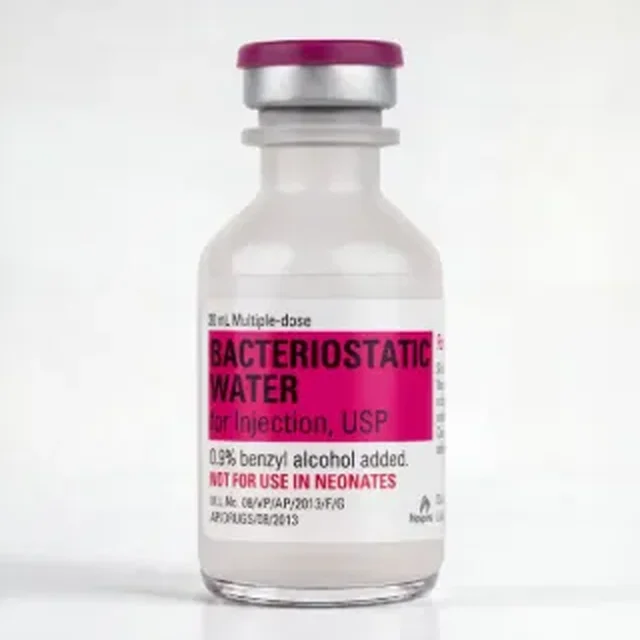
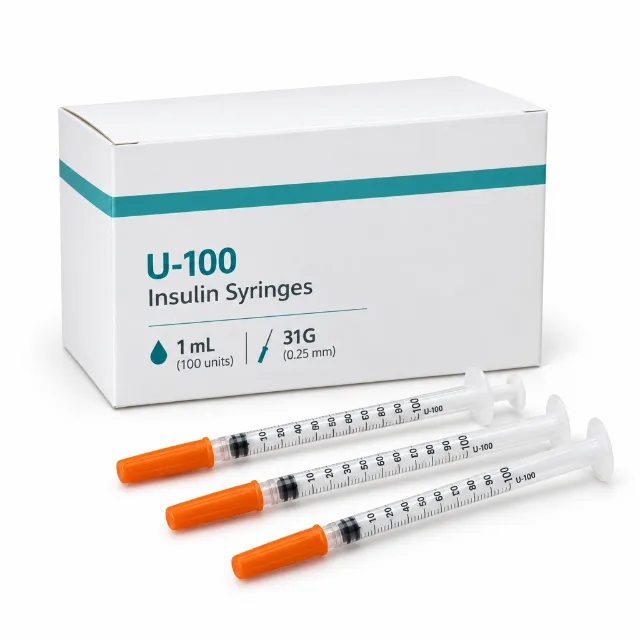
Why the vial has to be mixed. It ships as a dry powder. You add bacteriostatic waterbacteriostatic waterSterile water with a little benzyl alcohol that stops bacteria growing, so a mixed vial lasts days or weeks. Often called BAC water., and the amount you add decides how many unitsunitsMarks on an insulin syringe. On a U-100 syringe, 100 units = 1 mL. How many units equal a dose depends on how much water was added. on the syringe equal one dose. The calculator does that math.
SubcutaneoussubcutaneousUnder the skin, into the fat layer. The usual route for peptide injections. Often shortened to sub-Q. injection, Once weekly. Subcutaneous means into the fat layer just under the skin. It uses a small insulin syringe. Any word with a dotted underline on this page opens a short definition.
Dosage guidelines
Once a week, on the same day. The dose starts at 0.25 mg and goes up every 4 weeks, to 2.4 mg for weight loss.
The doses below come from published reference protocols and, where they exist, the human trials. Tap a row to load it into the calculator.
Figures reviewed against their sources in October 2026. Where a trial or approved label sets a schedule, it is shown first; where a label sets one fixed dose, the FAQ below says so.
Standard titration (weight management). Starts at 0.25 mg and goes up every 4 weeks: 0.25, 0.5, 1.0, 1.7, then 2.4 mg. Protocols hold a step 4 more weeks when side effects are strong.
The Wegovy schedule used in the STEP trials · 0.25 → 0.5 → 1.0 → 1.7 → 2.4 mg, once weekly · Ongoing; the dose steps up every 4 weeks, with 2.4 mg as maintenance from week 17
| Step | Weeks | Weekly dose | Draw to |
|---|---|---|---|
| 1 | Weeks 1–4 | 0.25 mg (250 mcg) | 5 units |
| 2 | Weeks 5–8 | 0.5 mg (500 mcg) | 10 units |
| 3 | Weeks 9–12 | 1 mg (1,000 mcg) | 20 units |
| 4 | Weeks 13–16 | 1.75 mg (1,750 mcg) rounded to the nearest 5-unit mark; the source says 1.7 mg | 35 units |
| 5 | Weeks 17+ | 2.5 mg (2,500 mcg) rounded to the nearest 5-unit mark; the source says 2.4 mg | 50 units |
Doses marked “between 5-unit marks” sit between the 5-unit lines on a 1 mL syringe; the 1-unit lines on a 0.5 mL or 0.3 mL syringe make them easier to read.
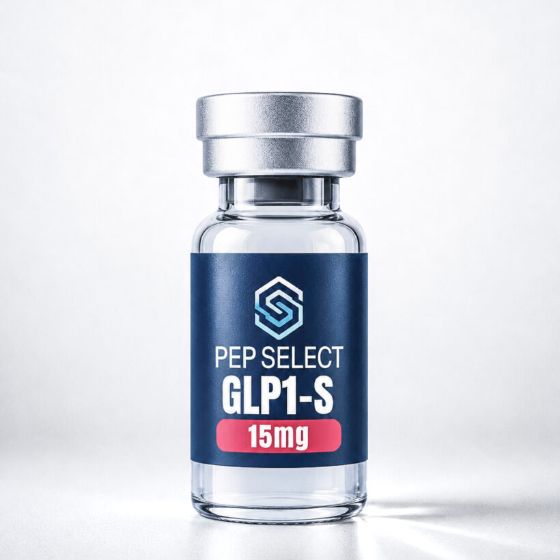
Units are for a 15 mg vial mixed with 3 mL of water. Change the vial in the calculator
Full protocol details
Mixing in the protocols: 5 mg vial + 2 mL bacteriostatic water · 2.5 mg/mL; 0.25 mg = 10 units. Research-grade vials come in 5, 10, 20 and 30 mg; the water volume sets the concentration. Refrigerated after mixing..
Other forms: Oral: the Wegovy pill is 25 mg once daily for weight management. In its main trial, OASIS 4, adults lost 13.6% of body weight over 64 weeks vs 2.2% on placebo (human trial). Rybelsus is the diabetes tablet. Tablets use an absorption helper (SNAC), and only about 0.8% of an oral dose reaches the blood, which is why oral doses are in the tens of milligrams a day against 2.4 mg a week injected.
Standard titration (weight management)
The Wegovy schedule used in the STEP trials
- Dose
- 0.25 → 0.5 → 1.0 → 1.7 → 2.4 mg
- How often
- Once weekly
- Timing
- Same day each week; the day can move if the previous dose was at least 2 days earlier. No fasting needed
- Route
- Subcutaneous
- How long
- Ongoing; the dose steps up every 4 weeks, with 2.4 mg as maintenance from week 17
- Break
- No off-period stated
Where side effects are strong, protocols hold the current dose for an extra 4 weeks. Skipping steps or starting high is described as causing severe nausea and vomiting. Many people are described as doing well below 2.4 mg, some at 1.0 mg; higher doses can add side effects without a matching gain.
Type 2 diabetes (Ozempic)
The diabetes dosing
- Dose
- 0.25 mg, then 0.5 mg; up to 1.0 or 2.0 mg
- How often
- Once weekly
- Route
- Subcutaneous
- How long
- Ongoing
From week 5 the dose is 0.5 mg, which can go up to 1.0 or 2.0 mg depending on response.
Cycle
Ongoing; the dose steps up every 4 weeks, with 2.4 mg as maintenance from week 17; No off-period stated
When a step up happens
User reports describe stepping up only after progress has stalled for two weeks or more, and only if the previous step was tolerated. Everyone is different.
Timing: Same day each week; the day can move if the previous dose was at least 2 days earlier. No fasting needed.
Peptide calculator
Already filled with this vial. Change anything you like.
How much is in your vial?
Check the label. The most common strengths:
Every 10 units = 0.5 mg.
5 units. 3 mL of BAC water
How the vial is mixed
The powder has to be dissolved in bacteriostatic (BAC) water before use. For a 15 mg vial this page uses 3 mL, which puts the usual dose on a round syringe mark: every 10 units is 0.5 mg.
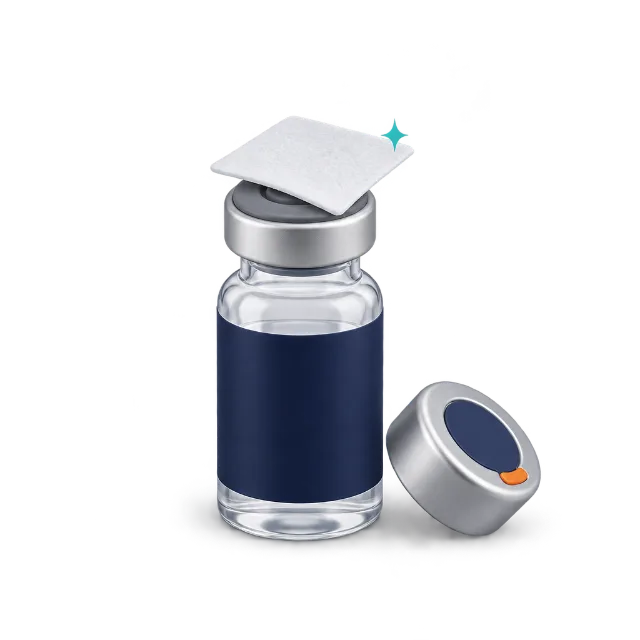 STEP 1Wipe both topsAlcohol pad on the peptide vial and the BAC water vial.
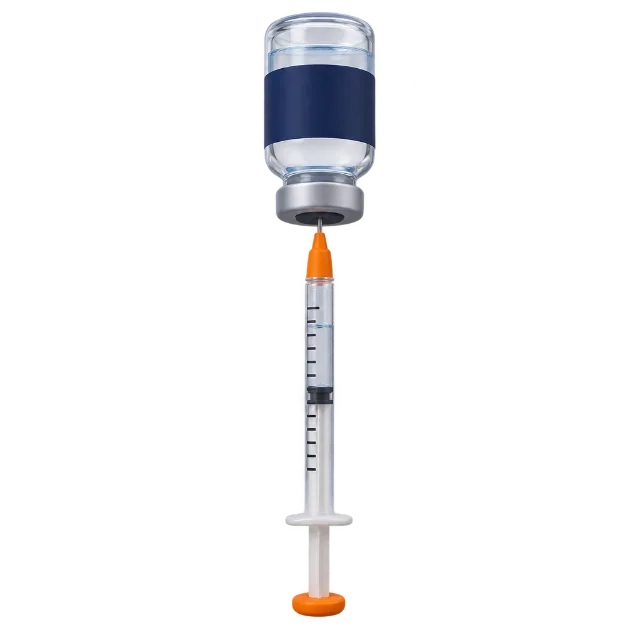 STEP 2Draw 3 mL of waterThat’s 3 full 1 mL syringes.
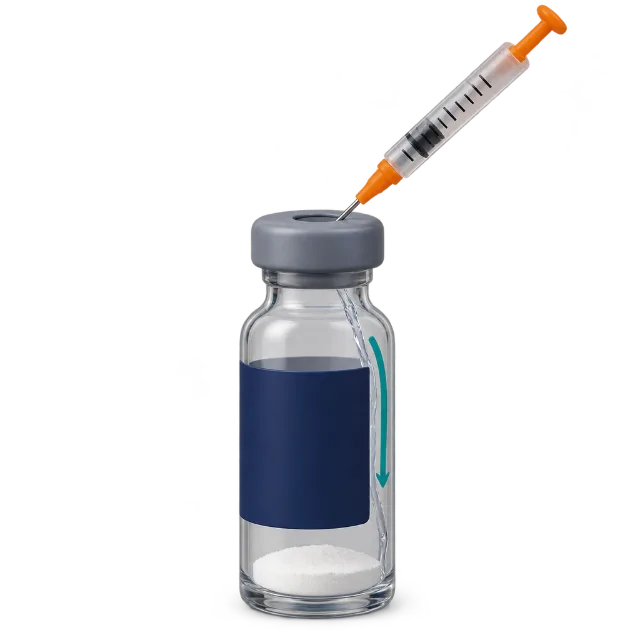 STEP 3Add it slowlyAim at the glass wall, not at the powder.
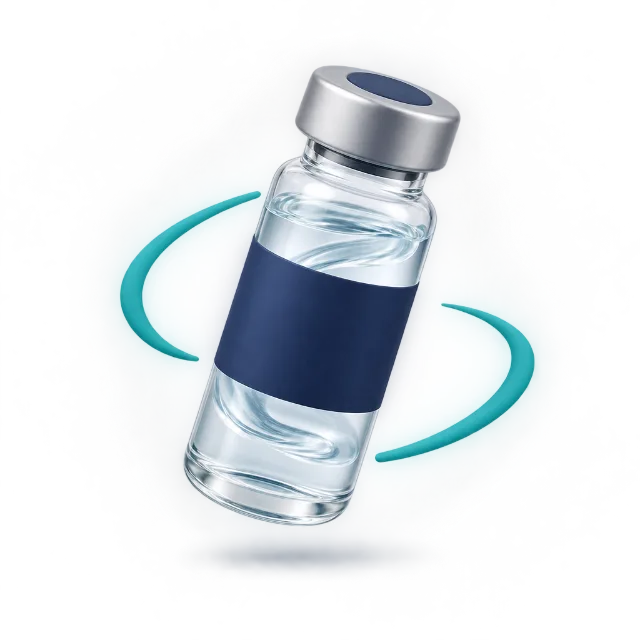 STEP 4Swirl, don’t shakeRoll gently until clear. Refrigerate after.
What to watch for
- Nausea, diarrhea, vomiting or constipation, mostly while the dose is going upStudied in humans
- Gallbladder problems, which are more common across this drug classStudied in humans
- Hair loss, a little more common than on placeboplaceboAn inactive version given to some trial participants so the real effect can be measured fairly.Studied in humans
- Tiredness, often tied to eating too littleReported by users
- Anxiety, irritability or feeling emotionally flatReported by users
Not for anyone with a personal or family history of medullary thyroid cancer or MEN 2. Also not for pregnancy, breastfeeding or a past serious allergy to semaglutide. Talk to a doctor first, especially with a history of pancreatitis, diabetic eye disease or depression.
Reasons to get medical help right away: trouble breathing, swelling of the face or throat, chest pain, fainting, or any severe or worrying reaction.
Full side-effect list and who should avoid it
In published research
- Nausea: 44% vs 17% on placebo
- Diarrhea: 32% vs 16% on placebo
- Also vomiting, constipation, stomach pain, headache and tiredness; dose-dependent, usually easing after 4 to 8 weeks
- About 4.5% stopped for stomach and gut side effects (STEP-1)
- Less common: reflux, bloating, gas, dizziness, injection-site reactions, hair loss (2.5% vs 1.0%)
- Gallbladder disease: 37% higher risk across the GLP-1 drug class
- Slowed stomach emptying (gastroparesis): most cases resolve after stopping; the FDA has unresolved reports
- Pancreatitis: no increase in meta-analyses (OR 0.7, 95% CI 0.5 to 1.2), but still a listed precaution
- Unusual skin sensations (dysesthesia), more common at the 7.2 mg dose
What users report
- Nausea during dose increases
- Constipation
- Tiredness, often traced to too few calories or too little protein
- "Sulfur burps"
- Anxiety, irritability or emotional flatness
Not for
- Personal or family history of medullary thyroid cancer, or MEN 2 (a label contraindication)
- Past serious allergy to semaglutide
- Pregnancy or breastfeeding
Use caution with
- History of pancreatitis
- Diabetic eye disease (retinopathy), which a rapid drop in blood sugar can worsen
- Kidney disease, because of dehydration-related kidney injury
- Gallbladder disease
- Gastroparesis or other gut motility disorders
- Depression or a history of suicidal thoughts
- Upcoming surgery or deep sedation
- Insulin or sulfonylureas, which may need lower doses
- Prokinetic drugs such as metoclopramide or erythromycin, which may work against the stomach effects
- Oral contraceptives: absorption timing could in theory shift. No clinically significant interactions were found with metformin, warfarin, atorvastatin or digoxin
How the body handles it
- 94% structurally identical to natural GLP-1
- Changes that resist breakdown by the enzyme DPP-4, plus a fatty side chain that binds albumin; over 99% is albumin-bound
- Half-life about 7 days, so dosed weekly
- Steady state after 4 to 5 weeks
- Cleared by protein breakdown and fat oxidation; excreted in urine and feces
- Oral bioavailability about 0.8%
Supplies
What 12 weeks of the schedule above takes, counted dose by dose.
By clicking this link, WikiPep may receive a commission.
Stacking
What the community pairs with semaglutide, and why. Most pairings aim to keep muscle while weight comes off. None has been tested in a trial.
- Strength training and proteinReported by users
Described as the most important pairing. Without it, a large share of the weight lost can be muscle, so training and protein are used to hold on to it.
- Growth-hormone peptidesReported by users
Paired to help hold on to lean mass. Lower appetite may make their empty-stomach timing easier.
- Testosterone therapyReported by users
Paired to help keep lean mass. No interaction is described.
Also used alongside it, with no interactions described: BPC-157 and TB-500.
Not combined with: Other GLP-1 drugs, because they act on the same target.
Talk to a doctor before combining it with: insulin or sulfonylureas, whose doses may need lowering because of the risk of low blood sugar.
Go deeper
Every study, community report and source behind this page.
What the studies show17 findings, each with its evidence label
Status, October 2026. FDA-approved as Ozempic (2017, type 2 diabetes; kidney-disease indication added Jan 2025), Rybelsus tablets (2019), and Wegovy (2021 weight management; 2024 major heart-event risk in adults with heart disease and overweight; 2025 MASH; Dec 2025 tablets; Mar 2026 Wegovy HD 7.2 mg). Source
How it works
In the brain, semaglutide acts on GLP-1glp-1A gut hormone that affects appetite and blood sugar. Several weight-management compounds act on its receptor. receptors in the hypothalamus and brainstem. In human studies this strengthened fullness signals, quieted hunger signals and lowered how rewarding food feels, which is why users so often describe food simply becoming less interesting.
In the stomach, it slows emptying. In one human study, 37% of a solid meal was still in the stomach after 4 hours, against none on placeboplaceboAn inactive version given to some trial participants so the real effect can be measured fairly.. Meals feel larger and last longer.
In the pancreas, it raises insulin only when blood sugar is high and lowers glucagon after meals. On its label, that glucose-dependent action is why low blood sugar is uncommon when semaglutide is used on its own.
It does not burn fat or raise metabolic rate. The weight loss in trials came from eating less than the body burns, which semaglutide makes easier to sustain.
Benefits
Each one carries an evidence label, so you can see how much is actually known.
Weight loss
In the STEP-1 trial, adults lost 14.9% of body weight over 68 weeks on 2.4 mg a week, against 2.4% on placeboplaceboAn inactive version given to some trial participants so the real effect can be measured fairly.. STEP-3 reached 16.0% with intensive lifestyle support, and STEP-5 held 15.2% at 2 years. source
Blood sugar and metabolic markers
Approved for type 2 diabetes since 2017. In human trials, fasting glucose, insulin sensitivity and HbA1c improved. source
Heart events in SELECT
In 17,604 adults with heart disease and overweight but no diabetes, 6.5% on semaglutide vs 8.0% on placebo had a heart attack, stroke or heart-related death over about 3 years, a 20% lower rate. source
Kidney outcomes in FLOW
In people with type 2 diabetes and chronic kidney disease, the trial's main kidney outcome occurred 24% less often than on placebo over a median 3.4 years. source
What the science shows
STEP-1 (human, 68 weeks)
Studied in humans1,961 adults with obesity and no diabetes, 2.4 mg weekly vs placeboplaceboAn inactive version given to some trial participants so the real effect can be measured fairly.. Weight fell 14.9% vs 2.4%. 86% lost at least 5%, 69% at least 10% and 50% at least 15%. About 4.5% stopped because of stomach and gut side effects. source
STEP-3 (human, 68 weeks)
Studied in humans611 adults given intensive behavioral therapy and an initial low-calorie diet on top of treatment. Weight fell 16.0% vs 5.7% on placebo, and about 40% lost 20% or more. source
STEP-5 (human, 2 years)
Studied in humans304 adults without diabetes. The 15.2% loss held at 104 weeks on continued treatment. source
STEP-1 extension, after stopping (human)
Studied in humans327 participants followed for a year off treatment regained about two-thirds of the weight they had lost. source
Body composition in STEP-1 (human, DXA)
Studied in humansIn 140 participants scanned, fat mass fell 19.3% and visceral fatvisceral fatFat stored deep around the organs, as opposed to the fat under the skin. 27.4%, while lean mass fell 9.7%. The share of the body made up of lean tissue rose 3.0 percentage points. Roughly 60 to 65% of the weight lost was fat and 35 to 40% lean tissue. source
SEMALEAN (human, 12 months)
Studied in humans106 patients on 2.4 mg. Fat mass fell 18% at 12 months. Lean mass fell 3 kg by month 7 and then held steady, handgrip strength rose 4.5 kg, and the share with sarcopenic obesity fell from 49% to 33%. source
SURMOUNT-5, head to head with tirzepatide (human, 72 weeks)
Studied in humans751 adults without diabetes. Tirzepatide lost 20.2% and semaglutide 13.7%. Stopping for stomach and gut side effects: 5.6% on semaglutide, 2.7% on tirzepatide. source
SELECT, heart events (human, about 40 months)
Studied in humans17,604 adults aged 45 or older with heart disease, a BMI of 27 or more and no diabetes, followed for a mean 39.8 months. Major heart events: 6.5% vs 8.0% on placebo (hazard ratio 0.80, 95% CI 0.72 to 0.90, P < 0.001). source
FLOW, kidney outcomes (human, 3.4 years)
Studied in humansPeople with type 2 diabetes and chronic kidney disease. Over a median 3.4 years, the combined kidney outcome occurred 24% less often than on placebo. source
Gallbladder risk across the drug class (human, meta-analysis)
Studied in humans76 randomized trials of GLP-1glp-1A gut hormone that affects appetite and blood sugar. Several weight-management compounds act on its receptor. drugs. Gallbladder and bile-duct disease was 37% more common (RR 1.37, 95% CI 1.23 to 1.52), gallstones 27% and gallbladder inflammation 36%. Risk was higher at higher doses and in weight-loss trials. source
Thyroid question (human review)
Studied in humansAcross 10 randomized trials with 14,550 participants, thyroid cancer cases were isolated, under 1% within study groups. source
Thyroid C-cell tumors (animal studies)
Studied in animals or labThyroid C-cell tumors, including medullary thyroid cancer, were seen in animal studies. Whether that applies to people is not established, and the label carries a boxed warning. source
Suicidal thoughts (FDA review, human)
Studied in humansAn FDA review of post-marketing reports and placebo-controlled trials found no increased risk. People with active major depression or past suicide attempts were not well represented in the trials. source
What the community reports7 user reports, a timeline and 6 pairings
What to expect
Appetite usually drops within the first one to two weeks, even at the 0.25 mg starting dose.
Reported by usersWeight loss usually becomes visible in the second month.
Reported by usersThe standard schedule reaches the full 2.4 mg dose, about 16 to 17 weeks after the first injection.
Studied in humansThe period with the largest losses.
Reported by usersIn STEP-5, most of the loss came in the first year and plateaued around 15%, which held through 2 years on continued treatment. For someone starting at 240 lb, 15% is about 36 lb.
Studied in humansIn the STEP-1 extension, people who had lost 17.3% regained about two-thirds within a year, ending 5.6% below their starting weight.
Studied in humansThe protocols are described for adults with obesity, or overweight with weight-related health problems. Protein, resistance training and sleep are framed as the foundation that decides how much of the loss is fat and how much of it lasts.
What people report
Gathered from user communities. Anecdotal: useful for what to expect, not proof.
Weight lost
Users commonly describe losing 8 to 18% of body weight over 6 to 12 months.
Food becomes less interesting
The effect is described less as willpower and more as food simply mattering less.
Nausea at each dose step
Worst for one to two weeks after each increase. Smaller meals, less fatty food, plenty of fluids and staying upright after eating are the strategies users describe.
Constipation
Nearly as common as nausea. Fiber, magnesium and water are described as helping partly.
Face and hair
Facial fat loss with rapid weight loss ("Ozempic face") and hair shedding, reported more often by women.
Muscle and strength
Users with low protein intake describe feeling weaker and losing definition. The best results are reported with high protein, at least 1 g per pound of goal body weight, and resistance training.
Switching
Some move on to tirzepatide or retatrutide for more weight loss or better muscle retention, and describe appetite control as weaker on retatrutide.
Stacking
How it is described alongside other compounds.
Resistance training and protein
Described as the most important pairing. Without it, 35 to 40% of the weight lost can be lean tissue. The targets described are training 2 to 3 days a week and at least 1 g of protein per pound of goal body weight a day.
BPC-157 and TB-500
No interaction concerns described. Some users say BPC-157 eases stomach discomfort; no published data backs this.
Growth-hormone peptides (CJC-1295, ipamorelin, sermorelin)
No interaction described. Those peptides need a fasted window, which reduced appetite may make easier. Paired to help hold on to lean mass.
Testosterone therapy
No interaction described; it is paired to help keep lean mass.
Other GLP-1 drugs
Not combined. They act on the same receptor.
Insulin or sulfonylureas
Those doses may need lowering because of the risk of low blood sugar, which calls for medical supervision.
Common questions11 questions
Common questions
Does semaglutide burn fat directly?
No. It lowers appetite so that eating less than the body burns is easier to sustain. The fat loss comes from that deficit.
Does the weight come back after stopping?
In the STEP-1 extension, most people regained about two-thirds of their loss within a year. The habits built while on it are described as what decides how much returns.
How does it compare with tirzepatide?
In SURMOUNT-5, tirzepatide lost 20.2% and semaglutide 13.7% at 72 weeks, about 47% more. Fewer people stopped tirzepatide for stomach and gut side effects (2.7% vs 5.6%). Tirzepatide's added GIP action may also help with muscle retention.
How does it compare with retatrutide?
Retatrutide acts on three receptors (GLP-1, GIP and glucagon). In the phase 3 TRIUMPH-1 trial, 12 mg weekly gave a 25.0% average loss at 80 weeks vs 3.9% on placebo. It is investigational, and Lilly plans to file with the FDA in early 2027.
How much muscle is lost?
In the STEP-1 scans, lean mass fell 9.7%, or about 35 to 40% of the weight lost. High protein and resistance training are described as improving that ratio.
What about the kidneys?
In FLOW, kidney outcomes occurred 24% less often than on placebo in people with diabetes and kidney disease. Case reports of acute kidney injury are tied to dehydration from vomiting or diarrhea, which is why existing kidney disease calls for supervision.
Can it cause hair loss?
In trials, 2.5% reported hair loss vs 1.0% on placebo. It appears tied to how much weight is lost, and may be more common in women.
Does a surgeon need to know?
Yes. Slower stomach emptying raises the risk of stomach contents being inhaled during anesthesia, and anesthesia guidance has advised holding weekly GLP-1 drugs for at least a week before elective surgery. The surgical team sets the plan.
What happens when switching to another compound?
Protocols describe taking the last semaglutide dose and starting the new compound the following week, with no washout.
What does “minimum effective dose” mean?
It is the lowest dose that still produces the effect someone is after. User reports describe starting there and staying there for as long as it keeps working, rather than climbing toward the top of the range. Side effects tend to rise with dose, and the top of each range on this page is a ceiling people report, not a target.
When does the dose go up?
In the trials, the dose went up on a fixed schedule, because a trial has to treat everyone the same way. User reports describe a different pattern outside trials: staying on a dose while it is still working, and moving up only after progress has stalled for two weeks or more and side effects have settled. There is no prize for getting to the top dose fast. These are not quick fixes: most of what people report builds over weeks, not days.
Source material15 studies and documents
References
- Wilding JPH, et al. N Engl J Med. 2021;384(11):989-1002. pubmed.ncbi.nlm.nih.gov/33567185/…
- Wadden TA, et al. JAMA. 2021;325(14):1403-1413. pubmed.ncbi.nlm.nih.gov/33625476/…
- Garvey WT, et al. Nat Med. 2022;28(10):2083-2091. pubmed.ncbi.nlm.nih.gov/36216945/…
- Wilding JPH, et al. Diabetes Obes Metab. 2022;24(8):1553-1564. pubmed.ncbi.nlm.nih.gov/35441470/…
- Wilding JPH, et al. J Endocr Soc. 2021;5(Suppl 1):A16-A17. pmc.ncbi.nlm.nih.gov/articles/PMC8089287/…
- Alissou M, et al. Diabetes Obes Metab. 2026;28(1):112-121. pubmed.ncbi.nlm.nih.gov/41068996/…
- Aronne LJ, et al. N Engl J Med. 2025;393(1):26-36. pubmed.ncbi.nlm.nih.gov/40353578/…
- Lincoff AM, et al. N Engl J Med. 2023;389(24):2221-2232. pubmed.ncbi.nlm.nih.gov/37952131/…
- Perkovic V, et al. N Engl J Med. 2024;391(2):109-121. pubmed.ncbi.nlm.nih.gov/38785209/…
- He L, et al. JAMA Intern Med. 2022;182(5):513-519. pubmed.ncbi.nlm.nih.gov/35344001/…
- Feier CVI, et al. Int J Mol Sci. 2024;25(8):4346. pmc.ncbi.nlm.nih.gov/articles/PMC11050669/…
- Yang XD, Yang YY. Drug Des Devel Ther. 2024;18:2555-2570. pmc.ncbi.nlm.nih.gov/articles/PMC11215664/…
- Jastreboff AM, et al. N Engl J Med. 2026. www.nejm.org/doi/full/10.1056/NEJMoa2604169…
- Wharton S, et al. N Engl J Med. 2025;393(11):1077-1087. doi.org/10.1056/NEJMoa2500969…
- US Food and Drug Administration. Update on ongoing evaluation of reports of suicidal thoughts or actions. January 2024. www.fda.gov/drugs/drug-safety-and-availability/u…
Related
What is Semaglutide?
Semaglutide is a synthetic version of GLP-1glp-1A gut hormone that affects appetite and blood sugar. Several weight-management compounds act on its receptor. (glucagon-like peptidepeptideA short chain of amino acids. Proteins are long chains; peptides are short ones, usually under 50 amino acids.-1), a hormone the gut releases after eating. Natural GLP-1 lasts only minutes; semaglutide was modified to last about a week, so it is dosed once weekly as an injection or once daily as a tablet. The FDA approved it as Ozempic in 2017 for type 2 diabetes (up to 2.0 mg a week), as Rybelsus tablets in 2019, and as Wegovy in 2021 for weight management (2.4 mg a week). On December 22, 2025 the Wegovy pill, a 25 mg daily tablet, became the first GLP-1 medicine taken by mouth for weight management. A higher 7.2 mg Wegovy dose followed in March 2026. It acts on one receptor, GLP-1. Tirzepatide adds a second (GIP) and retatrutide a third (glucagon). In the peptide market it is often listed as GLP1 or GLP1-S, which is a product name, not a separate drug or drug class.
What people look into Semaglutide for
Every line carries an evidence label, so you can see how much is actually known.
Weight loss: In the STEP-1 trial, adults lost 14.9% of body weight over 68 weeks on 2.4 mg a week, against 2.4% on placeboplaceboAn inactive version given to some trial participants so the real effect can be measured fairly.. STEP-3 reached 16.0% with intensive lifestyle support, and STEP-5 held 15.2% at 2 years.source
Studied in humansBlood sugar and metabolic markers: Approved for type 2 diabetes since 2017. In human trials, fasting glucose, insulin sensitivity and HbA1c improved.source
Studied in humansHeart events in SELECT: In 17,604 adults with heart disease and overweight but no diabetes, 6.5% on semaglutide vs 8.0% on placebo had a heart attack, stroke or heart-related death over about 3 years, a 20% lower rate.source
Studied in humansKidney outcomes in FLOW: In people with type 2 diabetes and chronic kidney disease, the trial's main kidney outcome occurred 24% less often than on placebo over a median 3.4 years.source
Studied in humansMix and measure: a 15 mg vial
Go deeper
How it works, in plain words
In the brain, semaglutide acts on GLP-1glp-1A gut hormone that affects appetite and blood sugar. Several weight-management compounds act on its receptor. receptors in the hypothalamus and brainstem. In human studies this strengthened fullness signals, quieted hunger signals and lowered how rewarding food feels, which is why users so often describe food simply becoming less interesting.
What did the study measure?
No single study is featured for Semaglutide; the human trials are linked from the uses above.
Sources
Side effects and who should avoid it
Side effects and limits, stated plainly. If anything here applies to you, talk to a doctor first.