Cagrilintide
Cagrilintide is an experimental once-a-week injection being tested for weight loss. Novo Nordisk makes it, and it is not approved. It acts like amylin, a fullness hormone the pancreas releases along with insulin. It is mostly studied with semaglutide, as a pair called CagriSema, now under FDA review.
What it’s studied for
- Weight loss with semaglutideStudied in humans
In the biggest trial, people on the CagriSema pair lost about a fifth of their body weight over 68 weeks, against about 15% on semaglutide alone. source
- Weight loss on its ownStudied in humans
On its own, the highest dose tested gave about 11% weight loss over 26 weeks, against 3% on placeboplaceboAn inactive version given to some trial participants so the real effect can be measured fairly.. source
- Blood sugarStudied in humans
In people with type 2 diabetes on the pair, nearly three in four reached the trial’s blood sugar goal. source
 New here? Three things worth knowing first
What’s a peptidepeptideA short chain of amino acids. Proteins are long chains; peptides are short ones, usually under 50 amino acids.? A short chain of amino acids, the building blocks of protein. Many act like messengers in the body.
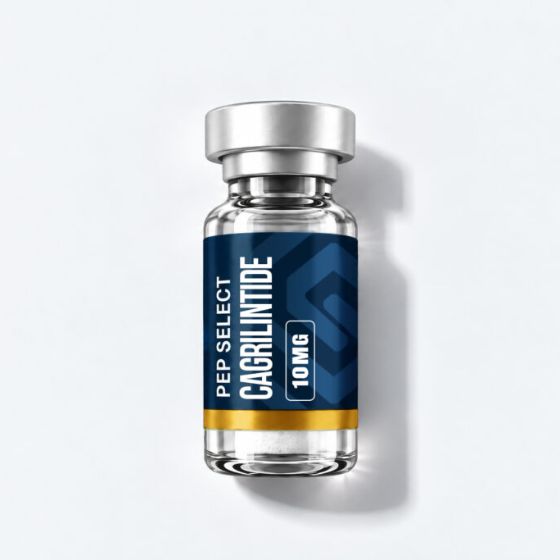
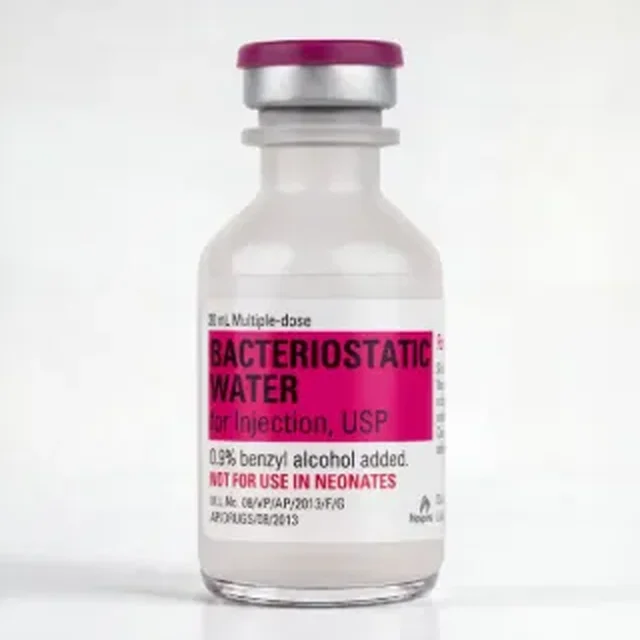
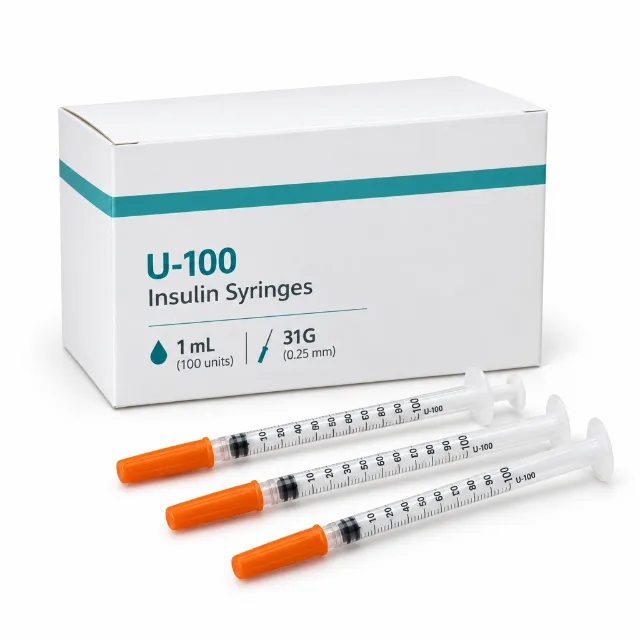
Why the vial has to be mixed. It ships as a dry powder. You add bacteriostatic waterbacteriostatic waterSterile water with a little benzyl alcohol that stops bacteria growing, so a mixed vial lasts days or weeks. Often called BAC water., and the amount you add decides how many unitsunitsMarks on an insulin syringe. On a U-100 syringe, 100 units = 1 mL. How many units equal a dose depends on how much water was added. on the syringe equal one dose. The calculator does that math.
SubcutaneoussubcutaneousUnder the skin, into the fat layer. The usual route for peptide injections. Often shortened to sub-Q. injection, Once weekly, same day. Subcutaneous means into the fat layer just under the skin. It uses a small insulin syringe. Any word with a dotted underline on this page opens a short definition.
Dosage guidelines
Once a week, on the same day. The dose starts at 0.25 mg and goes up every 4 weeks, to 2.4 mg.
The doses below come from published reference protocols and, where they exist, the human trials. Tap a row to load it into the calculator.
Figures reviewed against their sources in October 2026. Where a trial or approved label sets a schedule, it is shown first; where a label sets one fixed dose, the FAQ below says so.
Standard titration. Starts at 0.25 mg and goes up every 4 weeks: 0.25, 0.5, 1.0, 1.7, then 2.4 mg. Protocols hold a step 4 more weeks when side effects are strong.
The REDEFINE trial schedule · 0.25 → 0.5 → 1.0 → 1.7 → 2.4 mg, once weekly, same day · Ongoing; up every 4 weeks, with 2.4 mg as maintenance from week 17
| Step | Weeks | Weekly dose | Draw to |
|---|---|---|---|
| 1 | Weeks 1–4 | 0.25 mg (250 mcg) | 5 units |
| 2 | Weeks 5–8 | 0.5 mg (500 mcg) | 10 units |
| 3 | Weeks 9–12 | 1 mg (1,000 mcg) | 20 units |
| 4 | Weeks 13–16 | 1.75 mg (1,750 mcg) rounded to the nearest 5-unit mark; the source says 1.7 mg | 35 units |
| 5 | Weeks 17+ | 2.5 mg (2,500 mcg) rounded to the nearest 5-unit mark; the source says 2.4 mg | 50 units |
Doses marked “between 5-unit marks” sit between the 5-unit lines on a 1 mL syringe; the 1-unit lines on a 0.5 mL or 0.3 mL syringe make them easier to read.
Units are for a 10 mg vial mixed with 2 mL of water. Change the vial in the calculator
Full protocol details
Mixing in the protocols: 10 mg vial + 2 mL bacteriostatic water · 5 mg/mL. 0.25 mg = 5 units; 0.5 mg = 10 units; 1.0 mg = 20 units; 1.7 mg = 34 units; 2.4 mg = 48 units. At 2.4 mg a week, one vial lasts about 4 weeks. Bacteriostatic water only, never mixed with other peptides..
Standard titration
The REDEFINE trial schedule
- Dose
- 0.25 → 0.5 → 1.0 → 1.7 → 2.4 mg
- How often
- Once weekly, same day
- Timing
- None stated
- Route
- Subcutaneous
- How long
- Ongoing; up every 4 weeks, with 2.4 mg as maintenance from week 17
- Break
- No off-period stated
0.25 mg is 250 mcg. The titration is not rushed, and a lower dose that works is described as fine to stay on. With strong side effects, protocols hold the dose another 4 weeks.
Added to a GLP-1 drug
Semaglutide, tirzepatide or retatrutide
- Dose
- 0.25 mg, titrated as above to 2.4 mg
- How often
- Once weekly
- Timing
- Same day as the GLP-1 drug is fine
- Route
- Subcutaneous, as a separate injection at a different site
- How long
- Ongoing
When added to an existing GLP-1 dose, that dose stays unchanged and cagrilintide starts at 0.25 mg. When both start together, each follows its own titration. It needs a different pH and is described as incompatible with other peptides in the same vial.
Cycle
Ongoing; up every 4 weeks, with 2.4 mg as maintenance from week 17; No off-period stated
When a step up happens
User reports describe stepping up only after progress has stalled for two weeks or more, and only if the previous step was tolerated. Everyone is different.
Timing: None stated.
Peptide calculator
Already filled with this vial. Change anything you like.
How much is in your vial?
Check the label. The most common strengths:
Every 10 units = 0.5 mg.
5 units. 2 mL of BAC water
How the vial is mixed
The powder has to be dissolved in bacteriostatic (BAC) water before use. For a 10 mg vial this page uses 2 mL, which puts the usual dose on a round syringe mark: every 10 units is 0.5 mg.
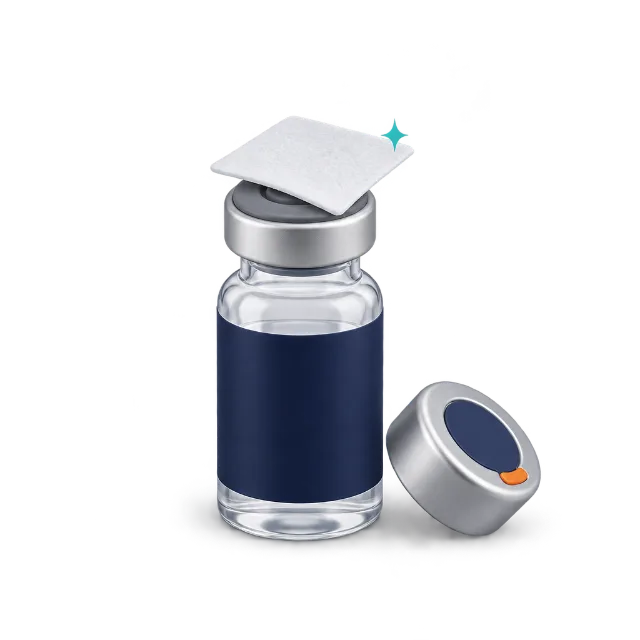 STEP 1Wipe both topsAlcohol pad on the peptide vial and the BAC water vial.
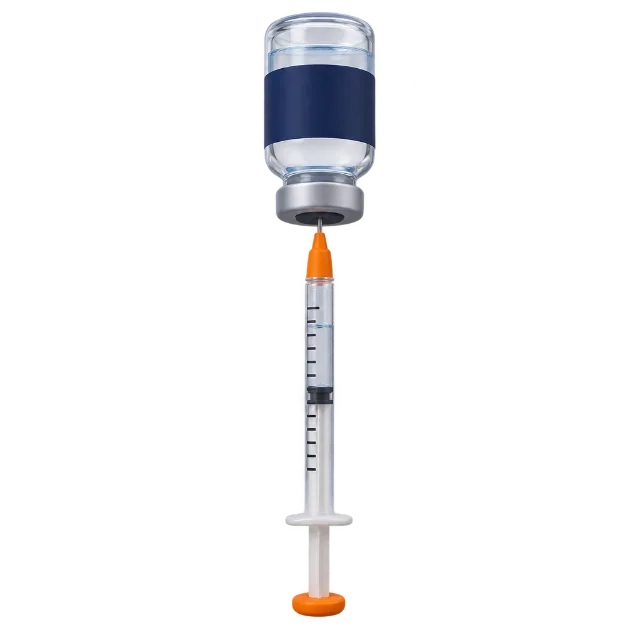 STEP 2Draw 2 mL of waterThat’s 2 full 1 mL syringes.
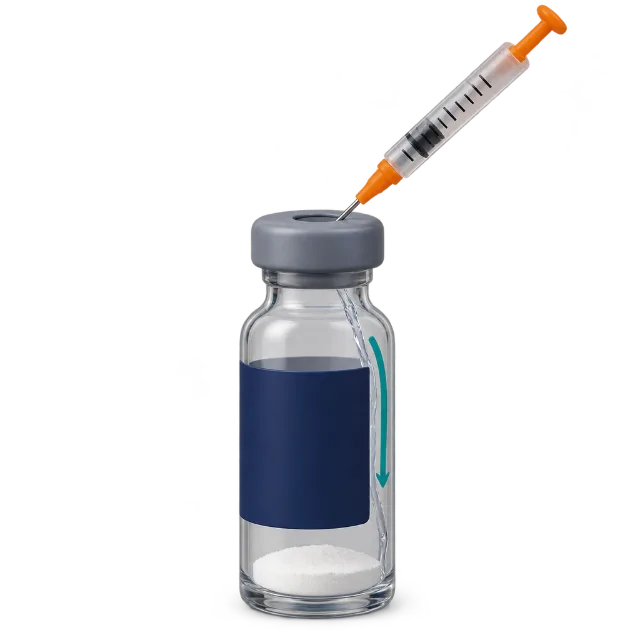 STEP 3Add it slowlyAim at the glass wall, not at the powder.
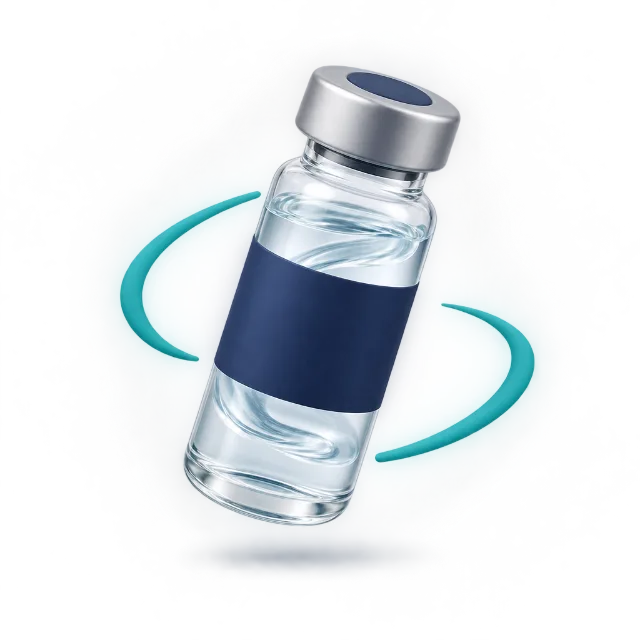 STEP 4Swirl, don’t shakeRoll gently until clear. Refrigerate after.
What to watch for
- Nausea, the most common side effectside effectAn unwanted effect that happens alongside the intended one., plus vomiting, constipation or diarrheaStudied in humans
- Stronger stomach side effects when paired with a GLP-1glp-1A gut hormone that affects appetite and blood sugar. Several weight-management compounds act on its receptor. drug, mostly while the dose is going upStudied in humans
- Injection-site reactions and tirednessStudied in humans
- Mild low blood sugar, more so alongside a GLP-1 drugStudied in humans
- Long-term safety, which is still being studiedUnknown
Not for anyone who is pregnant or breastfeeding, or who has had pancreatitis. Talk to a doctor first, especially with gallbladder or kidney disease, or alongside insulin.
Reasons to get medical help right away: vomiting that won’t stop, severe stomach pain, signs of an allergic reaction, severe dehydration, or low blood sugar with symptoms.
Full side-effect list and who should avoid it
In published research
- Similar to GLP-1 drugs, and stronger when combined, especially during titration
- Common: nausea (the most common), vomiting, constipation or diarrhea, stomach discomfort, low appetite, feeling overfull, injection-site reactions, tiredness
- Less common: headache, dizziness, mild low blood sugar (more so with a GLP-1 drug)
- Long-term safety is still being studied
Not for
- Pregnancy or breastfeeding (not studied)
- History of pancreatitis, until more is known
Use caution with
- Gallbladder disease
- Gastroparesis or other gut motility disorders
- Kidney disease
- Type 1 diabetes (not studied)
- Insulin or sulfonylureas, which may need lower doses
- Oral drugs, whose absorption slower stomach emptying can affect
- Reasons to contact a doctor: persistent vomiting, severe stomach pain (possible pancreatitis or gallbladder trouble), signs of allergy, severe dehydration, blood sugar below 70 mg/dL with symptoms
How the body handles it
- Half-life about 7 to 8 days, so dosed weekly
- Natural amylin lasts only minutes
Supplies
What 12 weeks of the schedule above takes, counted dose by dose.
By clicking this link, WikiPep may receive a commission.
Stacking
What the community pairs with cagrilintide, and why. Only the pairing with semaglutide has been tested in trials.
- SemaglutideStudied in humans
Tested together as CagriSema. Each acts on a different hunger signal, and together they gave more weight loss than semaglutide alone.
- RetatrutideReported by users
Retatrutide’s appetite effect is weaker than semaglutide’s, so hunger can come back. Cagrilintide adds a fullness signal retatrutide doesn’t act on.
- TirzepatideReported by users
Tirzepatide doesn’t act on amylin, so cagrilintide is described as a logical add-on for fullness.
Go deeper
Every study, community report and source behind this page.
What the studies show8 findings, each with its evidence label
Status, October 2026. Investigational and not approved; Novo Nordisk filed CagriSema (cagrilintide 2.4 mg + semaglutide 2.4 mg) with the FDA on Dec 18 2025, a decision is expected in Q4 2026 and none had been reported as of October 2026, and cagrilintide alone has not been filed. Source
How it works
GLP-1glp-1A gut hormone that affects appetite and blood sugar. Several weight-management compounds act on its receptor. and amylin are described as working in two different brain regions with two different jobs. GLP-1 acts mainly in the hypothalamus, shaping the drive to start eating and food thoughts between meals. Amylin acts in a brainstem area called the area postrema and governs when to stop during a meal. Amylin-responsive neurons are described as lacking GLP-1 receptors, which would mean tolerance to a GLP-1 drug does not carry over.
One proposed idea, without a cited study, is "amylin resistance": insulin resistance raises insulin and amylin levels, amylin receptors are turned down in response, and the fullness signal weakens. Cagrilintide's stronger, longer signal is described as getting through anyway.
Like amylin itself, it also slows stomach emptying. In human studies, amylin and drugs like it slowed stomach emptying and increased the feeling of fullness.
This is why it comes up with retatrutide. Retatrutide's GLP-1 action is weaker than semaglutide's, so hunger can return, and cagrilintide adds a pathway retatrutide does not touch. That pairing has not been studied.
Benefits
Each one carries an evidence label, so you can see how much is actually known.
With semaglutide (CagriSema)
In REDEFINE 1, CagriSema gave 20.4% average weight loss at 68 weeks. 60% lost at least 20% and 23% at least 30%. source
On its own
In a phase 2phase 2A mid-stage human trial that tests dose and early effect in hundreds of people. Phase 3 confirms results in thousands. trial, 4.5 mg weekly gave 10.8% weight loss at 26 weeks, more than liraglutide 3.0 mg (9.0%). source
Blood sugar
In REDEFINE 2, in adults with type 2 diabetes, 73.5% on CagriSema reached HbA1c of 6.5% or lower, against 15.9% on placeboplaceboAn inactive version given to some trial participants so the real effect can be measured fairly.. source
With retatrutide or tirzepatide
No trial exists. The case rests on mechanism and user reports.
What the science shows
Phase 2, on its own (human, 26 weeks)
Studied in humans706 participants with obesity. Weight loss was 6.0% on 0.3 mg, 9.7% on 2.4 mg and 10.8% on 4.5 mg, against 3.0% on placeboplaceboAn inactive version given to some trial participants so the real effect can be measured fairly. and 9.0% on liraglutide 3.0 mg. source
Phase 1b, with semaglutide (human, 20 weeks)
Studied in humansCagrilintide 2.4 mg plus semaglutide 2.4 mg gave 17.1% weight loss, against about 10% on semaglutide alone. source
REDEFINE 1 (human, phase 3, 68 weeks)
Studied in humans3,417 adults without diabetes. CagriSema −20.4% (60% lost at least 20%, 23% at least 30%), semaglutide alone −14.9%, placebo −3.0%. Among people who took every dose, −22.7%. 56.4% were no longer classed as having obesity, and 88% of those with prediabetes returned to normal blood sugar. source
REDEFINE 2, type 2 diabetes (human, phase 3, 68 weeks)
Studied in humans1,206 adults with type 2 diabetes. CagriSema −13.7% vs −3.4% on placebo, and 73.5% vs 15.9% reached HbA1c of 6.5% or lower. People with type 2 diabetes lose less weight across every trial in this drug class. source
What the community reports3 user reports, a timeline and 3 pairings
What to expect
Mild or no change in appetite; any stomach upset is usually mild.
Reported by usersNoticeable appetite suppression and smaller portions. Stomach effects may rise briefly.
Reported by usersStrong suppression for most, with much less food noise. Protein intake is the thing described as slipping here.
Reported by usersThe full effect, with steady loss where nutrition and training are in place.
Reported by usersMostly described as an add-on for people already on semaglutide, tirzepatide or retatrutide. A protein warning runs through every protocol: with strong appetite suppression the scale drops fast in weeks 1 to 4, strength drops around months 2 to 3, and too little protein is described as ending in a "skinny fat" result, a slower metabolism and easier regain. The rule described is protein first at every meal, tracked rather than guessed, at 1 g per pound of body weight a day.
What people report
Gathered from user communities. Anecdotal: useful for what to expect, not proof.
Appetite on top of a GLP-1 drug
Described as filling the gap when hunger returns on retatrutide, and as a logical add-on to tirzepatide, which does not act on amylin.
Fullness during meals
Smaller portions and stopping sooner, with much less food noise at the higher steps.
Stomach and gut
Side effects are described as stronger when it is combined with a GLP-1glp-1A gut hormone that affects appetite and blood sugar. Several weight-management compounds act on its receptor. drug, especially during titrationtitrationStepping a dose up (or down) gradually over time, every few weeks (every four weeks in the GLP-1 drug trials), instead of starting at the full amount.. Smaller meals, less greasy, fried or spicy food, and ginger tea for nausea are what users describe.
Stacking
How it is described alongside other compounds.
Semaglutide
The studied pairing, as CagriSema: 20.4% weight loss in REDEFINE 1.
Retatrutide
Described as covering retatrutide's weaker GLP-1 appetite effect. Unstudied.
Tirzepatide
Tirzepatide does not act on amylin, so the pairing is described as a logical add-on. Unstudied.
Common questions7 questions
Common questions
Is it approved?
No. Cagrilintide is investigational. CagriSema, its combination with semaglutide, was filed with the FDA in December 2025, with a decision expected in late 2026. Cagrilintide alone has not been filed.
Why pair it with a GLP-1 drug?
The two hormones are described as acting in different brain regions: GLP-1 on the drive to eat, amylin on fullness during a meal. In REDEFINE 1, the combination with semaglutide gave 20.4% vs 14.9% for semaglutide alone.
Can it share a vial with semaglutide or retatrutide?
No. It needs a different pH and is described as incompatible with other peptides in one vial. It goes in as a separate injection.
How is it stored?
Powder frozen at −20 °C or refrigerated at 2–8 °C, away from light. Once mixed, it is kept at 2–8 °C, not frozen, away from light, and used within 28 days. Cloudy or discolored solution is discarded.
How long does one vial last?
A 10 mg vial at the 2.4 mg maintenance dose lasts about 4 weeks.
What does “minimum effective dose” mean?
It is the lowest dose that still produces the effect someone is after. User reports describe starting there and staying there for as long as it keeps working, rather than climbing toward the top of the range. Side effects tend to rise with dose, and the top of each range on this page is a ceiling people report, not a target.
When does the dose go up?
In the trials, the dose went up on a fixed schedule, because a trial has to treat everyone the same way. User reports describe a different pattern outside trials: staying on a dose while it is still working, and moving up only after progress has stalled for two weeks or more and side effects have settled. There is no prize for getting to the top dose fast. These are not quick fixes: most of what people report builds over weeks, not days.
Source material4 studies and documents
References
- Lau DCW, et al. Lancet. 2021. www.thelancet.com/journals/lancet/article/PIIS01…
- Enebo LB, et al. Lancet. 2021. www.thelancet.com/journals/lancet/article/PIIS01…
- Garvey WT, et al. N Engl J Med. 2025. www.nejm.org/doi/full/10.1056/NEJMoa2502081…
- Davies MJ, et al. N Engl J Med. 2025. www.nejm.org/doi/abs/10.1056/NEJMoa2502082…
Related
What is Cagrilintide?
Cagrilintide (AM833) is a synthetic analog of amylin. The body's own amylin lasts minutes; cagrilintide lasts 7 to 8 days, so it is injected once a week. It comes from Novo Nordisk and is not approved. The studied combination is with semaglutide, as CagriSema (cagrilintide 2.4 mg plus semaglutide 2.4 mg). Novo Nordisk filed CagriSema with the FDA on December 18, 2025, with a decision expected in the fourth quarter of 2026. Cagrilintide on its own has not been filed.
What people look into Cagrilintide for
Every line carries an evidence label, so you can see how much is actually known.
With semaglutide (CagriSema): In REDEFINE 1, CagriSema gave 20.4% average weight loss at 68 weeks. 60% lost at least 20% and 23% at least 30%.source
Studied in humansOn its own: In a phase 2phase 2A mid-stage human trial that tests dose and early effect in hundreds of people. Phase 3 confirms results in thousands. trial, 4.5 mg weekly gave 10.8% weight loss at 26 weeks, more than liraglutide 3.0 mg (9.0%).source
Studied in humansBlood sugar: In REDEFINE 2, in adults with type 2 diabetes, 73.5% on CagriSema reached HbA1c of 6.5% or lower, against 15.9% on placeboplaceboAn inactive version given to some trial participants so the real effect can be measured fairly..source
Studied in humansWith retatrutide or tirzepatide: No trial exists. The case rests on mechanism and user reports.
Reported by usersMix and measure: a 10 mg vial
Go deeper
How it works, in plain words
GLP-1glp-1A gut hormone that affects appetite and blood sugar. Several weight-management compounds act on its receptor. and amylin are described as working in two different brain regions with two different jobs. GLP-1 acts mainly in the hypothalamus, shaping the drive to start eating and food thoughts between meals. Amylin acts in a brainstem area called the area postrema and governs when to stop during a meal. Amylin-responsive neurons are described as lacking GLP-1 receptors, which would mean tolerance to a GLP-1 drug does not carry over.
What did the study measure?
No single study is featured for Cagrilintide; the human trials are linked from the uses above.
Sources
Side effects and who should avoid it
Side effects and limits, stated plainly. If anything here applies to you, talk to a doctor first.