Retatrutide
Retatrutide is a once-a-week injection being tested for weight loss. Eli Lilly makes it, and it is not approved yet. It acts like three natural hormones that help control hunger and blood sugar. Tirzepatide acts like two of them, and semaglutide like one.
What it’s studied for
- Weight lossStudied in humans
In the biggest trial so far, people on the top dose lost about a quarter of their body weight on average over 80 weeks. source
- Liver fatStudied in humans
In a smaller trial, liver fat dropped by more than 80% in 24 weeks on the top doses. source
- Blood sugar and heart markersStudied in humans
Blood sugar, blood pressure and cholesterol improved in trials. source
2 more uses studied
- Knee painStudied in humans
In people with obesity and knee arthritis, pain scores dropped by up to three quarters. source
- Calories burned at restStudied in animals or lab
Animal and lab studies of similar triple-agonist molecules suggest it may raise the calories burned at rest. There is no human number yet. source
 New here? Three things worth knowing first
What’s a peptidepeptideA short chain of amino acids. Proteins are long chains; peptides are short ones, usually under 50 amino acids.? A short chain of amino acids, the building blocks of protein. Many act like messengers in the body.
Why the vial has to be mixed. It ships as a dry powder. You add bacteriostatic waterbacteriostatic waterSterile water with a little benzyl alcohol that stops bacteria growing, so a mixed vial lasts days or weeks. Often called BAC water., and the amount you add decides how many unitsunitsMarks on an insulin syringe. On a U-100 syringe, 100 units = 1 mL. How many units equal a dose depends on how much water was added. on the syringe equal one dose. The calculator does that math.
SubcutaneoussubcutaneousUnder the skin, into the fat layer. The usual route for peptide injections. Often shortened to sub-Q. injection, Once weekly, same day. Subcutaneous means into the fat layer just under the skin. It uses a small insulin syringe. Any word with a dotted underline on this page opens a short definition.
Dosage guidelines
Once a week, on the same day. In the trials, the dose started low and went up on a fixed schedule.
The doses below come from published reference protocols and, where they exist, the human trials. Tap a row to load it into the calculator.
Figures reviewed against their sources in October 2026. Where a trial or approved label sets a schedule, it is shown first; where a label sets one fixed dose, the FAQ below says so.
Standard titration. Goes up every 4 weeks: 2, 4, 8, then 12 mg. Protocols stay on a step longer when side effects are rough.
The phase 2 trial design · 2 → 4 → 8 → 12 mg, once weekly, same day · Phase 2 ran 48 weeks and phase 3 up to 80; most protocols run to goal weight
| Step | Weeks | Weekly dose | Draw to |
|---|---|---|---|
| 1 | Weeks 1–4 | 2 mg (2,000 mcg) | 20 units |
| 2 | Weeks 5–8 | 4 mg (4,000 mcg) | 40 units |
| 3 | Weeks 9–12 | 8 mg (8,000 mcg) | 80 units |
| 4 | Weeks 13+ | 12 mg (12,000 mcg) | 120 units split into two draws of 60 units |
Doses marked “between 5-unit marks” sit between the 5-unit lines on a 1 mL syringe; the 1-unit lines on a 0.5 mL or 0.3 mL syringe make them easier to read.
Over 100 units? That’s more than a 1 mL syringe holds, so protocols split the dose into equal draws. Less water makes the mix stronger: a 30 mg vial mixed with 2.5 mL puts 12 mg at 100 units.
Units are for a 30 mg vial mixed with 3 mL of water. Change the vial in the calculator
Full protocol details
Other protocols described
- Moderate target. For a 15–20% weight-loss goal, protocols stop climbing at 4 to 8 mg.
- Higher target. For a goal of 20% or more, protocols go on to 8 to 12 mg. In phase 2, going from 8 to 12 mg added about 1.5 points of weight loss.
- Split dosing. Some split the weekly dose in two, like 1 mg twice a week instead of 2 mg once. It is described as easing stomach upset.
Standard titration
The phase 2 trial design
- Dose
- 2 → 4 → 8 → 12 mg
- How often
- Once weekly, same day
- Timing
- No fasting required
- Route
- Subcutaneous
- How long
- Phase 2 ran 48 weeks and phase 3 up to 80; most protocols run to goal weight
- Break
- No off-period stated
Starting at 2 mg rather than 4 mg is described as easier to tolerate. With rough side effects, protocols hold the dose another 4 weeks; pushing through severe nausea is described as gaining nothing. 12 mg is the maximum.
Moderate target
A 15–20% weight-loss goal
- Dose
- 4–8 mg
- How often
- Once weekly
- Route
- Subcutaneous
- How long
- To goal
Reached through the standard titration. In phase 2 at 48 weeks, 4 mg gave about 17% and 8 mg about 23%.
Higher target
A goal of 20% or more
- Dose
- 8–12 mg
- How often
- Once weekly
- Route
- Subcutaneous
- How long
- To goal
Returns shrink at the top: 4 to 8 mg added about 5 points of weight loss in phase 2, and 8 to 12 mg about 1.5.
Split dosing
Smoothing peaks
- Dose
- Weekly dose split in two, e.g. 1 mg twice a week instead of 2 mg once
- How often
- Twice weekly
- Route
- Subcutaneous
The total weekly dose sets the average steady level, so it stays the same with lower peaks. Described as helping stomach side effects and peak-related skin sensitivity. This is not microdosing (under 1/100th of a working dose), which is described as making no sense for retatrutide.
Cycle
Phase 2 ran 48 weeks and phase 3 up to 80; most protocols run to goal weight; No off-period stated
When a step up happens
User reports describe stepping up only after progress has stalled for two weeks or more, and only if the previous step was tolerated. Everyone is different.
Timing: No fasting required.
Peptide calculator
Already filled with this vial. Change anything you like.
How much is in your vial?
Check the label. The most common strengths:
Every 10 units = 1 mg.
20 units. 3 mL of BAC water
How the vial is mixed
The powder has to be dissolved in bacteriostatic (BAC) water before use. For a 30 mg vial this page uses 3 mL, which puts the usual dose on a round syringe mark: every 10 units is 1 mg.
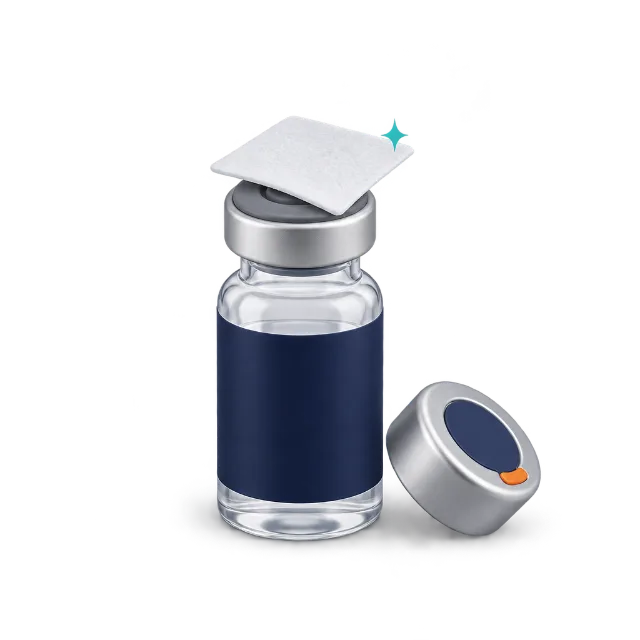 STEP 1Wipe both topsAlcohol pad on the peptide vial and the BAC water vial.
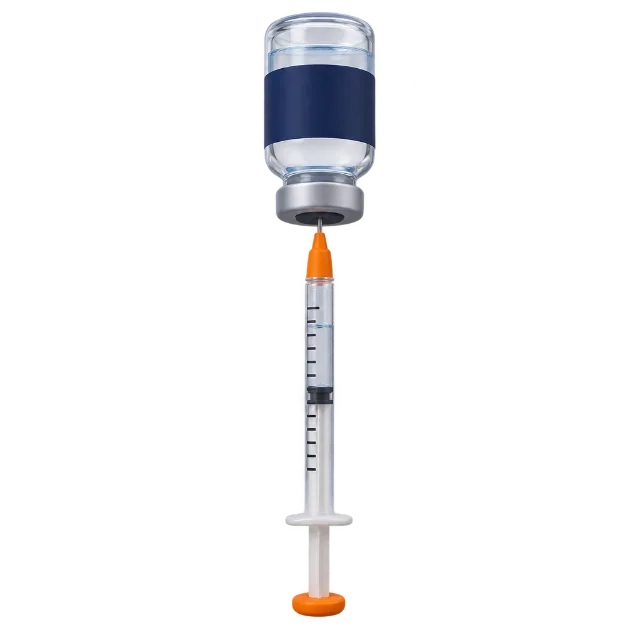 STEP 2Draw 3 mL of waterThat’s 3 full 1 mL syringes.
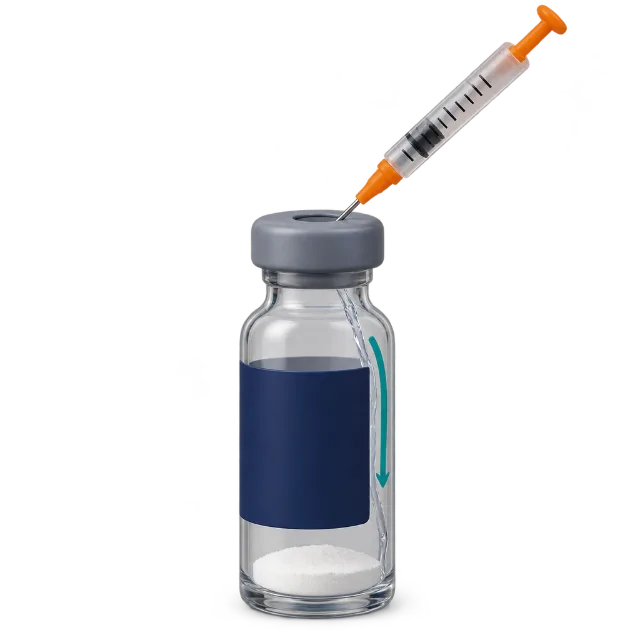 STEP 3Add it slowlyAim at the glass wall, not at the powder.
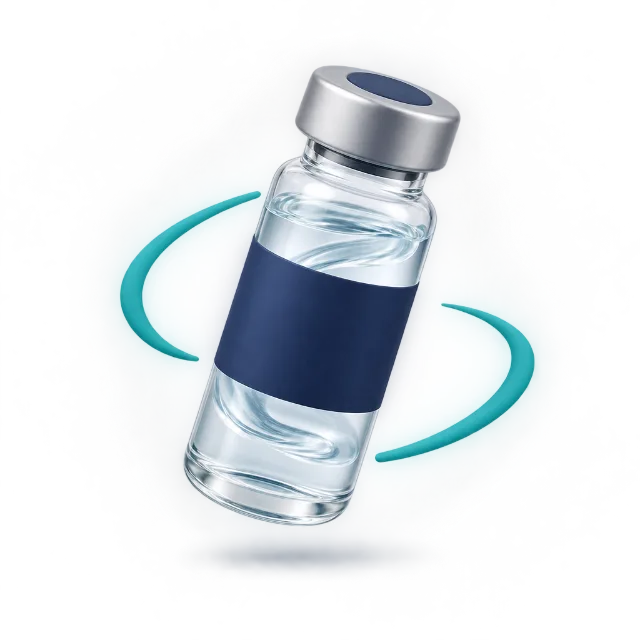 STEP 4Swirl, don’t shakeRoll gently until clear. Refrigerate after.
What to watch for
- Nausea, diarrhea, constipation or vomiting, mostly in the weeks after a dose increaseStudied in humans
- Unusual skin sensations, like tingling or soreness to the touch. More common at higher dosesStudied in humans
- A faster resting heart rateStudied in humans
- Feeling coldReported by users
Not for anyone with a personal or family history of medullary thyroid cancer or MEN 2 (a rare inherited gland condition). The same goes for a history of pancreatitis, or pregnancy and breastfeeding. Talk to a doctor first, especially if you take diabetes or blood-pressure medicine.
Reasons to get medical help right away: vomiting that won’t stop, severe stomach pain, signs of an allergic reaction, a resting heart rate that stays over 100, or skin sensitivity that doesn’t ease.
Full side-effect list and who should avoid it
In published research
- TRIUMPH-1 on 12 mg: nausea 42.4% (placebo 14.8%), diarrhea 32.0% (13.5%), constipation 26.1% (10.9%), vomiting 25.3% (4.8%)
- Phase 2: nausea 25 to 45%, dose-dependent
- Dysesthesia (unusual skin sensations): 12.5% on 12 mg vs 0.9% in TRIUMPH-1; 8.8% (9 mg) and 20.9% (12 mg) vs 0.7% in TRIUMPH-4
- Symptoms of low blood pressure, more common at higher doses, especially with blood-pressure drugs
- Resting heart rate rise, peaking around week 24 and then easing
- Less common: injection-site reactions, tiredness, hair thinning (attributed to rapid loss and undereating)
- One case of pancreatitis in phase 2, which resolved on its own; no thyroid cancer and no severe low blood sugar
- Other drugs in this class cause thyroid C-cell tumors in animal studies; whether this applies to retatrutide or to people is not known
What users report
- Skin sensitivity, worse at night. Users describe trying a lower dose, split dosing, zinc picolinate 15 to 30 mg a day or loratadine 10 mg a day; none is trial-tested
- Feeling cold, with core temperature possibly around 99 °F
- Resting heart rate up about 10 beats per minute
Not for
- Personal or family history of medullary thyroid cancer, or MEN 2
- History of pancreatitis
- Known allergy to the peptide
- Pregnancy or breastfeeding
Use caution with
- Gallbladder disease
- Type 1 diabetes
- Diabetic eye disease (retinopathy)
- Heart rhythm problems
- Gastroparesis or other gut motility disorders
- An active eating disorder
- Insulin or sulfonylureas, which may need large dose cuts
- Oral drugs, whose absorption may change
- Oral contraceptives: a backup method is described during titration
- SGLT2 inhibitors: higher ketoacidosis risk, especially with low-carb eating
- Monitoring described: daily protein, resting heart rate (flagged if consistently over 100), signs of nutrient deficiency, body composition, periodic basic blood panel and lipids
- Reasons to contact a doctor: persistent vomiting, severe stomach pain, signs of allergy, resting heart rate consistently over 100, severe skin sensitivity that does not ease with dose changes
How the body handles it
- Half-life about 6 days, so dosed weekly
- Steady level after about four to five half-lives
- Fatty side chain at lysine-17
- Most sensitive at the GIP receptor, then GLP-1, then glucagon
Supplies
What 12 weeks of the schedule above takes, counted dose by dose.
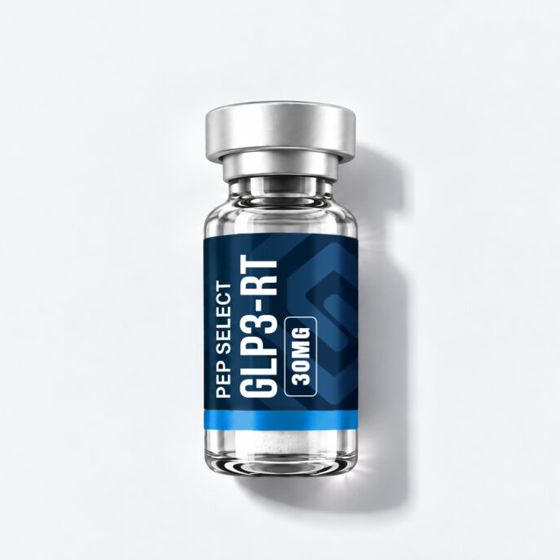
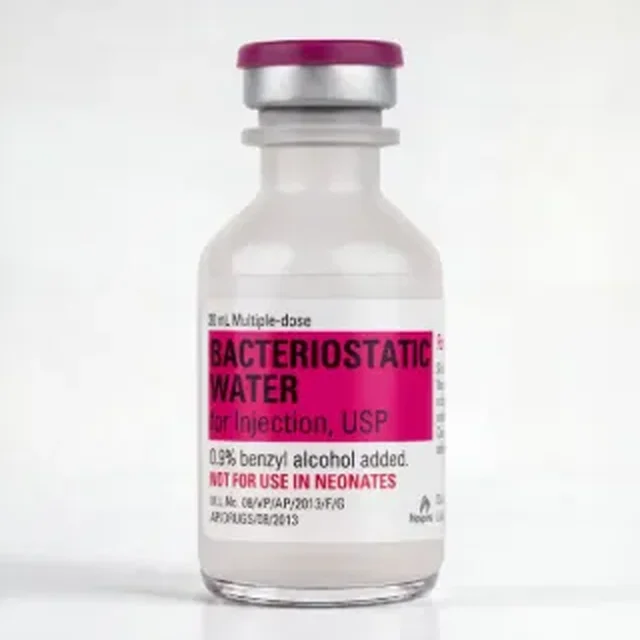
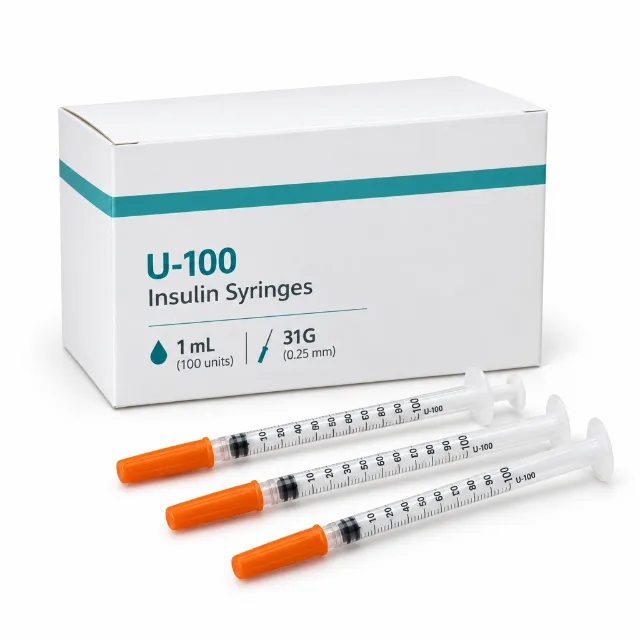
By clicking this link, WikiPep may receive a commission.
Stacking
What the community pairs with retatrutide, and why. None of these pairings has been tested in a trial.
- CagrilintideReported by users
Adds a fullness signal from a different hormone, amylin, that retatrutide doesn’t act on. It’s a separate weekly shot, often given on the same day.
Also used alongside it, with no interactions described: BPC-157 and TB-500, growth-hormone peptides, and testosterone therapy.
Not combined with: Semaglutide or tirzepatide, because they act on the same targets.
Go deeper
Every study, community report and source behind this page.
What the studies show16 findings, each with its evidence label
Status, October 2026. Investigational and not approved anywhere as of October 2026; the phase 3 TRIUMPH-1 trial was published in NEJM on Sep 29, 2026, and Lilly plans to submit a US application in Q1 2027. Source
How it works
GLP-1glp-1A gut hormone that affects appetite and blood sugar. Several weight-management compounds act on its receptor.: acts on the hypothalamus, the brain's appetite thermostat, to strengthen fullness, and slows stomach emptying. In human trials of drugs acting on GLP-1 and GIP, people ate less.
GIP: in lab studies retatrutide is about 9 times more potent at the GIP receptor than natural GIP. GIP is credited with a better insulin response, steadier blood sugar and better handling of nutrients.
Glucagon: the part that sets it apart. In animal and lab studies, glucagon drives fat burning in the liver, raises resting energy use and releases stored fat. In a human trial, liver fat fell by more than 80% on the top doses.
By design its GLP-1 action is weaker than semaglutide's, so hunger is described as returning more than on GLP-1-only drugs. Fat burning in the liver cannot be felt, which is why judging retatrutide by appetite alone is described as underselling it.
The three receptors respond along a curve, most sensitive to GIP, then GLP-1, then glucagon. In the phase 2phase 2A mid-stage human trial that tests dose and early effect in hundreds of people. Phase 3 confirms results in thousands. liver study, beta-hydroxybutyrate, a marker of fat burning, rose 2 to 3 times above baseline at 4 mg and above, matching the largest fat losses on body scans. "4 mg is where glucagon kicks in" is a simplification of that curve, not a hard threshold.
These fat-burning pathways run on stored fat, not carbohydrate. Low-carb eating raises the body's own glucagon, so the two are described as possibly working together. Moderate low-carb (50 to 100 g a day) is described as a non-issue; ketoacidosis is flagged as a concern with strict keto plus a high dose plus illness, in people with diabetes, and with SGLT2 inhibitor drugs.
Benefits
Each one carries an evidence label, so you can see how much is actually known.
Weight loss
In TRIUMPH-1, average weight change at 80 weeks was −17.6%, −23.7% and −25.0% on 4, 9 and 12 mg vs −3.9% on placeboplaceboAn inactive version given to some trial participants so the real effect can be measured fairly.. In TRIUMPH-4, 12 mg reached −28.7% at 68 weeks, about 71 lb. source
Nearly everyone responded
In phase 2phase 2A mid-stage human trial that tests dose and early effect in hundreds of people. Phase 3 confirms results in thousands., 100% of people on 8 and 12 mg lost at least 5% of body weight. On 12 mg, 93% lost at least 10% and 83% at least 15%. source
Liver fat
In a phase 2a trial, liver fat fell 82.4% on 12 mg and 81.4% on 8 mg at 24 weeks. 86% on 12 mg reached normal liver fat (under 5%), against 0% on placebo. source
Blood sugar and metabolic markers
In type 2 diabetes, HbA1c fell by up to 2.02 points on 12 mg. Across three trials, systolic blood pressure fell about 9.9 mmHg, with lower LDL cholesterol and triglycerides. source
Higher resting calorie burn
Credited to the glucagon receptor, based on animal and lab work. No human figure is given. source
Knee osteoarthritis pain
In TRIUMPH-4, in adults with obesity and knee osteoarthritis, knee pain scores (WOMAC) fell by up to 75.8%, and more than 1 in 8 reported no knee pain at all. source
Once-weekly dosing
A half-lifehalf-lifeHow long it takes for half of a compound to leave the body. A longer half-life usually means less frequent dosing. of about 6 days allows one injection a week. source
What the science shows
TRIUMPH-1, obesity without diabetes (human, phase 3, 80 weeks)
Studied in humans2,339 adults with obesity or overweight and at least one weight-related condition, starting at 2 mg and stepping up every 4 weeks. Average weight change, counting everyone randomized: −17.6% (4 mg), −23.7% (9 mg), −25.0% (12 mg), −3.9% placeboplaceboAn inactive version given to some trial participants so the real effect can be measured fairly.. Stopping for side effects: 4.1%, 6.9% and 11.3% vs 4.9%. Smaller groups with knee osteoarthritis and sleep apnea also improved. source
TRIUMPH-4, obesity and knee osteoarthritis (human, phase 3, 68 weeks)
Studied in humansReported by Lilly in December 2025. Weight fell 26.4% on 9 mg and 28.7% on 12 mg vs 2.1% on placebo, and knee pain scores fell by up to 75.8%. Dysesthesia: 8.8% (9 mg) and 20.9% (12 mg) vs 0.7%. Stopping for side effects: 12.2% and 18.2%. source
Phase 2, obesity (human, 48 weeks)
Studied in humans338 adults. Weight fell 8.7%, 17.1%, 22.8% and 24.2% on 1, 4, 8 and 12 mg vs 2.1% on placebo. On 12 mg, about 63% lost at least 20% and about 25% at least 30%, and weight was still falling at week 48. Starting at 2 mg instead of 4 mg gave fewer side effects with similar results. source
Phase 2, type 2 diabetes (human, 36 weeks)
Studied in humans281 adults at 42 US centers. HbA1c at 24 weeks fell 1.39 (4 mg), 1.99 (8 mg) and 2.02 points (12 mg). Weight at 36 weeks fell 16.94% on the top dose vs 3.0% on placebo and 2.02% on dulaglutide. No severe low blood sugar and no deaths. source
Phase 2a, fatty liver (human, 48 weeks)
Studied in humans98 people with at least 10% liver fat. At 24 weeks liver fat changed −42.9% (1 mg), −57.0% (4 mg), −81.4% (8 mg) and −82.4% (12 mg) vs +0.3% on placebo. 86% on 12 mg reached normal levels, against 0%. source
Body composition in type 2 diabetes (human)
Studied in humansFat mass fell 23.2% on 12 mg vs 2.6% on dulaglutide. The share of weight lost as lean tissue was similar to other treatments. source
Meta-analysis of three trials (human)
Studied in humans878 patients. Against comparators: weight −14.33%, BMI −5.38, waist −10.51 cm, fasting glucose −23.51 mg/dL, HbA1c −0.91%, systolic blood pressure −9.88 mmHg. Overall side effects did not differ significantly. source
Structure (lab)
Studied in animals or labImaging of the peptidepeptideA short chain of amino acids. Proteins are long chains; peptides are short ones, usually under 50 amino acids. bound to its receptors showed the first nine amino acids are shared across all three receptors, residues 10 to 21 differ by receptor, and the fatty side chain sits at lysine-17. source
Triple agonism (animal study)
Studied in animals or labThe earlier animal work behind the idea of one molecule acting on the GLP-1glp-1A gut hormone that affects appetite and blood sugar. Several weight-management compounds act on its receptor., GIP and glucagon receptors together. source
What the community reports7 user reports, a timeline and 6 pairings
What to expect
Mild appetite suppression, weaker than on semaglutide or tirzepatide, and possibly mild stomach upset in the first week.
Reported by usersLoss speeds up, around 1.5 to 2 lb a week at moderate doses. Glucagon effects become measurable from 4 mg.
Reported by users1.5 to 2 lb a week or more. Weight was still falling at week 48 in phase 2phase 2A mid-stage human trial that tests dose and early effect in hundreds of people. Phase 3 confirms results in thousands. and at week 68 in TRIUMPH-4.
Studied in humansUnusual skin sensitivity (dysesthesia) in about 9 to 21% depending on dose, possibly through GLP-1glp-1A gut hormone that affects appetite and blood sugar. Several weight-management compounds act on its receptor. receptors in the nervous system.
Studied in humansThe protocols are described for adults with obesity, including people who used semaglutide or tirzepatide before. Former users are described as sometimes seeing results at moderate retatrutide doses that they did not get at the top doses of those drugs.
What people report
Gathered from user communities. Anecdotal: useful for what to expect, not proof.
Weight lost
10 to 20 lb in the first month at 2 mg, partly water and stored carbohydrate; 1.5 to 2 lb a week at working doses; 25 to 30% within a year.
Food matters less
Much less "food noise" and a general indifference to food. Fatty food and alcohol become less appealing, and some set reminders to eat enough. Appetite suppression is described as weaker than on semaglutide.
Stomach and gut
Nausea that improves within about a week at each dose, and constipation in the first week.
Skin, temperature and heart rate
Skin sensitivity in a minority, often worse at night. Feeling cold is widely reported, and resting heart rate up about 10 beats per minute. In trials heart rate peaked around week 24 and then eased.
Common schedule
2 mg for 4 weeks, 4 mg for 4 weeks, then 8 mg and optionally 12 mg. Some split the weekly dose, and many stop at 8 mg.
Pairings
Cagrilintide for extra appetite control; BPC-157, TB-500 and testosterone therapy with no reported issues.
Feeling cold
Feeling cold is commonly described while on retatrutide.
Stacking
How it is described alongside other compounds.
Cagrilintide
The most discussed pairing. Cagrilintide is a long-acting amylin analog that acts on a brainstem area (the area postrema) and is credited with fullness during a meal, alongside the hypothalamic GLP-1 "thermostat". It has not been trialed with retatrutide; the rationale is mechanism only. The cagrilintide schedule described when it is added: 0.25 mg for weeks 1–4, 0.5 mg for weeks 5–8, 1.0 mg for weeks 9–12, 1.7 mg for weeks 13–16, then 2.4 mg from week 17, once weekly, as a separate injection on the same day as retatrutide.
BPC-157 and TB-500
No interaction described.
Growth-hormone peptides (CJC-1295, ipamorelin, sermorelin)
No interaction described. Those peptides keep their own fasting schedule.
Testosterone therapy
No interaction described.
Semaglutide or tirzepatide
Not combined. Where more appetite control is wanted, cagrilintide is the add-on described instead.
Coming from tirzepatide
Protocols start retatrutide at 2 mg on the next scheduled tirzepatide day, whatever the previous dose.
Common questions11 questions
Common questions
Why does hunger feel stronger than on semaglutide?
By design, retatrutide's GLP-1 action is weaker than semaglutide's, and the glucagon effects on fat burning cannot be felt. Users who want more appetite control describe adding cagrilintide.
Is it approved?
No. It is investigational and not approved anywhere. TRIUMPH-1 was published in September 2026, and Lilly plans to submit it to the FDA in the first quarter of 2027.
Does the weight come back after stopping?
There is no published stop-and-follow trial yet. The nutrition, training and sleep habits built while on it are described as what decides it.
Is muscle lost?
In a body-scan study the share of weight lost as lean tissue was similar to other treatments. Protein and resistance training are described as what keeps it low.
Does it need carbs to work?
No. The fat-burning pathways run on stored fat. Ketoacidosis is the caveat, with strict keto plus a high dose plus illness.
When does the glucagon part kick in?
Gradually, along a dose curve. It becomes measurable from about 4 mg, where a fat-burning marker rose 2 to 3 times in the phase 2 liver study.
Can the weekly dose be split?
Protocols describe it, for example 1 mg twice a week instead of 2 mg once. The average level is the same, with lower peaks.
How long do people stay on it?
The trials ran 48, 68 and 80 weeks, and weight was still falling at the end of the 48- and 68-week trials. Most protocols run to goal weight.
What goes alongside it?
The foundation described is 1 g of protein per pound of goal body weight a day, daily walking, resistance training at least 2 to 3 times a week, and good sleep.
What does “minimum effective dose” mean?
It is the lowest dose that still produces the effect someone is after. User reports describe starting there and staying there for as long as it keeps working, rather than climbing toward the top of the range. Side effects tend to rise with dose, and the top of each range on this page is a ceiling people report, not a target.
When does the dose go up?
In the trials, the dose went up on a fixed schedule, because a trial has to treat everyone the same way. User reports describe a different pattern outside trials: staying on a dose while it is still working, and moving up only after progress has stalled for two weeks or more and side effects have settled. There is no prize for getting to the top dose fast. These are not quick fixes: most of what people report builds over weeks, not days.
Source material9 studies and documents
References
- Jastreboff AM, et al. N Engl J Med. 2026. www.nejm.org/doi/full/10.1056/NEJMoa2604169…
- TRIUMPH-4 trial record, NCT05931367. ClinicalTrials.gov. Topline results December 2025. clinicaltrials.gov/study/NCT05931367…
- Jastreboff AM, et al. N Engl J Med. 2023;389(6):514-526. www.nejm.org/doi/full/10.1056/NEJMoa2301972…
- Rosenstock J, et al. Lancet. 2023;402(10401):529-544. pubmed.ncbi.nlm.nih.gov/37385280/…
- Sanyal AJ, et al. Nat Med. 2024;30(7):2037-2048. pubmed.ncbi.nlm.nih.gov/38858523/…
- Coskun T, et al. Lancet Diabetes Endocrinol. 2025;13(8):674-684. pubmed.ncbi.nlm.nih.gov/40609566/…
- Abouelmagd AA, et al. Proc (Bayl Univ Med Cent). 2025;38(3):291-303. pubmed.ncbi.nlm.nih.gov/40291085/…
- Li W, et al. Cell Discov. 2024;10(1):77. pubmed.ncbi.nlm.nih.gov/39019866/…
- Finan B, et al. Nat Med. 2015;21(1):27-36. pubmed.ncbi.nlm.nih.gov/25485909/…
Related
What is Retatrutide?
Retatrutide (LY3437943) is a single synthetic peptidepeptideA short chain of amino acids. Proteins are long chains; peptides are short ones, usually under 50 amino acids. that acts on three receptors: GLP-1glp-1A gut hormone that affects appetite and blood sugar. Several weight-management compounds act on its receptor. and GIP, the two tirzepatide targets, plus glucagon. It is injected under the skin once a week and has a half-lifehalf-lifeHow long it takes for half of a compound to leave the body. A longer half-life usually means less frequent dosing. of about 6 days. It is not approved anywhere. The phase 3phase 3A late-stage human trial in thousands of people, usually the last step before approval. TRIUMPH program has reported results from four trials, starting with TRIUMPH-4 in December 2025. TRIUMPH-1 was published in the New England Journal of Medicine on September 29, 2026. Lilly plans to submit it to the FDA in the first quarter of 2027, as a biologics license application. A rough ladder: semaglutide (one receptor) about 15% weight loss in its main trials, tirzepatide (two) about 20%, retatrutide (three) 24.2% at 48 weeks in phase 2phase 2A mid-stage human trial that tests dose and early effect in hundreds of people. Phase 3 confirms results in thousands. and 25.0% at 80 weeks in TRIUMPH-1. In the peptide market it is often listed as GLP3 or GLP3-RT. That is a product name. There is no GLP-3 hormone or drug class; retatrutide is a GLP-1/GIP/glucagon triple agonist.
GLP-1 + GIP
In human trials, drugs acting on these two receptors slow digestion and send “I’m full” signals to the brain, so people tend to eat less.
+ Glucagon
In animal and lab studies, glucagon nudges the liver to burn stored fat; in a human trial, liver fat fell sharply. This third target is why it’s nicknamed the “triple agonist.”
What people look into Retatrutide for
Every line carries an evidence label, so you can see how much is actually known.
Weight loss: In TRIUMPH-1, average weight change at 80 weeks was −17.6%, −23.7% and −25.0% on 4, 9 and 12 mg vs −3.9% on placeboplaceboAn inactive version given to some trial participants so the real effect can be measured fairly.. In TRIUMPH-4, 12 mg reached −28.7% at 68 weeks, about 71 lb.source
Studied in humansNearly everyone responded: In phase 2phase 2A mid-stage human trial that tests dose and early effect in hundreds of people. Phase 3 confirms results in thousands., 100% of people on 8 and 12 mg lost at least 5% of body weight. On 12 mg, 93% lost at least 10% and 83% at least 15%.source
Studied in humansLiver fat: In a phase 2a trial, liver fat fell 82.4% on 12 mg and 81.4% on 8 mg at 24 weeks. 86% on 12 mg reached normal liver fat (under 5%), against 0% on placebo.source
Studied in humansBlood sugar and metabolic markers: In type 2 diabetes, HbA1c fell by up to 2.02 points on 12 mg. Across three trials, systolic blood pressure fell about 9.9 mmHg, with lower LDL cholesterol and triglycerides.source
Studied in humansHigher resting calorie burn: Credited to the glucagon receptor, based on animal and lab work. No human figure is given.source
Studied in animals or labKnee osteoarthritis pain: In TRIUMPH-4, in adults with obesity and knee osteoarthritis, knee pain scores (WOMAC) fell by up to 75.8%, and more than 1 in 8 reported no knee pain at all.source
Studied in humansOnce-weekly dosing: A half-lifehalf-lifeHow long it takes for half of a compound to leave the body. A longer half-life usually means less frequent dosing. of about 6 days allows one injection a week.source
Studied in humansMix and measure: a 30 mg vial
Go deeper
How it works, in plain words
GLP-1glp-1A gut hormone that affects appetite and blood sugar. Several weight-management compounds act on its receptor.: acts on the hypothalamus, the brain's appetite thermostat, to strengthen fullness, and slows stomach emptying. In human trials of drugs acting on GLP-1 and GIP, people ate less.
What did the study measure?
No single study is featured for Retatrutide; the human trials are linked from the uses above.
Sources
Side effects and who should avoid it
Side effects and limits, stated plainly. If anything here applies to you, talk to a doctor first.