KPV
KPV is a tiny peptide, just three amino acids long, cut from the end of alpha-MSH, a natural hormone. It keeps the hormone’s anti-inflammatory activity but not its effect on skin color. It is not FDA-approved, and there are no human trials yet. Everything published so far comes from animal and lab studies. Because it is so small, it is used as capsules, shots and creams.
What it’s studied for
- Gut inflammationStudied in animals or lab
In animal studies of colitis, KPV by mouth lowered disease severity and inflammation in the colon. Human results may differ. source
- Inflammation elsewhereStudied in animals or lab
In animal studies of skin, joint and airway inflammation, its activity matched or beat alpha-MSH, the hormone it comes from. source
- Skin inflammationStudied in animals or lab
Early lab and animal work describes less skin inflammation, without skin thinning or color change. source
1 more use studied
- GermsStudied in animals or lab
In lab studies it acted against some bacteria and yeast, and helped immune cells kill them. source
 New here? Three things worth knowing first
What’s a peptidepeptideA short chain of amino acids. Proteins are long chains; peptides are short ones, usually under 50 amino acids.? A short chain of amino acids, the building blocks of protein. Many act like messengers in the body.
Why the vial has to be mixed. It ships as a dry powder. You add bacteriostatic waterbacteriostatic waterSterile water with a little benzyl alcohol that stops bacteria growing, so a mixed vial lasts days or weeks. Often called BAC water., and the amount you add decides how many unitsunitsMarks on an insulin syringe. On a U-100 syringe, 100 units = 1 mL. How many units equal a dose depends on how much water was added. on the syringe equal one dose. The calculator does that math.
SubcutaneoussubcutaneousUnder the skin, into the fat layer. The usual route for peptide injections. Often shortened to sub-Q. injection, Once daily. Subcutaneous means into the fat layer just under the skin. It uses a small insulin syringe. Any word with a dotted underline on this page opens a short definition.
Dosage guidelines
Protocols describe 200 to 400 mcg once a day as a shot, or 200 to 500 mcg by mouth once or twice a day. Both run 4 to 8 weeks.
The doses below come from published reference protocols and, where they exist, the human trials. Tap a row to load it into the calculator.
Figures reviewed against their sources in October 2026. Where a trial or approved label sets a schedule, it is shown first; where a label sets one fixed dose, the FAQ below says so.
Subcutaneous protocol. 200 to 400 mcg once a day as a shot under the skin, for 4 to 8 weeks.
Whole-body inflammatory goals · 200–400 mcg, once daily · 4–8 weeks
| Step | Dose per injection | Draw to | |
|---|---|---|---|
| 1 | 200 mcg (0.2 mg) between 5-unit marks | 4 units | |
| 2 | 300 mcg (0.3 mg) between 5-unit marks | 6 units | |
| 3 | 400 mcg (0.4 mg) between 5-unit marks | 8 units |
Doses marked “between 5-unit marks” sit between the 5-unit lines on a 1 mL syringe; the 1-unit lines on a 0.5 mL or 0.3 mL syringe make them easier to read.
Units are for a 10 mg vial mixed with 2 mL of water. Change the vial in the calculator
Full protocol details
Other protocols described
- Topical protocol. A cream with 0.01 to 0.1% KPV, applied twice a day as needed.
Mixing in the protocols: 5 mg vial + 1 mL bacteriostatic water · 250 mcg per 5 units; refrigerated after mixing.
Other forms: Because it is so small, KPV is used by mouth (capsule or solution), by injection under the skin and in creams at 0.01–0.1%. Studies used nanomolar concentrations in cells and oral doses in animal colitis models; there is no human dose-finding by any route.
Subcutaneous protocol
Whole-body inflammatory goals
- Dose
- 200–400 mcg
- How often
- Once daily
- Timing
- No fasting needed
- Route
- Subcutaneous
- How long
- 4–8 weeks
Oral protocol
Gut-focused use
- Dose
- 200–500 mcg
- How often
- Once or twice daily
- Timing
- No fasting needed
- Route
- Oral capsule or solution
- How long
- 4–8 weeks; extended with monitoring
The PepT1 uptake route is the reasoning given for oral use in the gut.
Topical protocol
Skin
- Dose
- 0.01–0.1% in a cream base
- How often
- Twice daily
- Route
- Topical
- How long
- As needed
Described as penetrating better on broken or inflamed skin.
Cycle
4–8 weeks
When a step up happens
User reports describe stepping up only after progress has stalled for two weeks or more, and only if the previous step was tolerated. Everyone is different.
Timing: No fasting needed.
Peptide calculator
Already filled with this vial. Change anything you like.
How much is in your vial?
Check the label. The most common strengths:
Every 10 units = 0.4 mg.
5 units. 2.5 mL of BAC water
How the vial is mixed
The powder has to be dissolved in bacteriostatic (BAC) water before use. For a 10 mg vial this page uses 2 mL, which puts the usual dose on a round syringe mark: every 10 units is 500 mcg.
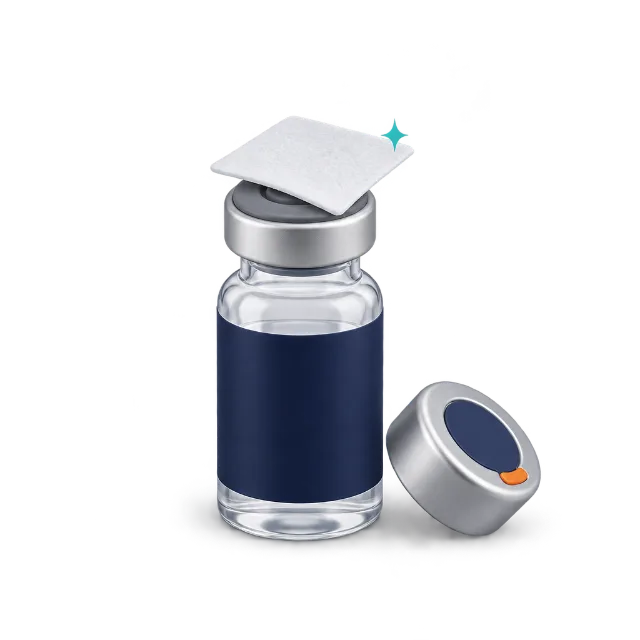 STEP 1Wipe both topsAlcohol pad on the peptide vial and the BAC water vial.
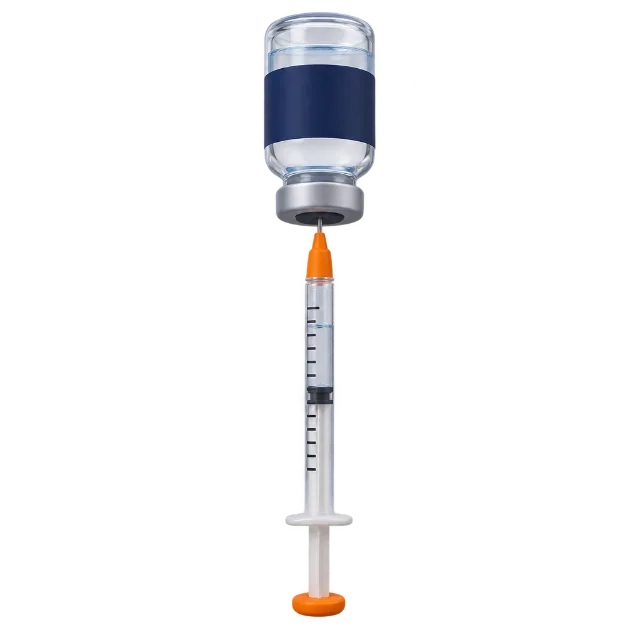 STEP 2Draw 2 mL of waterThat’s 2 full 1 mL syringes.
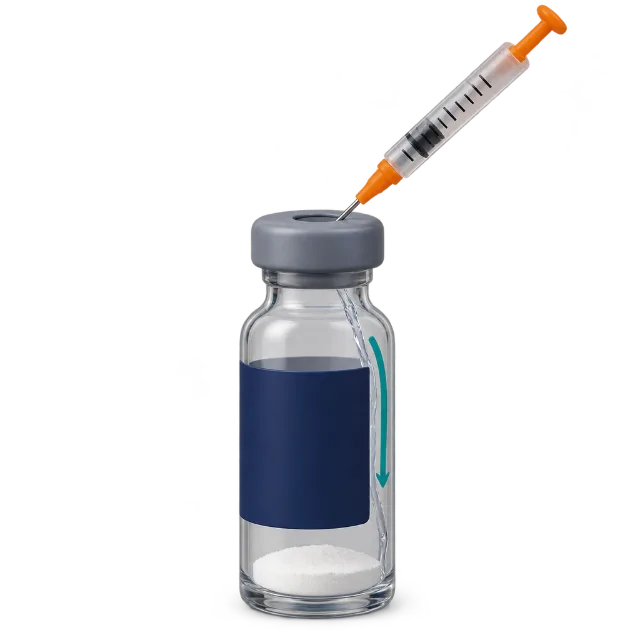 STEP 3Add it slowlyAim at the glass wall, not at the powder.
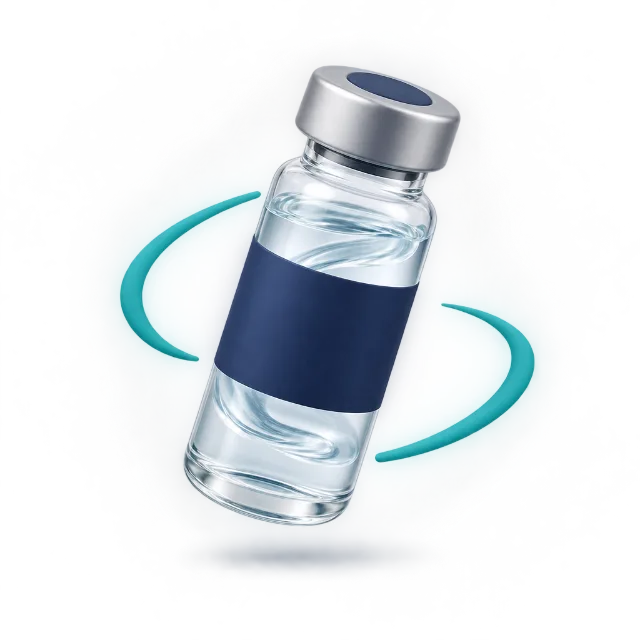 STEP 4Swirl, don’t shakeRoll gently until clear. Refrigerate after.
What to watch for
- Mild irritation where the shot goes inReported by users
- Brief redness from creamsReported by users
- An upset stomach at higher oral dosesReported by users
- No human safety data, so long-term effects are unknownUnknown
Not for anyone allergic to it. It is also not for pregnancy or breastfeeding, since there is no data on either. Talk to a doctor first, especially with active cancer, an autoimmune condition, or medicine that suppresses the immune system.
Reasons to get medical help right away: trouble breathing, swelling of the face or throat, chest pain, fainting, or any severe or worrying reaction.
Full side-effect list and who should avoid it
In published research
- Very well tolerated in animals, with no significant adverse effects
- Low toxicity in preclinical work (2008 review)
- No human safety data; long-term human safety is unknown
What users report
- Mild injection-site irritation
- Brief redness with topical use
- Occasional stomach upset at higher oral doses
- Most users report few or no side effects
Not for
- Known allergy to the peptide
- Pregnancy or breastfeeding (no reproductive data in any species)
Use caution with
- Active cancer
- Immunosuppressive medicines
- Autoimmune conditions
- Protocols for inflammatory conditions describe tracking CRP and ESR, symptom tracking for gut use, and regular physician follow-up
How the body handles it
- Molecular weight about 325 daltons
- Active at nanomolar concentrations in lab studies
- Taken into cells by the PepT1 transporter
- No half-life has been published
Supplies
What 12 weeks of the schedule above takes, counted dose by dose.
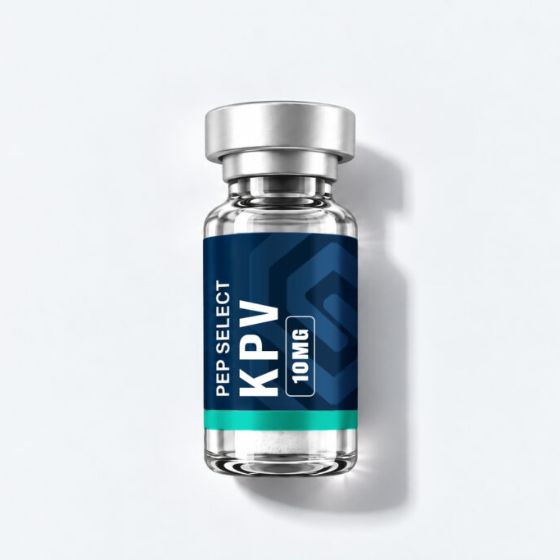
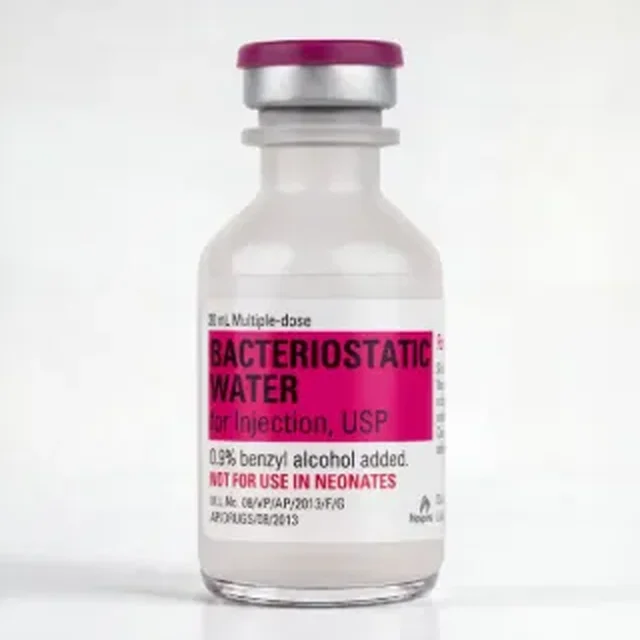
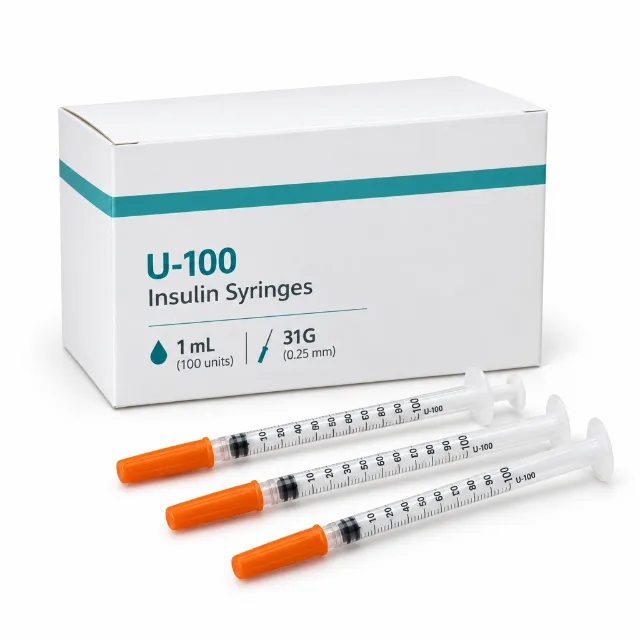
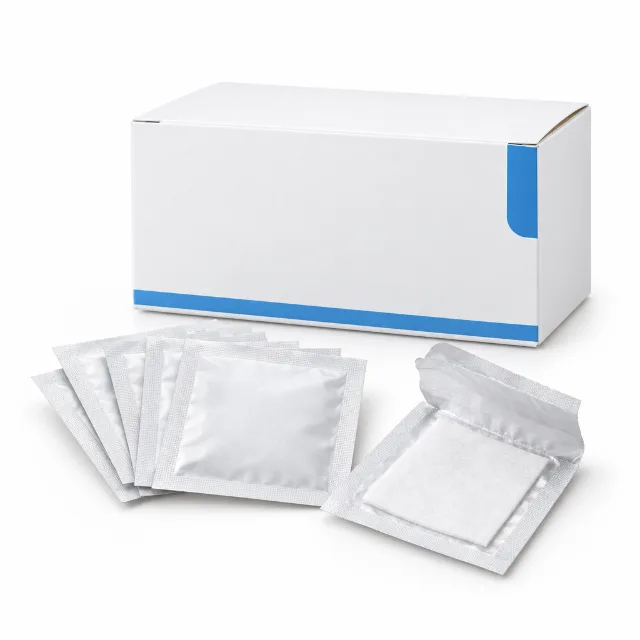
By clicking this link, WikiPep may receive a commission.
Stacking
The community pairs KPV mostly with BPC-157 for the gut, one for calming inflammation and one for repair. That pairing has not been studied.
- BPC-157Reported by users
KPV is used for calming inflammation and BPC-157 for repair. Both are often taken by mouth for the gut.
Also used alongside it, with no interactions described: GLP-1 drugs such as semaglutide and retatrutide, growth-hormone peptides, and testosterone therapy.
Talk to a doctor before combining it with: medicines that suppress the immune system.
Go deeper
Every study, community report and source behind this page.
What the studies show12 findings, each with its evidence label
Status, October 2026. KPV is not FDA-approved and has no human trials; the FDA said on April 15, 2026 it would take it off its Category 2 compounding list, and an advisory committee voted 8–6 on July 23, 2026 to recommend it for the 503A bulks list, which is non-binding and not yet acted on. Source
How it works
Instead of binding a receptor on the cell surface, KPV is carried into cells by PepT1, a transporter for small peptides found on gut lining cells and immune cells.
Inside the cell, in lab studies, it dampened two inflammation switches, NF-κB and MAP kinase, lowering the inflammatory messengers TNF-alpha, IL-1 beta, IL-6 and IL-8 at nanomolar concentrations.
PepT1 increases in inflamed colon tissue, so KPV taken by mouth is described as concentrating where the gut is inflamed. It is presented as calming inflammation rather than suppressing the immune system, and in lab work it kept or improved the ability of immune cells to kill microbes.
Benefits
Each one carries an evidence label, so you can see how much is actually known.
Gut inflammation
In animal models of colitis, KPV by mouth reduced disease severity and inflammatory signaling in the colon and helped preserve the gut barrier. In one severe model, all treated animals survived. source
Broad anti-inflammatory activity
Across animal models of dermatitis, arthritis, colitis and allergic asthma, a 2008 review rated its activity comparable to or stronger than full-length alpha-MSH. source
Activity against microbes
In lab studies it acted directly against S. aureus and C. albicans and increased the killing activity of neutrophils. source
Skin inflammation
Preclinical work in models of psoriasis, eczema and wound healing describes anti-inflammatory effects without skin thinning or pigment change. source
Colitis-associated tumors
In an animal model of colitis-associated cancer, KPV reduced tumor formation through PepT1. The effect disappeared in animals bred without PepT1. source
What the science shows
PepT1 and colitis (lab and animal, 2008)
Studied in animals or labAt nanomolar levels KPV blocked NF-κB and MAP kinase activation and cytokine release through PepT1, not through melanocortin receptors. Given by mouth in two colitis models, it reduced disease severity and inflammatory gene activity in the colon. source
Targeted nanoparticles (animal, 2017)
Studied in animals or labKPV packed into nanoparticles coated with hyaluronic acid homed in on inflamed colon tissue and outperformed free KPV, with faster healing of the gut lining and less inflammation. source
Colitis-associated cancer (animal, 2016)
Studied in animals or labKPV taken up through PepT1 reduced tumor formation. Animals without PepT1 saw no anti-tumor effect. source
Discovery (animal, 1989)
Studied in animals or labIdentified KPV as the active anti-inflammatory end of alpha-MSH, and found it also lowered fever. source
Review of alpha-MSH and KPV (2008)
Studied in animals or labActivity comparable to or greater than alpha-MSH in models of dermatitis, arthritis, colitis and asthma, with low toxicity in preclinical work. source
Antimicrobial activity (lab, 2000)
Studied in animals or labActed against S. aureus and C. albicans at concentrations as low as picomolar, by raising cAMP, and increased the killing activity of neutrophils. source
Skin and inflammation (review, 2007)
Studied in animals or labA review of the anti-inflammatory potential of alpha-MSH and its fragments, including in skin. source
What the community reports4 user reports, a timeline and 4 pairings
What to expect
In animal studies, inflammation markers fell within days of treatment by mouth, with the gut lining healing over the following weeks.
Studied in animals or labUsers describe less bloating and better digestion with oral use.
Reported by usersUsers describe larger gut improvements, varying with the condition.
Reported by usersUsers describe less redness within days, and more by 2–4 weeks.
Reported by usersThere are no human trials, so these timelines come from animal work and user reports. It is described as working best with steady daily use rather than as a rescue compound.
What people report
Gathered from user communities. Anecdotal: useful for what to expect, not proof.
The only human data
User reports are effectively the only human experience with KPV.
Gut
Less bloating, better digestion and a calmer gut within 2–4 weeks of oral use. Results are mixed for more serious conditions such as suspected inflammatory bowel disease.
Tolerability
Described as very well tolerated by every route: mild injection-site irritation and occasional stomach upset at higher oral doses. The most consistent report is few or no side effects.
With BPC-157
Often paired with oral BPC-157 for gut protocols, KPV for inflammation and BPC-157 for repair. The combination has not been studied.
Stacking
How it is described alongside other compounds.
BPC-157
The most discussed gut pairing: anti-inflammatory signaling plus structural repair. Unstudied. Both are commonly used by mouth for this.
GLP-1 drugs (semaglutide, retatrutide)
No known interaction. A theoretical role in gut inflammation linked to these drugs has been raised, but it is unstudied.
Growth-hormone peptides
No known interaction. The growth-hormone peptides are taken fasted; KPV is not.
TRT
No known interaction.
Common questions7 questions
Common questions
Does KPV darken the skin like Melanotan?
No. It does not bind melanocortin receptors, so it has no effect on pigment, appetite or sexual function.
Oral or injected?
Oral use is described for the gut, because of PepT1 uptake there. Injection is described for whole-body or skin goals.
Is there any human clinical data?
None has been published as of early 2026, and the FDA found no human exposure data.
How is it different from ibuprofen or prednisone?
In lab studies it acts on specific inflammation pathways without broad immune suppression, and may even increase microbe-killing by immune cells. Unlike those drugs, it has no human safety or efficacy data.
Has it been studied in autoimmune conditions?
It is active in animal models and the mechanism is relevant, but there is no human data. That question belongs with a physician, especially for anyone on immunosuppressants.
What does “minimum effective dose” mean?
It is the lowest dose that still produces the effect someone is after. User reports describe starting there and staying there for as long as it keeps working, rather than climbing toward the top of the range. Side effects tend to rise with dose, and the top of each range on this page is a ceiling people report, not a target.
When does the dose go up?
There is no trial schedule for KPV. User reports describe staying on a dose while it is still working, and moving up only after progress has stalled for two weeks or more and side effects have settled. There is no prize for getting to the top dose fast. These are not quick fixes: most of what people report builds over weeks, not days.
Source material7 studies and documents
References
- Dalmasso G, Charrier-Hisamuddin L, Nguyen HTT, et al. Gastroenterology. 2008;134(1):166-178. pubmed.ncbi.nlm.nih.gov/18061177/…
- Xiao B, Xu Z, Viennois E, et al. Mol Ther. 2017;25(7):1628-1640. pubmed.ncbi.nlm.nih.gov/28624258/…
- Dalmasso G, Nguyen HTT, Charrier-Hisamuddin L, et al. Cell Mol Gastroenterol Hepatol. 2016;2(3):340-357. pubmed.ncbi.nlm.nih.gov/27458604/…
- Hiltz ME, Lipton JM. FASEB J. 1989;3(11):2282-2284. pubmed.ncbi.nlm.nih.gov/2550304/…
- Brzoska T, Luger TA, Maaser C, et al. Endocr Rev. 2008;29(5):581-602. pubmed.ncbi.nlm.nih.gov/18612139/…
- Cutuli M, Cristiani S, Lipton JM, et al. J Leukoc Biol. 2000;67(2):233-239. pubmed.ncbi.nlm.nih.gov/10670585/…
- Luger TA, Brzoska T. Ann Rheum Dis. 2007;66(Suppl 3):iii52-iii55. pmc.ncbi.nlm.nih.gov/articles/PMC2095288/…
Related
What is KPV?
KPV is the last three amino acids of alpha-MSH, the hormone behind skin pigmentation, and the piece identified as responsible for its anti-inflammatory activity. At about 325 daltons it is very small, which is why it is used by mouth, by injection under the skin and on the skin. It does not bind the melanocortin receptors that alpha-MSH uses, so it has no effect on pigment, appetite or sexual function. KPV is not FDA-approved and has no human trials; the FDA found no human exposure data. On April 15, 2026 the FDA said it would take KPV off its Category 2 compounding list, and on July 23, 2026 an advisory committee voted 8–6 to recommend it for the 503A bulks list. That vote is not binding and has not yet been acted on. All published work, as of early 2026, is in cells and animals.
What people look into KPV for
Every line carries an evidence label, so you can see how much is actually known.
Gut inflammation: In animal models of colitis, KPV by mouth reduced disease severity and inflammatory signaling in the colon and helped preserve the gut barrier. In one severe model, all treated animals survived.source
Studied in animals or labBroad anti-inflammatory activity: Across animal models of dermatitis, arthritis, colitis and allergic asthma, a 2008 review rated its activity comparable to or stronger than full-length alpha-MSH.source
Studied in animals or labActivity against microbes: In lab studies it acted directly against S. aureus and C. albicans and increased the killing activity of neutrophils.source
Studied in animals or labSkin inflammation: Preclinical work in models of psoriasis, eczema and wound healing describes anti-inflammatory effects without skin thinning or pigment change.source
Studied in animals or labColitis-associated tumors: In an animal model of colitis-associated cancer, KPV reduced tumor formation through PepT1. The effect disappeared in animals bred without PepT1.source
Studied in animals or labMix and measure: a 10 mg vial
Go deeper
How it works, in plain words
Instead of binding a receptor on the cell surface, KPV is carried into cells by PepT1, a transporter for small peptides found on gut lining cells and immune cells.
What did the study measure?
The reference sites don’t cite a specific published study for KPV. Most of what’s written comes from animal work or user reports, so the dose numbers here are reference-site figures, not settled science.
Sources
Side effects and who should avoid it
Side effects and limits, stated plainly. If anything here applies to you, talk to a doctor first.