Semax
Semax is a lab-made peptide from Russia that people look into for focus and mental clarity. In Russia it is prescribed as nose drops after a stroke. It comes from a small piece of ACTH, a stress hormone, but it does not raise cortisol. It is not FDA-approved, and all the human data comes from small Russian studies.
What it’s studied for
- Recovery after strokeStudied in humans
In a Russian trial of 110 people after a stroke, it raised a brain growth protein in the blood. Movement and daily-living scores improved. source
- Memory and learningStudied in animals or lab
In animal studies, nasal Semax raised a brain growth protein and improved learning and memory. Human results may differ. source
- FocusReported by users
Users describe a clean lift in focus and clarity, without jitters.
1 more use studied
- Nerve cells under stressStudied in animals or lab
In an animal model of stroke, it turned down inflammation genes in the injured brain. source
 New here? Three things worth knowing first
What’s a peptidepeptideA short chain of amino acids. Proteins are long chains; peptides are short ones, usually under 50 amino acids.? A short chain of amino acids, the building blocks of protein. Many act like messengers in the body.
Why the vial has to be mixed. It ships as a dry powder. You add bacteriostatic waterbacteriostatic waterSterile water with a little benzyl alcohol that stops bacteria growing, so a mixed vial lasts days or weeks. Often called BAC water., and the amount you add decides how many unitsunitsMarks on an insulin syringe. On a U-100 syringe, 100 units = 1 mL. How many units equal a dose depends on how much water was added. on the syringe equal one dose. The calculator does that math.
SubcutaneoussubcutaneousUnder the skin, into the fat layer. The usual route for peptide injections. Often shortened to sub-Q. injection, Once daily. Subcutaneous means into the fat layer just under the skin. It uses a small insulin syringe. Any word with a dotted underline on this page opens a short definition.
Dosage guidelines
Under the skin, protocols describe 200 to 600 mcg once a day, in the morning. A cycle runs 10 to 14 days, then 2 to 4 weeks off.
The doses below come from published reference protocols and, where they exist, the human trials. Tap a row to load it into the calculator.
Figures reviewed against their sources in October 2026. Where a trial or approved label sets a schedule, it is shown first; where a label sets one fixed dose, the FAQ below says so.
Subcutaneous protocol. 200 to 600 mcg once a day, in the morning. A cycle runs 10 to 14 days, then 2 to 4 weeks off.
200–600 mcg a day, once daily · 10–14 days on
| Step | Dose per injection | Draw to | |
|---|---|---|---|
| 1 | 200 mcg (0.2 mg) | 5 units | |
| 2 | 400 mcg (0.4 mg) | 10 units | |
| 3 | 600 mcg (0.6 mg) | 15 units |
Doses marked “between 5-unit marks” sit between the 5-unit lines on a 1 mL syringe; the 1-unit lines on a 0.5 mL or 0.3 mL syringe make them easier to read.
Units are for a 10 mg vial mixed with 2.5 mL of water. Change the vial in the calculator
Full protocol details
Other protocols described
- Ranges by stated purpose. Users describe 200 to 400 mcg for focus. The higher end, and the figure after injury, is 600 mcg.
Other forms: Semax is used by nose (spray or drops) or by injection under the skin. It is not used by mouth, because stomach acid breaks it down. Nasal preparations are described as made with sterile saline rather than bacteriostatic water.
Subcutaneous protocol
- Dose
- 200–600 mcg a day
- How often
- Once daily
- Timing
- Morning
- Route
- Subcutaneous
- How long
- 10–14 days on
- Break
- 2–4 weeks off
Ranges by stated purpose
- Dose
- 200–400 mcg (focus, as users describe); 400–600 mcg (higher range); 600 mcg (after injury)
- How often
- Daily
- How long
- 10–14 days on
- Break
- 2–4 weeks off
Clinical stroke studies used up to 6,000 mcg a day.
Cycle
10–14 days on; 2–4 weeks off
When a step up happens
User reports describe stepping up only after progress has stalled for two weeks or more, and only if the previous step was tolerated. Everyone is different.
Timing: Morning.
Peptide calculator
Already filled with this vial. Change anything you like.
How much is in your vial?
Check the label. The most common strengths:
Every 10 units = 0.4 mg.
5 units. 2.5 mL of BAC water
How the vial is mixed
The powder has to be dissolved in bacteriostatic (BAC) water before use. For a 10 mg vial this page uses 2.5 mL, which puts the usual dose on a round syringe mark: every 10 units is 400 mcg.
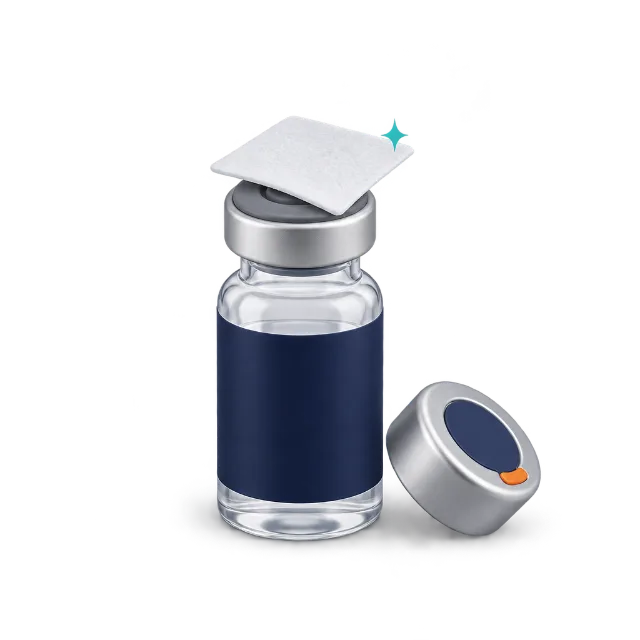 STEP 1Wipe both topsAlcohol pad on the peptide vial and the BAC water vial.
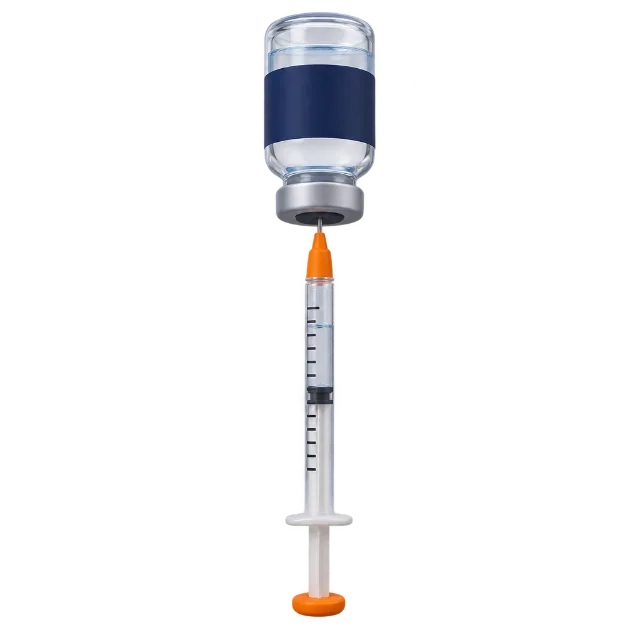 STEP 2Draw 2.5 mL of waterThat’s 2 full 1 mL syringes plus 0.5 mL.
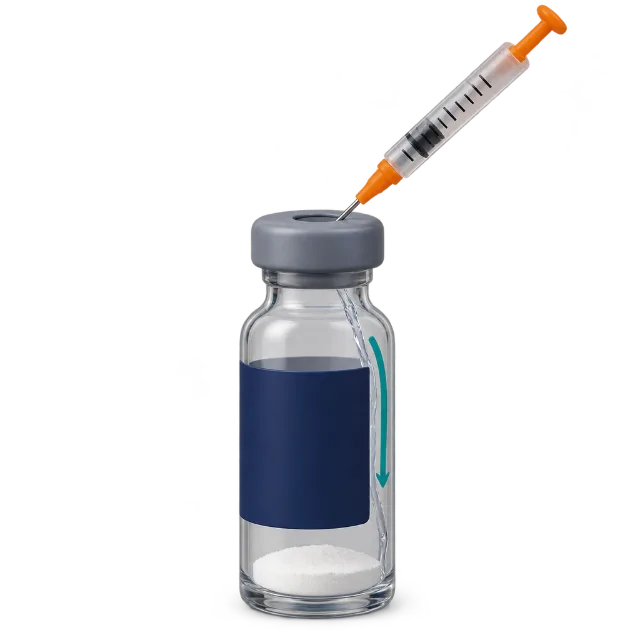 STEP 3Add it slowlyAim at the glass wall, not at the powder.
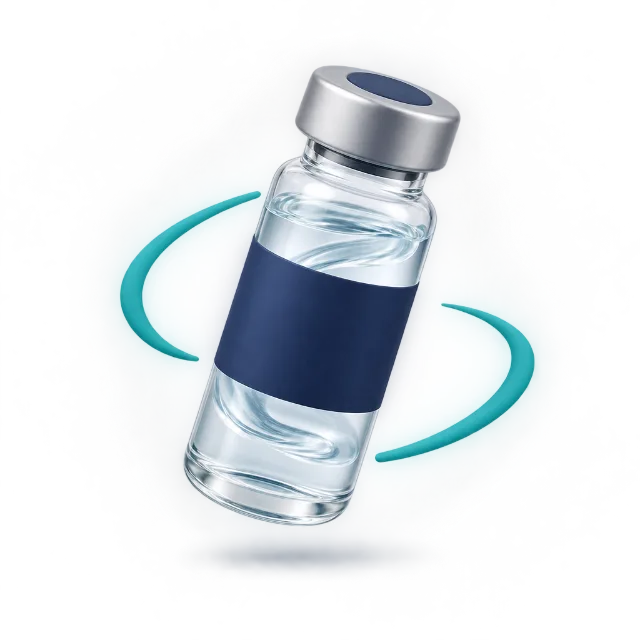 STEP 4Swirl, don’t shakeRoll gently until clear. Refrigerate after.
What to watch for
- Nose irritation or drynessReported by users
- Mild headacheReported by users
- Restlessness, anxiety or poor sleep, mostly at higher doses or late in the dayReported by users
- Higher blood pressure at higher doses, or higher blood sugar in people with diabetesReported by users
Not for anyone on an MAO inhibitor or with uncontrolled high blood pressure. Not for anyone with a psychiatric condition, especially mania or severe anxiety, or who is pregnant or breastfeeding. Talk to a doctor first, especially with diabetes or anxiety.
Reasons to get medical help right away: trouble breathing, swelling of the face or throat, chest pain, fainting, or any severe or worrying reaction.
Full side-effect list and who should avoid it
In published research
- Used clinically in Russia since the early 1990s with no significant adverse effects reported
- No hormonal disruption, dependence or withdrawal reported
- No major adverse events in the 110-person stroke study at 6,000 mcg a day
What users report
- Common: nasal irritation or dryness, temporary nasal discoloration, mild headache, restlessness at high doses
- Less common: irritability or mood shifts, light sleep or insomnia when taken late, more anxiety at higher doses
- Less common: blood sugar rises in people with diabetes, blood pressure rises at higher doses
- Temporary hair shedding (reported, not established)
Not for
- Anyone on an MAO inhibitor
- Uncontrolled high blood pressure
- Pregnancy or breastfeeding
- Psychiatric conditions, especially mania or severe anxiety
Use caution with
- Existing anxiety
- Diabetes
- Other stimulants or nootropics, whose effects may be amplified
- Nasal decongestants, with nasal use
- A tendency to pattern hair loss (theoretical)
How the body handles it
- Onset about 20 minutes after a dose
- Peak effect about 90 minutes
- Effects last about 20–24 hours
- No blood half-life has been published for routine use
Supplies
What 12 weeks of the schedule above takes, counted dose by dose.
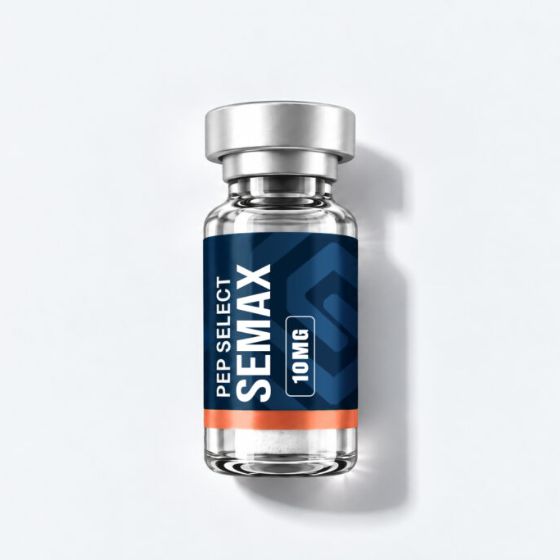

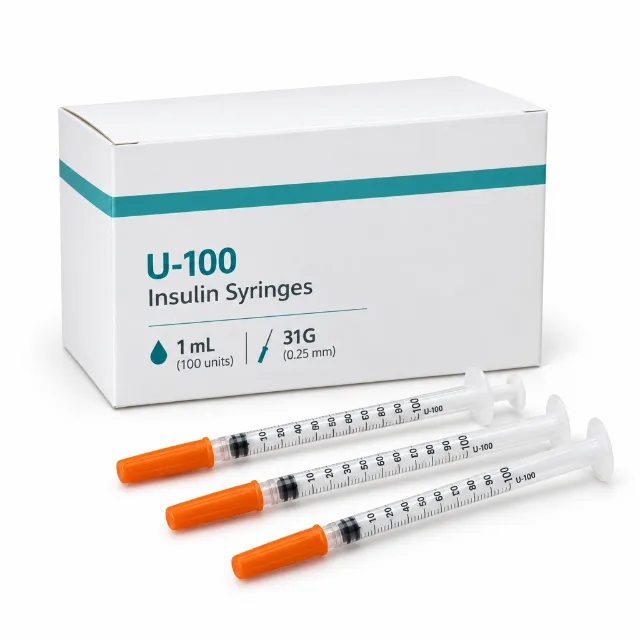
By clicking this link, WikiPep may receive a commission.
Stacking
The community pairs Semax with Selank, for focus plus calm. That pairing has not been tested in a trial.
- SelankReported by users
Semax is used for focus and Selank for calm. Some protocols start Selank alone for about a week before adding Semax, and others start both together.
Also used alongside it, with no interactions described: growth-hormone peptides, BPC-157, GLP-1 drugs and testosterone therapy.
Not combined with: MAO inhibitors, which are listed as a combination not to use.
Talk to a doctor before combining it with: caffeine, strong stimulants or other nootropics, which may add up to overstimulation, and nasal decongestants when Semax is used by nose.
Go deeper
Every study, community report and source behind this page.
What the studies show12 findings, each with its evidence label
Status, October 2026. Semax is not FDA-approved. It is a prescription drug in Russia, given as nasal drops. In April 2026 the FDA removed it from the Category 2 compounding list, and on July 24, 2026 an FDA advisory committee voted 8–5 to recommend it for the 503A bulks list. That vote is not binding, and the FDA has not yet added it. Source
How it works
The main effect described is on BDNF, a protein that helps nerve cells survive, grow and form connections. In an animal study, one dose raised BDNF protein in the hippocampus about 1.4-fold and activated its receptor, TrkB, about 1.6-fold.
In animal studies Semax did not raise dopamine on its own but increased dopamine release from other triggers, and sped up serotonin turnover. That is the explanation given for why caffeine can feel stronger alongside it.
In an animal model of stroke, Semax changed the activity of more than 1,500 genes: immune and blood-vessel genes went up and inflammatory genes went down. Lab and animal work also describes antioxidant effects, higher levels of NGF (another nerve growth factor), and growth of blood-vessel, support and stem cells after the blood supply is cut off.
Benefits
Each one carries an evidence label, so you can see how much is actually known.
Focus and attention
Users describe a clean lift in focus, verbal fluency and clarity without jitters.
Memory and learning
In animal studies, nasal Semax raised BDNF and improved learning and memory. Users describe deeper effects on memory after 1–2 weeks. source
Recovery after stroke
In a Russian trial of 110 people after ischemic stroke, Semax raised blood BDNF levels and was linked to better movement and daily-living scores. source
Nerve cells under stress
In an animal model of stroke, Semax turned down inflammatory genes and turned up immune and blood-vessel genes in the injured brain. source
Anxiety
Mixed. Some users describe feeling calmer; others feel more anxious at higher doses.
Mood
A possible effect on mood has been raised, but nothing conclusive has been shown in people.
Stress resilience
Early animal work describes resistance to stress-related changes in behavior and liver enzymes. It has not been tested in people.
What the science shows
Ischemic stroke (human, 2018)
Studied in humans110 people after ischemic stroke received 6,000 mcgmcgMicrogram, one thousandth of a milligram. 1 mg = 1,000 mcg. a day by nose for 10 days, a 20-day break, then another 10 days. Blood BDNF rose and stayed raised, and movement and daily-living (Barthel index) scores improved. No major adverse events. source
BDNF in the hippocampus (animal, 2006)
Studied in animals or labNasal Semax raised BDNF protein about 1.4-fold and TrkB activation about 1.6-fold, with better learning and memory. source
Genes after stroke (animal, 2014)
Studied in animals or labA genome-wide study in a stroke model found more than 1,500 genes changed: immune and blood-vessel genes up, inflammatory genes down. source
Dopamine and serotonin (animal, 2005)
Studied in animals or labSemax activated dopamine and serotonin systems and increased dopamine release. source
What the research can and cannot say
UnknownAll the human data is Russian, with small samples. Long-term safety has not been established to Western standards.
What the community reports5 user reports, a timeline and 5 pairings
What to expect
Onset after a dose, with a peak at about 90 minutes and effects lasting 20 to 24 hours.
Reported by usersUsers describe subtle gains in focus, word-finding and clarity. Some notice nothing until days 5–7.
Reported by usersUsers describe deeper effects on memory and learning.
Reported by usersUsers describe it as a refinement rather than a dramatic change, more noticeable under stress or after injury. Sleep and diet are framed as things it does not make up for.
What people report
Gathered from user communities. Anecdotal: useful for what to expect, not proof.
Clean focus
A boost to focus, verbal fluency and clarity without jitters. Some describe more creativity and sharper visual processing, and caffeine feeling stronger.
Mixed on anxiety
Some feel calmer; others feel more anxious at higher doses, especially with N-acetyl Semax amidate. Anxiety-prone users describe staying at the low end.
Nose or injection
The nasal route is preferred for convenience, injection for precision.
Side effects
Nasal irritation or dryness, headaches (linked to dose or dehydration), poorer sleep when taken late, and some reports of temporary hair shedding, which has not been established.
N-acetyl Semax amidate
Both ends are capped. Users find it stronger. It has no studies of its own.
Stacking
How it is described alongside other compounds.
Selank
The classic pairing: focus from Semax, calm from Selank. Protocols differ on the start: some begin both together, with Semax in the morning and Selank in the morning or afternoon; others run Selank alone for the first week before adding Semax.
Growth-hormone peptides (CJC-1295, Ipamorelin, Tesamorelin)
No interaction described. They run on separate schedules, since the growth-hormone peptides are taken fasted.
BPC-157, GLP-1 drugs, TRT
No interaction described. Despite its ACTH origin, Semax is described as having no hormonal effect.
Caffeine
The effect is described as amplified, with a risk of overstimulation.
MAO inhibitors, nasal decongestants, strong stimulants
MAO inhibitors are listed as a combination not to use. Nasal decongestants (with nasal use) and strong stimulants or other nootropics are listed as cautions.
Common questions8 questions
Common questions
Does Semax affect cortisol?
No. The ACTH fragment it is built from does not stimulate the adrenal glands.
Can it be taken by mouth?
No. Stomach acid breaks it down, so it is used by nose or by injection under the skin.
Is Semax a stimulant?
It is not classed as one. In animal studies it raised BDNF and increased dopamine release from other sources rather than releasing dopamine itself.
What is N-acetyl Semax amidate?
Semax with both ends capped for stability. Users describe it as stronger, so protocols use lower doses. It has no separate studies.
Does Semax cause hair loss?
It is not documented in clinical use. Some users report temporary shedding, and a link through BDNF and hair follicles is speculative. Users who notice it describe lowering the dose or stopping.
Why is it cycled?
BDNF pathways are described as adapting, so continuous use is thought to give diminishing returns. Protocols run 10–14 days on and 2–4 weeks off.
What does “minimum effective dose” mean?
It is the lowest dose that still produces the effect someone is after. User reports describe starting there and staying there for as long as it keeps working, rather than climbing toward the top of the range. Side effects tend to rise with dose, and the top of each range on this page is a ceiling people report, not a target.
When does the dose go up?
There is no trial schedule for Semax. User reports describe staying on a dose while it is still working, and moving up only after progress has stalled for two weeks or more and side effects have settled. There is no prize for getting to the top dose fast. These are not quick fixes: most of what people report builds over weeks, not days.
Source material4 studies and documents
References
- Gusev EI, et al. Zh Nevrol Psikhiatr Im S S Korsakova. 2018;118(3):61-68. pubmed.ncbi.nlm.nih.gov/29798977/…
- Dolotov OV, et al. Brain Res. 2006;1117(1):54-60. pubmed.ncbi.nlm.nih.gov/16996037/…
- Medvedeva EV, et al. BMC Genomics. 2014;15:228. pubmed.ncbi.nlm.nih.gov/24661604/…
- Eremin KO, et al. Neurochem Res. 2005;30(12):1493-1500. pubmed.ncbi.nlm.nih.gov/16362768/…
Related
What is Semax?
Semax is a synthetic peptidepeptideA short chain of amino acids. Proteins are long chains; peptides are short ones, usually under 50 amino acids., Met-Glu-His-Phe-Pro-Gly-Pro, created in 1982 at the Institute of Molecular Genetics in Russia. It takes amino acids 4 to 7 of ACTH and adds Pro-Gly-Pro, which keeps it from breaking down quickly and helps it reach the brain. In the research literature it is often called an ACTH(4-10) analog. The fragment does not carry ACTH's hormonal effect, so it does not raise cortisol. It was first developed for recovery after stroke and brain injury. In Russia it is prescribed as nasal drops for stroke, brain injury, cognitive decline and optic nerve disease. It is used by nose or by injection under the skin, not by mouth. Semax is not FDA-approved. In April 2026 the FDA removed it from its Category 2 compounding list, and on July 24, 2026 an FDA advisory committee voted 8–5 to recommend it for the 503A bulks list. That vote is not binding, and the FDA has not yet added it.
What people look into Semax for
Every line carries an evidence label, so you can see how much is actually known.
Focus and attention: Users describe a clean lift in focus, verbal fluency and clarity without jitters.
Reported by usersMemory and learning: In animal studies, nasal Semax raised BDNF and improved learning and memory. Users describe deeper effects on memory after 1–2 weeks.source
Studied in animals or labRecovery after stroke: In a Russian trial of 110 people after ischemic stroke, Semax raised blood BDNF levels and was linked to better movement and daily-living scores.source
Studied in humansNerve cells under stress: In an animal model of stroke, Semax turned down inflammatory genes and turned up immune and blood-vessel genes in the injured brain.source
Studied in animals or labAnxiety: Mixed. Some users describe feeling calmer; others feel more anxious at higher doses.
Reported by usersMood: A possible effect on mood has been raised, but nothing conclusive has been shown in people.
UnknownStress resilience: Early animal work describes resistance to stress-related changes in behavior and liver enzymes. It has not been tested in people.
UnknownMix and measure: a 10 mg vial
Go deeper
How it works, in plain words
The main effect described is on BDNF, a protein that helps nerve cells survive, grow and form connections. In an animal study, one dose raised BDNF protein in the hippocampus about 1.4-fold and activated its receptor, TrkB, about 1.6-fold.
What did the study measure?
No single study is featured for Semax; the human trials are linked from the uses above.
Sources
Side effects and who should avoid it
Side effects and limits, stated plainly. If anything here applies to you, talk to a doctor first.