BPC-157 / TB-500
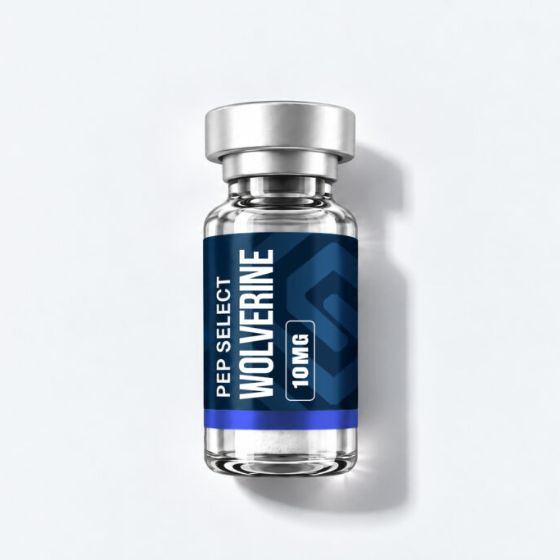
The BPC-157 / TB-500 blend, often called the Wolverine stack, puts two popular repair peptides in one vial. No controlled study has tested the two together, and most of what is known comes from animal studies of each one alone.
What it’s studied for
- Knee painStudied in humans
In a small human records review with no comparison group, most people reported knee relief after shots into the knee. Only four got both peptides. source
- Tendons and ligamentsStudied in animals or lab
Each peptidepeptideA short chain of amino acids. Proteins are long chains; peptides are short ones, usually under 50 amino acids. improved tendon or ligament healing in animal and lab studies. source
- WoundsStudied in animals or lab
In animal studies of thymosin beta-4 (TB-500), skin wounds closed faster. source
2 more uses studied
- MuscleStudied in animals or lab
In animal studies, more muscle fibers regrew with thymosin beta-4, though strength did not improve. source
- Recovery after surgeryReported by users
Users describe it for recovery after surgery. It has not been studied.
 New here? Three things worth knowing first
What’s a peptidepeptideA short chain of amino acids. Proteins are long chains; peptides are short ones, usually under 50 amino acids.? A short chain of amino acids, the building blocks of protein. Many act like messengers in the body.
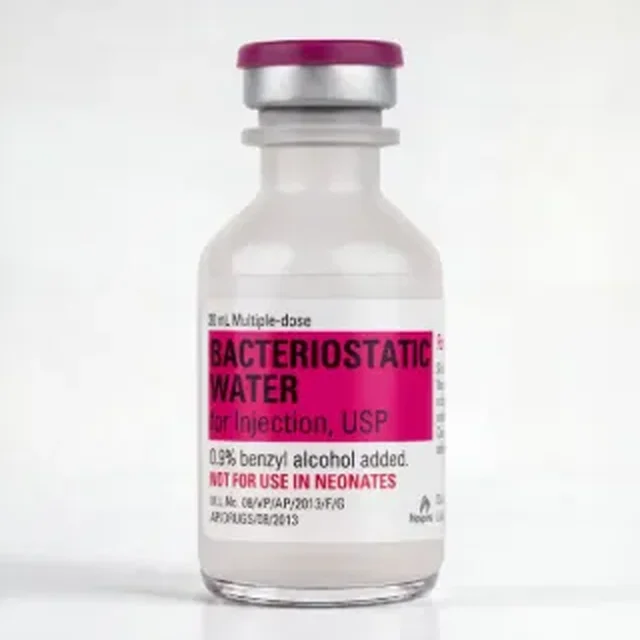
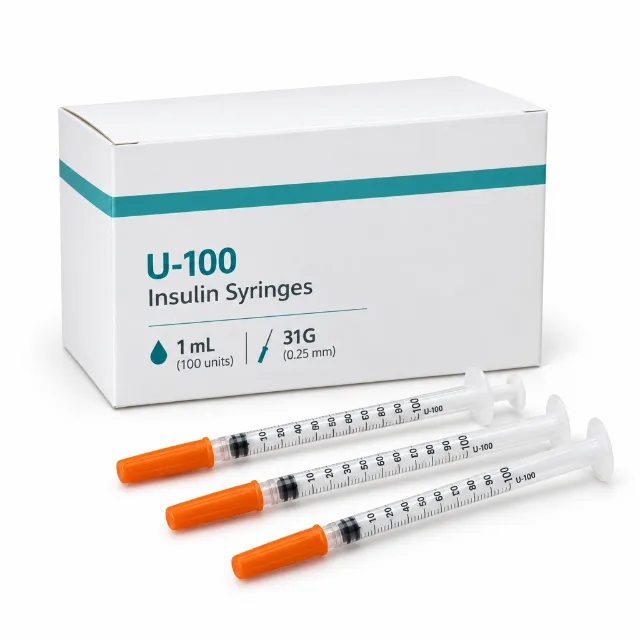
Why the vial has to be mixed. It ships as a dry powder. You add bacteriostatic waterbacteriostatic waterSterile water with a little benzyl alcohol that stops bacteria growing, so a mixed vial lasts days or weeks. Often called BAC water., and the amount you add decides how many unitsunitsMarks on an insulin syringe. On a U-100 syringe, 100 units = 1 mL. How many units equal a dose depends on how much water was added. on the syringe equal one dose. The calculator does that math.
SubcutaneoussubcutaneousUnder the skin, into the fat layer. The usual route for peptide injections. Often shortened to sub-Q. injection, Once daily. Subcutaneous means into the fat layer just under the skin. It uses a small insulin syringe. Any word with a dotted underline on this page opens a short definition.
Dosage guidelines
Once a day, usually 500 to 1,000 mcg of blend, which is 250 to 500 mcg of each peptide. Protocols run 4 to 8 weeks, up to 12 for older injuries.
The doses below come from published reference protocols and, where they exist, the human trials. Tap a row to load it into the calculator.
Figures reviewed against their sources in October 2026. Where a trial or approved label sets a schedule, it is shown first; where a label sets one fixed dose, the FAQ below says so.
Standard Wolverine stack. 500 to 1,000 mcg of blend once a day, which is 250 to 500 mcg of each. Runs 4 to 8 weeks, up to 12 for older or deeper damage.
Active healing · 500–1,000 mcg of blend (250–500 mcg of each peptide), once daily · 4–8 weeks; up to 8–12 weeks for chronic or deeper damage
| Step | Dose per injection | Draw to | |
|---|---|---|---|
| 1 | 500 mcg (0.5 mg) | 10 units | |
| 2 | 1,000 mcg (1 mg) | 20 units |
Doses marked “between 5-unit marks” sit between the 5-unit lines on a 1 mL syringe; the 1-unit lines on a 0.5 mL or 0.3 mL syringe make them easier to read.
Units are for a 10 mg vial mixed with 2 mL of water. Change the vial in the calculator
Full protocol details
Other protocols described
- Acute injury (strain, sprain, tear). 500 to 1,000 mcg of blend a day for 4 to 6 weeks.
- Post-surgical. 500 to 1,000 mcg of blend a day for 4 to 8 weeks, described as run with the surgeon's approval.
- Chronic injury / joint comfort. 500 to 1,000 mcg of blend a day for 6 to 8 weeks.
- Several injuries at once. The top of the range, 1,000 mcg of blend a day, for 6 to 8 weeks.
Mixing in the protocols: 10 mg vial + 2 mL bacteriostatic water · 10 mg vial is 5 mg BPC-157 + 5 mg TB-500. 10 units = 250 mcg of each = 500 mcg of blend; 20 units = 500 mcg of each = 1,000 mcg of blend. The water goes in slowly down the vial wall; the vial is swirled, not shaken..
Standard Wolverine stack
Active healing
- Dose
- 500–1,000 mcg of blend (250–500 mcg of each peptide)
- How often
- Once daily
- Timing
- Any time of day; no fasting
- Route
- Subcutaneous
- How long
- 4–8 weeks; up to 8–12 weeks for chronic or deeper damage
- Break
- None required; stopped or reduced once healed
Doses are for the whole equal-parts blend: each dose is half BPC-157 and half TB-500. The source protocols state figures per peptide.
Acute injury (strain, sprain, tear)
- Dose
- 500–1,000 mcg of blend (250–500 mcg of each)
- How often
- Daily
- Route
- Subcutaneous
- How long
- 4–6 weeks
Blend totals.
Post-surgical
- Dose
- 500–1,000 mcg of blend (250–500 mcg of each)
- How often
- Daily
- Route
- Subcutaneous
- How long
- 4–8 weeks
Blend totals. Described as run with the surgeon's approval.
Chronic injury / joint comfort
- Dose
- 500–1,000 mcg of blend (250–500 mcg of each)
- How often
- Daily
- Route
- Subcutaneous
- How long
- 6–8 weeks
Blend totals.
Several injuries at once
- Dose
- 1,000 mcg of blend (500 mcg of each)
- How often
- Daily
- Route
- Subcutaneous
- How long
- 6–8 weeks
Blend total.
By body weight
- Dose
- Under 150 lbs: 500 mcg; 150–200 lbs: 500–800 mcg; over 200 lbs: 800–1,000 mcg (blend)
- How often
- Daily
- Route
- Subcutaneous
Blend totals. Per peptide: 250, 250–400 and 400–500 mcg.
Cycle
4–8 weeks; up to 8–12 weeks for chronic or deeper damage; None required; stopped or reduced once healed
When a step up happens
User reports describe stepping up only after progress has stalled for two weeks or more, and only if the previous step was tolerated. Everyone is different.
Timing: Any time of day; no fasting.
Peptide calculator
Already filled with this vial. Change anything you like.
How much is in your vial?
Check the label. The most common strengths:
Every 10 units = 1 mg.
5 units. 1 mL of BAC water
How the vial is mixed
The powder has to be dissolved in bacteriostatic (BAC) water before use. For a 10 mg vial this page uses 2 mL, which puts the usual dose on a round syringe mark: every 10 units is 500 mcg.
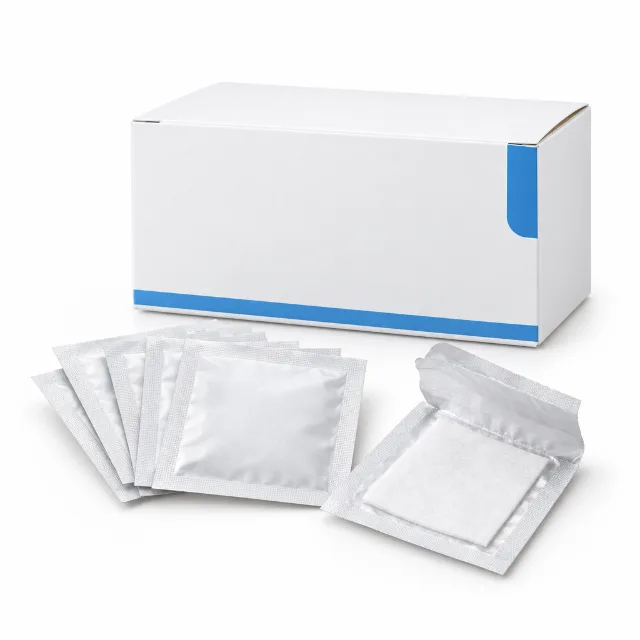
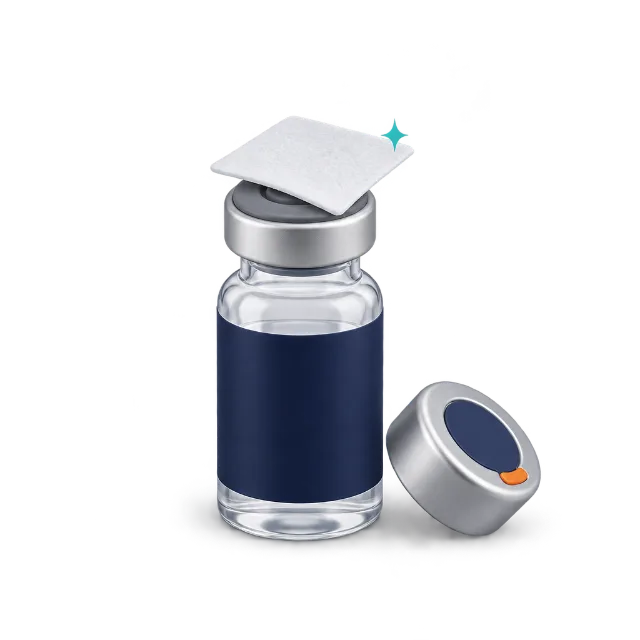 STEP 1Wipe both topsAlcohol pad on the peptide vial and the BAC water vial.
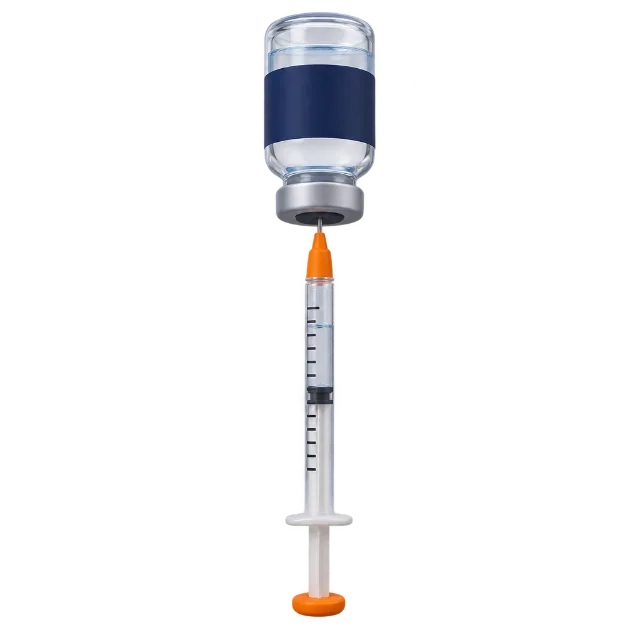 STEP 2Draw 2 mL of waterThat’s 2 full 1 mL syringes.
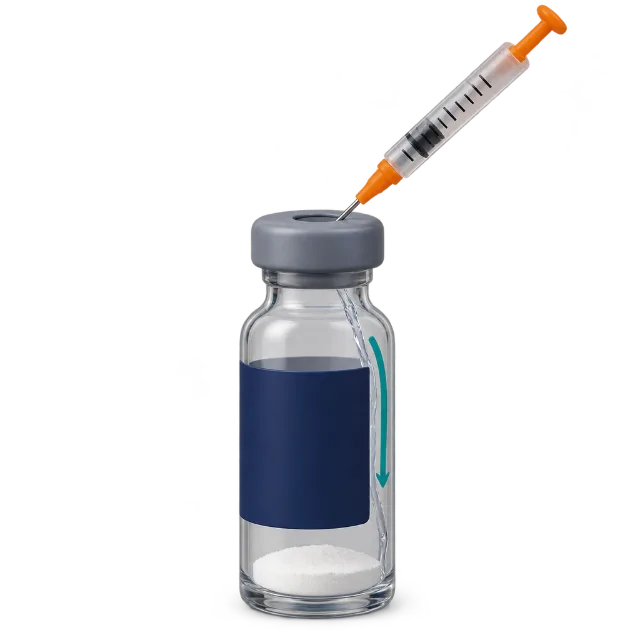 STEP 3Add it slowlyAim at the glass wall, not at the powder.
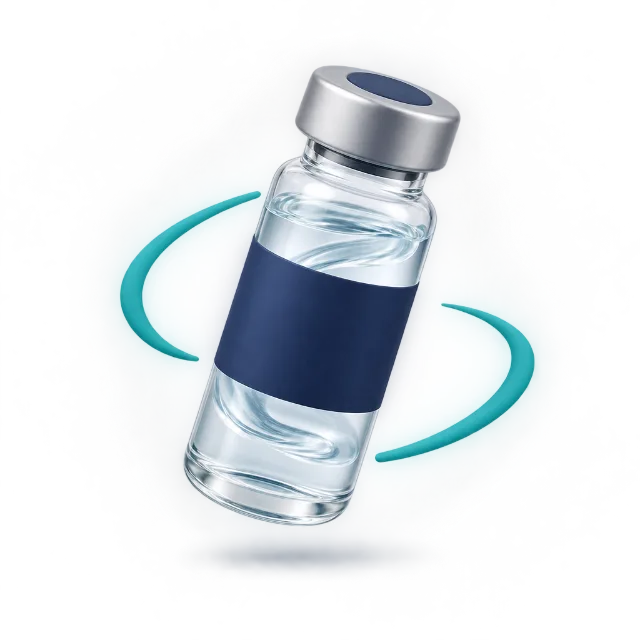 STEP 4Swirl, don’t shakeRoll gently until clear. Refrigerate after.
What to watch for
- Redness or soreness where the shot goes inReported by users
- Tiredness or flu-like feelings in the first few daysReported by users
- Mild nausea, more with higher BPC-157 dosesReported by users
- Headache, or a brief head rush after a shotReported by users
- A theoretical tumor concern, since both raised blood-vessel growth in animal and lab studies. No study shows either causing cancerUnknown
Not for anyone with active cancer, a past cancer without a cancer doctor’s input, or an allergy to either peptide. Both are banned in tested sport. Talk to a doctor first, especially if pregnant, breastfeeding, or living with an immune, heart, liver or kidney condition.
Reasons to get medical help right away: trouble breathing, swelling of the face or throat, chest pain, fainting, or any severe or worrying reaction.
Full side-effect list and who should avoid it
In published research
- BPC-157: no acute liver, kidney, genetic or birth-defect toxicity up to 20 mg/kg in animals; up to 20 mg intravenously in 2 adults with no adverse events
- Thymosin beta-4: no significant adverse effects up to 100 mg/kg in animal toxicology; up to 1,260 mg intravenously across more than 100 volunteers in two phase 1 trials, with no dose-limiting toxicity or serious adverse events
- The combination under the skin at practical doses has never been safety-tested
- When it placed BPC-157 in Category 2 in 2023, the FDA cited possible immune reactions, impurities and the lack of human data
What users report
- Common: injection-site reactions, tiredness on days 1–3, mild nausea (more with BPC-157 above 500 mcg a day)
- Less common: headache, a head rush after injection that passes in minutes, flu-like feelings at the start, dizziness
Theoretical concerns
- Both peptides promote blood-vessel growth, which raises a tumor concern. High thymosin beta-4 levels are linked to spread in some tumors. No study shows either peptide causing cancer in a healthy organism
Not for
- Active cancer or tumors
- A history of cancer without an oncologist's input
- Known allergy to BPC-157, TB-500 or thymosin peptides
- Tested athletes (WADA S0)
Use caution with
- Pregnancy or breastfeeding (no data)
- Severe immune deficiency
- Active autoimmune disease
- Heart and circulation conditions
- Precancerous conditions or unexplained masses
- Liver or kidney impairment
- NSAIDs (mixed data); no other established interactions, and none between the two peptides
- No set bloodwork panel; healing is described as tracked with a physician or physical therapist, with imaging clearance from an oncologist if there is any cancer history
How the body handles it
- BPC-157: half-life under 30 minutes; processed by the liver and cleared by the kidneys; detectable in urine for up to 4 days
- TB-500: no published data after injection under the skin; the circulating 'about 10 days' half-life has no published source
Supplies
What 12 weeks of the schedule above takes, counted dose by dose.
By clicking this link, WikiPep may receive a commission.
Stacking
The community most often adds GHK-Cu to this blend, but no pairing, including the blend itself, has been tested in a controlled trial.
- GHK-CuReported by users
Its effects are described as complementing the two repair peptides. The three together are known as the GLOW blend, and with KPV added, KLOW.
Also used alongside it, with no interactions described: GLP-1 drugs, growth-hormone peptides and testosterone therapy.
Talk to a doctor before combining it with: anti-inflammatory painkillers like ibuprofen, where the data are mixed.
Go deeper
Every study, community report and source behind this page.
What the studies show17 findings, each with its evidence label
Status, October 2026. Neither component is FDA-approved and the blend has no separate regulatory status; both BPC-157 and TB-500 were taken off the FDA's Category 2 list in April 2026 and recommended (8–6) by an advisory committee in July 2026, but neither is yet on the 503A bulks list, so compounding is still not authorized. Source
How it works
The case for two peptides is that they cover different stages of repair. No controlled study has tested whether they work better together.
BPC-157 is described as acting locally. In animal and lab studies it raised VEGFR2, the receptor for the blood-vessel growth signal VEGF, switching on the Akt-eNOS and nitric oxide pathway. It also activated FAK-paxillin, which helps cells move and anchor, and raised growth-hormone receptors in tendon cells. It amplifies injury signals already present, so it is described as needing damaged tissue to act on.
TB-500 is described as acting throughout the body. In lab and animal studies thymosin beta-4 regulated actin through profilin to drive cell movement, promoted blood-vessel growth through VEGF, and released Ac-SDKP, a fragment that lowered inflammation and scarring. The full protein does not bind the surrounding tissue matrix, so in animal studies the injection site did not matter.
Benefits
Each one carries an evidence label, so you can see how much is actually known.
Tendon and ligament healing
Each component improved tendon or ligament healing in animal and lab studies; users describe it for Achilles, rotator cuff, patellar and elbow problems and ACL/MCL sprains. source
Muscle recovery
In animal studies, thymosin beta-4 increased the number of regenerating muscle fibers, though not strength; BPC-157 is linked to muscle repair in animal work. source
Post-surgical recovery
Described by users and on mechanistic grounds; not studied.
Joint comfort
Described for chronic joint inflammation, usually over 6 to 8 weeks or more. Not studied.
Wound healing
In animal studies, thymosin beta-4 raised skin closure 42% by day 4 and 61% by day 7. source
Gut lining
From the BPC-157 component only: animal studies report healing of ulcers, NSAID damage and inflammatory-bowel-type injury. source
Several injuries at once
The reasoning is local BPC-157 plus body-wide TB-500. Not studied.
What the science shows
Knee pain chart review (human, 2021)
Studied in humansRetrospective review of 17 people with chronic knee pain given injections into the joint: 12 had BPC-157 alone and 4 had BPC-157 with thymosin beta-4. Of 16 reached, 14 reported significant relief lasting 6 months to a year: 11 of 12 on BPC-157 alone and 3 of 4 on the combination. No standardized outcome measures, and no doses stated for the combination arm. source
BPC-157 systematic review (2025)
Studied in animals or lab36 studies, 35 preclinical. No acute toxicity at doses up to 20 mg/kg in animals. source
BPC-157 and tumors (review, 2025)
Studied in animals or labIn animal tumor models, BPC-157 held back uncontrolled cell growth and lowered VEGF. source
BPC-157 intravenous pilot (human, 2025)
Studied in humansTwo healthy adults, up to 20 mg, no adverse events. source
BPC-157 interstitial cystitis pilot (human, 2024)
Studied in humans12 women; 10 had complete symptom resolution. No control group. source
Thymosin beta-4, wound healing (1999)
Studied in animals or labSkin closure up 42% at day 4 and 61% at day 7, with better contraction and more collagen. source
Thymosin beta-4, scarring (2010)
Studied in animals or labMinimal scarring, organized mature collagen and no loss of breaking strength. source
Thymosin beta-4, knee ligament (2013)
Studied in animals or labBetter mechanics, more uniform fiber bundles and thicker collagen fibrils. source
Thymosin beta-4 phase 1 trials (human, 2010 and 2021)
Studied in humansIntravenous full-length protein up to 1,260 mg in healthy volunteers, and recombinant protein in 84 healthy volunteers: no dose-limiting toxicity and well tolerated. source
The bottom line
UnknownThe combination has not been tested in a controlled trial, and the subcutaneoussubcutaneousUnder the skin, into the fat layer. The usual route for peptide injections. Often shortened to sub-Q. doses below have never been safety-tested. The argument for pairing is mechanistic.
What the community reports4 user reports, a timeline and 5 pairings
What to expect
Some describe tiredness or flu-like feelings that pass within 24–48 hours.
Reported by usersLess pain and inflammation.
Reported by usersMuscle injuries are described as responding.
Reported by usersFunctional gains are described.
Reported by usersTendon injuries respond, with the peak described around weeks 6–8.
Reported by usersChronic or old injuries are described as responding here, less predictably.
Reported by usersThere is no human timeline for the combination. The closest data point is a small knee study: of the 4 people given BPC-157 with thymosin beta-4, 3 reported improvement after a single injection.
What people report
Gathered from user communities. Anecdotal: useful for what to expect, not proof.
Faster recovery
Shoulder, knee and elbow injuries are the most discussed. Logs describe rotator-cuff pain gone in about 3 weeks, and a return to training after about 5 weeks for tennis elbow.
Mixed results
Some report no change, especially with chronic and degenerative problems such as imaging-confirmed shoulder degeneration. Results vary most there.
Blend or separate vials
The blend is preferred for convenience. Separate vials suit people who want independent doses, different cyclecycleA planned period of use followed by a break, written as weeks on / weeks off. lengths, or a site-specific BPC-157 injection.
Side effects
Mostly minimal. Tiredness or flu-like feelings on days 1–3, usually put down to TB-500, passing within 24–48 hours. Painless injection-site redness or bruising, and occasional nausea, headache or lightheadedness.
Stacking
How it is described alongside other compounds.
GLP-1 drugs (Retatrutide, Semaglutide, Tirzepatide)
No interaction concern described. Protocols keep it in a separate syringe, because volumes and schedules differ.
Growth-hormone peptides (CJC-1295, ipamorelin, sermorelin)
No interaction described, but the GH peptides keep their fasting schedule. Drawing both into one syringe when the timing lines up is described; premixing and storing them is not.
Testosterone therapy
No interaction concerns described.
GHK-Cu
Mechanisms described as complementary. Separate vials are described for maximum potency; the three together are known as the GLOW blend, and with KPV added, KLOW.
NSAIDs
Mixed data. They may blunt BPC-157's regenerative effects, while in animal studies BPC-157 lessened NSAID damage to the gut. Not described as a firm reason to avoid the combination.
Common questions10 questions
Common questions
Can both start together from day one?
Yes. There is no described need to introduce them one at a time.
Blend or separate vials?
The blend is simpler. Separate vials allow independent doses, cycle lengths and injection sites.
Does it need to go near the injury?
Not necessarily. TB-500 acts body-wide, while BPC-157 concentrates locally, so injecting near a single injury is described as helping.
Does it need cycling?
No. It is run while healing: 4 to 8 weeks for acute injuries, 8 to 12 for chronic ones.
Does it need fasting?
No. Protocols describe any consistent time of day.
Can it share a syringe with other peptides?
With GH peptides at injection time, yes. Premixing and storing is not described, and neither is sharing a syringe with GLP-1 drugs.
Is the stack better than either peptide alone?
No study has compared them. The argument is mechanistic, and BPC-157 alone is described as possibly enough for mild or gut issues.
How is the vial mixed?
2 mL of bacteriostatic water into the 10 mg vial. 10 units = 500 mcg of blend (250 mcg of each), 20 units = 1,000 mcg of blend (500 mcg of each). Swirled, not shaken.
What does “minimum effective dose” mean?
It is the lowest dose that still produces the effect someone is after. User reports describe starting there and staying there for as long as it keeps working, rather than climbing toward the top of the range. Side effects tend to rise with dose, and the top of each range on this page is a ceiling people report, not a target.
When does the dose go up?
There is no trial schedule for BPC-157 / TB-500. User reports describe staying on a dose while it is still working, and moving up only after progress has stalled for two weeks or more and side effects have settled. There is no prize for getting to the top dose fast. These are not quick fixes: most of what people report builds over weeks, not days.
Source material12 studies and documents
References
- Lee E, Padgett B. Altern Ther Health Med. 2021;27(4):8-13. pubmed.ncbi.nlm.nih.gov/34324435/…
- Vasireddi N, et al. HSS J. 2025. pubmed.ncbi.nlm.nih.gov/40756949/…
- McGuire FP, et al. Curr Rev Musculoskelet Med. 2025. pubmed.ncbi.nlm.nih.gov/40789979/…
- Lee E, Burgess K. Altern Ther Health Med. 2025;31(5):20-24. pubmed.ncbi.nlm.nih.gov/40131143/…
- Lee E, Walker C, Ayadi B. Altern Ther Health Med. 2024;30(10):12-17. pubmed.ncbi.nlm.nih.gov/39325560/…
- Malinda KM, et al. J Invest Dermatol. 1999;113(3):364-368. pubmed.ncbi.nlm.nih.gov/10469335/…
- Ehrlich HP, Hazard SW 3rd. Ann N Y Acad Sci. 2010;1194:118-124. pubmed.ncbi.nlm.nih.gov/20536458/…
- Xu B, et al. Regul Pept. 2013;184:1-5. pubmed.ncbi.nlm.nih.gov/23523891/…
- Ruff D, et al. Ann N Y Acad Sci. 2010;1194:223-229. pubmed.ncbi.nlm.nih.gov/20536472/…
- Wang X, et al. J Cell Mol Med. 2021;25(17):8222-8228. pubmed.ncbi.nlm.nih.gov/34346165/…
- Spurney CF, et al. PLoS ONE. 2010;5(1):e8976. pubmed.ncbi.nlm.nih.gov/20126456/…
- Sikiric P, et al. Curr Pharm Des. 2018;24(18):1990-2001. pubmed.ncbi.nlm.nih.gov/29879879/…
Related
What is BPC-157 / TB-500?
Each vial holds 5 mg of BPC-157 and 5 mg of TB-500, 10 mg in total and equal parts by weight. BPC-157 is a 15-amino-acid synthetic sequence taken from a protein in human stomach juice. TB-500 here means thymosin beta-4, a 43-amino-acid repair protein found in nearly every cell; some sellers use the name for a 7-amino-acid fragment of it. Neither component is FDA-approved, and the blend has no separate regulatory status. Both were taken off the FDA's Category 2 list in April 2026 and recommended (8–6) by an advisory committee in July 2026, but neither is yet on the 503A bulks list, so compounding is still not authorized. Both are prohibited in tested sport (WADA S0).
What people look into BPC-157 / TB-500 for
Every line carries an evidence label, so you can see how much is actually known.
Tendon and ligament healing: Each component improved tendon or ligament healing in animal and lab studies; users describe it for Achilles, rotator cuff, patellar and elbow problems and ACL/MCL sprains.source
Studied in animals or labMuscle recovery: In animal studies, thymosin beta-4 increased the number of regenerating muscle fibers, though not strength; BPC-157 is linked to muscle repair in animal work.source
Studied in animals or labPost-surgical recovery: Described by users and on mechanistic grounds; not studied.
Reported by usersJoint comfort: Described for chronic joint inflammation, usually over 6 to 8 weeks or more. Not studied.
Reported by usersWound healing: In animal studies, thymosin beta-4 raised skin closure 42% by day 4 and 61% by day 7.source
Studied in animals or labGut lining: From the BPC-157 component only: animal studies report healing of ulcers, NSAID damage and inflammatory-bowel-type injury.source
Studied in animals or labSeveral injuries at once: The reasoning is local BPC-157 plus body-wide TB-500. Not studied.
UnknownMix and measure: a 10 mg vial
Go deeper
How it works, in plain words
The case for two peptides is that they cover different stages of repair. No controlled study has tested whether they work better together.
What did the study measure?
The reference sites don’t cite a specific published study for BPC-157 / TB-500. Most of what’s written comes from animal work or user reports, so the dose numbers here are reference-site figures, not settled science.
Sources
Side effects and who should avoid it
Side effects and limits, stated plainly. If anything here applies to you, talk to a doctor first.