Bremelanotide (PT-141)
PT-141, or bremelanotide, is an FDA-approved peptide for low sexual desire in women before menopause. It acts on desire signals in the brain, not on blood flow like Viagra-type drugs.
What it’s studied for
- Desire in women before menopauseStudied in humans
In two large trials, desire scores rose and distress fell more than on placeboplaceboAn inactive version given to some trial participants so the real effect can be measured fairly.. This is the approved use. source
- Erections in menStudied in humans
Early trials tested men for whom sildenafil (Viagra) did not work. About a third responded, against under a tenth on placebo. source
- A lasting effectStudied in humans
In a year-long follow-up, the effect on desire held steady. source
1 more use studied
- Hormone levelsUnknown
Because it acts in the brain, it may work whatever a person’s hormone levels. This has not been tested directly.
 New here? Three things worth knowing first
What’s a peptidepeptideA short chain of amino acids. Proteins are long chains; peptides are short ones, usually under 50 amino acids.? A short chain of amino acids, the building blocks of protein. Many act like messengers in the body.
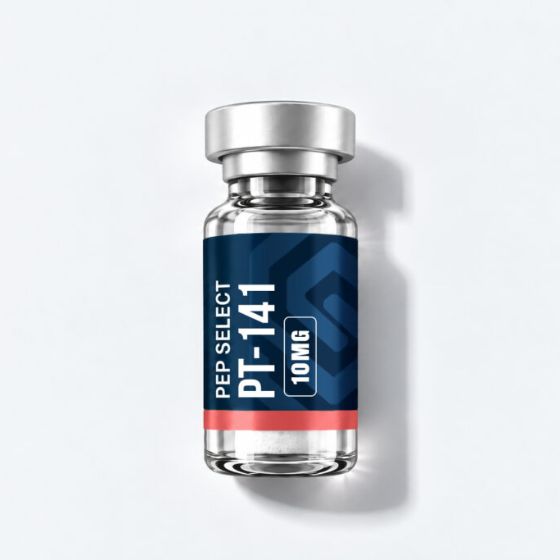
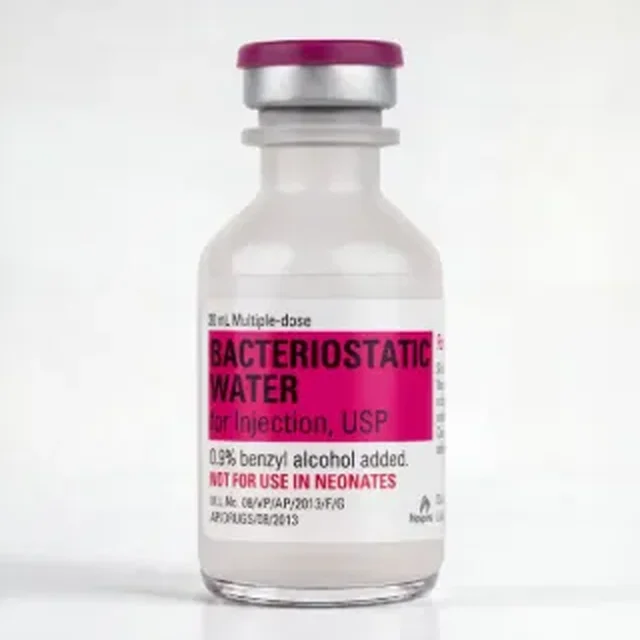
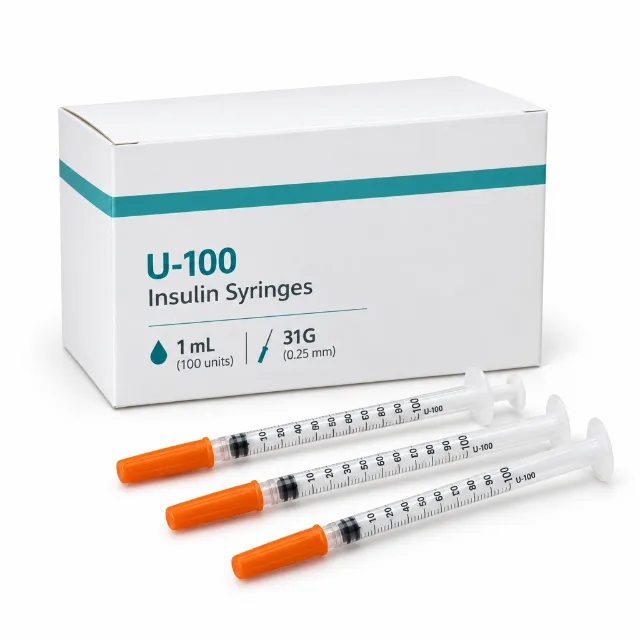
Why the vial has to be mixed. It ships as a dry powder. You add bacteriostatic waterbacteriostatic waterSterile water with a little benzyl alcohol that stops bacteria growing, so a mixed vial lasts days or weeks. Often called BAC water., and the amount you add decides how many unitsunitsMarks on an insulin syringe. On a U-100 syringe, 100 units = 1 mL. How many units equal a dose depends on how much water was added. on the syringe equal one dose. The calculator does that math.
SubcutaneoussubcutaneousUnder the skin, into the fat layer. The usual route for peptide injections. Often shortened to sub-Q. injection, As needed; no more than 1 dose in 24 hours and no more than 8 doses a month. Subcutaneous means into the fat layer just under the skin. It uses a small insulin syringe. Any word with a dotted underline on this page opens a short definition.
Dosage guidelines
Used as needed, not on a schedule, at least 45 minutes before sex. The label dose is 1.75 mg, no more than once in 24 hours or 8 times a month.
The doses below come from published reference protocols and, where they exist, the human trials. Tap a row to load it into the calculator.
Figures reviewed against their sources in October 2026. Where a trial or approved label sets a schedule, it is shown first; where a label sets one fixed dose, the FAQ below says so.
FDA label (Vyleesi). 1.75 mg as needed, at least 45 minutes before sex. No more than once in 24 hours or 8 times a month.
HSDD in premenopausal women, the approved use · 1.75 mg, as needed; no more than 1 dose in 24 hours and no more than 8 doses a month
| Step | Dose per injection | Draw to | |
|---|---|---|---|
| 1 | 1,750 mcg (1.75 mg) | 35 units |
Doses marked “between 5-unit marks” sit between the 5-unit lines on a 1 mL syringe; the 1-unit lines on a 0.5 mL or 0.3 mL syringe make them easier to read.
Units are for a 10 mg vial mixed with 2 mL of water. Change the vial in the calculator
Full protocol details
Other protocols described
- Studied dose in men (ED, phase 2). Early trials in men used 1.25 to 2 mg as needed. It is not approved for men.
Mixing in the protocols: 10 mg vial + 2 mL bacteriostatic water · 500 mcg per 10 units; 1 mg = 20 units; 1.75 mg = 35 units; 2 mg = 40 units.
FDA label (Vyleesi)
HSDD in premenopausal women, the approved use
- Dose
- 1.75 mg
- How often
- As needed; no more than 1 dose in 24 hours and no more than 8 doses a month
- Timing
- At least 45 minutes before anticipated sexual activity
- Route
- Subcutaneous
Standard protocol
Off-label use described in clinical practice and by users
- Dose
- 1–2 mg
- How often
- As needed; at most 1 dose in 24 hours and 8 doses a month
- Timing
- 45–60 minutes before sexual activity; no fasting
- Route
- Subcutaneous (abdomen or thigh)
Not a daily or cycled compound: it is used as needed, within the monthly maximum.
Nausea-sensitive protocol
- Dose
- 0.5 mg, then 0.75 mg, then 1 mg
- How often
- As needed, rising on later uses
- Route
- Subcutaneous
The aim described is the lowest effective dose with tolerable nausea. Some protocols pair it with ondansetron, a prescription anti-nausea medicine, 30 minutes before.
Studied dose in men (ED, phase 2)
Clinical research; not approved for men
- Dose
- 1.25–2 mg
- How often
- As needed
- Route
- Subcutaneous
There are no dose-finding studies for off-label male libido protocols.
Cycle
the label describes use as needed, at most 1 dose in 24 hours and no more than 8 a month; reference sites describe 8–12 weeks of daily use, which is outside the label
When a step up happens
User reports describe stepping up only after progress has stalled for two weeks or more, and only if the previous step was tolerated. Everyone is different.
Timing: At least 45 minutes before anticipated sexual activity.
Peptide calculator
Already filled with this vial. Change anything you like.
How much is in your vial?
Check the label. The most common strengths:
Every 10 units = 0.5 mg.
35 units. 2 mL of BAC water
How the vial is mixed
The powder has to be dissolved in bacteriostatic (BAC) water before use. For a 10 mg vial this page uses 2 mL, which puts the usual dose on a round syringe mark: every 10 units is 500 mcg.
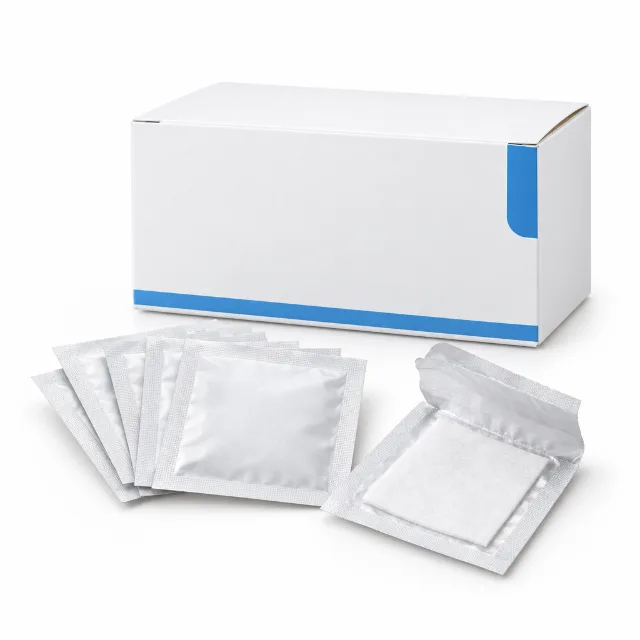
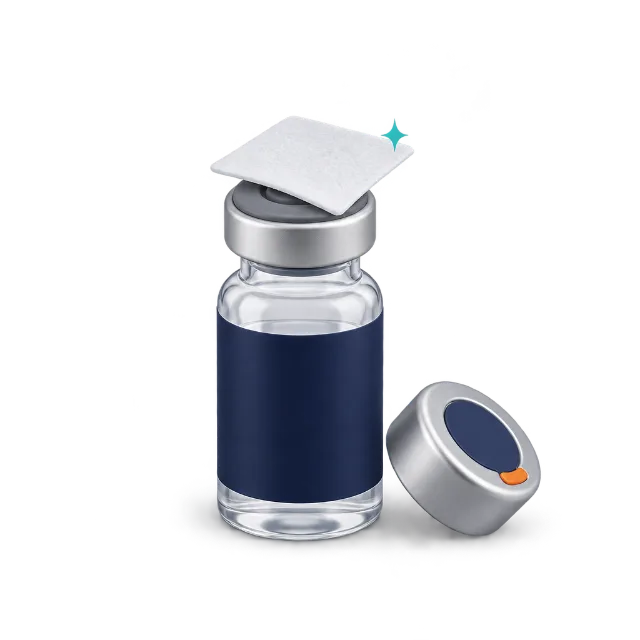 STEP 1Wipe both topsAlcohol pad on the peptide vial and the BAC water vial.
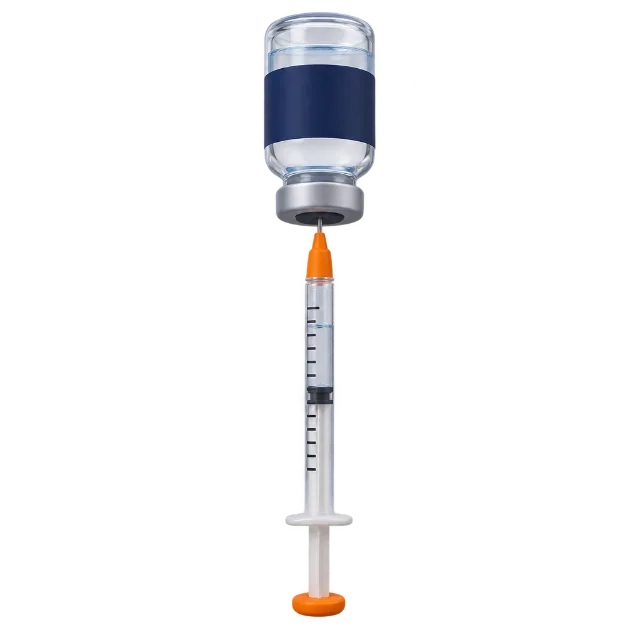 STEP 2Draw 2 mL of waterThat’s 2 full 1 mL syringes.
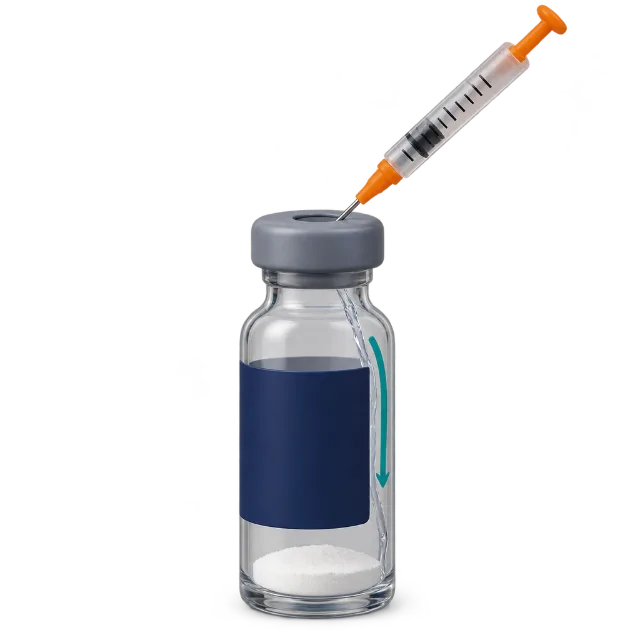 STEP 3Add it slowlyAim at the glass wall, not at the powder.
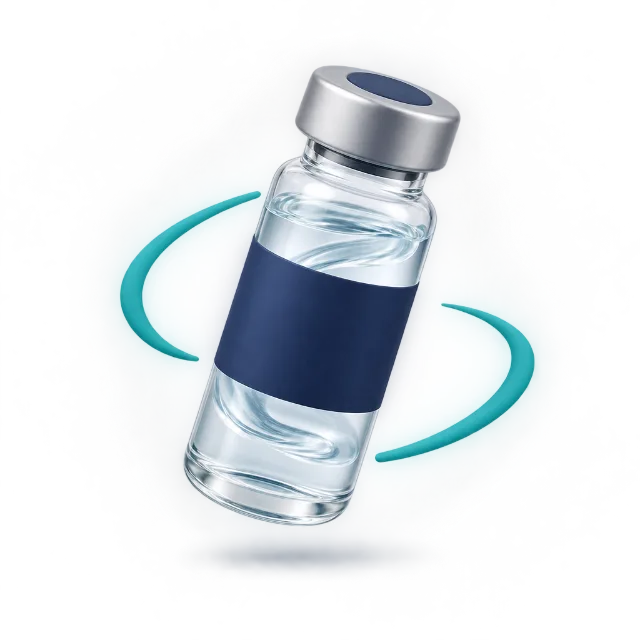 STEP 4Swirl, don’t shakeRoll gently until clear. Refrigerate after.
What to watch for
- Nausea, which is common, starting about an hour after a dose and lasting a couple of hoursStudied in humans
- Flushing or hot flashesStudied in humans
- Headache, or a reaction where the shot goes inStudied in humans
- A small, short rise in blood pressure after a doseStudied in humans
- Darker patches on the skin or gums, mostly with frequent dosing, that do not always fadeStudied in humans
Not for anyone with uncontrolled high blood pressure, heart disease, an allergy to it, or who is pregnant. Talk to a doctor first, especially if you take blood-pressure medicine or naltrexone.
Reasons to get medical help right away: trouble breathing, swelling of the face or throat, chest pain, fainting, or any severe or worrying reaction.
Full side-effect list and who should avoid it
In published research
- Nausea: about 40% (vs 1.3% on placebo), starting about 1 hour after a dose and lasting about 2 hours
- Flushing: about 20%
- Injection-site reactions: 13%
- Headache: 11%
- Vomiting: 4.8%
- Cough: 3.3%
- Fatigue: 3.2%
- Hot flashes: 2.7%
- Tingling: 2.6%
- Dizziness: 2.2%
- Nasal congestion: 2.1%
- Blood pressure up about 2–3 mmHg and heart rate slightly down for a few hours after a dose
- Darker patches of skin or gums: about 1% at up to 8 doses a month, but 38% in a study of daily dosing; it did not always fade
- No melanoma cases reported
What users report
- Common: nausea, facial flushing, warmth or hot flashes, mild tiredness
- Less common: headache, dizziness, long-lasting erections at higher doses, mild blood pressure rise, injection-site soreness
- Mostly dose-related and temporary
Not for
- Uncontrolled high blood pressure or known heart disease (label contraindications)
- Known allergy to bremelanotide
- Pregnancy
Use caution with
- Controlled high blood pressure
- Liver or kidney impairment (not studied)
- Breastfeeding (no data)
- Any condition where a short rise in blood pressure is risky
- Other medicines that affect blood pressure
- Oral naltrexone: PT-141 can sharply lower its levels, and the label advises against using them together
How the body handles it
- Peak in the blood about 1 hour after an injection under the skin
- Half-life about 2.7 hours
- Bioavailability under the skin essentially 100%
- Broken down by peptide-bond hydrolysis; about 65% leaves in urine and 23% in feces
- Effects begin within about 45 minutes and last up to 12–24 hours, with up to 72 hours reported at higher doses
Supplies
What 12 weeks of the schedule above takes, counted dose by dose.
By clicking this link, WikiPep may receive a commission.
Stacking
The community pairs PT-141 with Viagra-type drugs when low desire and erection problems occur together, and a trial of that pairing is under way.
- Viagra-type drugsReported by users
PT-141 acts on desire in the brain, while Viagra-type drugs act on blood flow. Both affect blood pressure, and lightheadedness is the noted risk.
Also used alongside it, with no interactions described: testosterone therapy, growth-hormone peptides and kisspeptin.
Not combined with: Melanotan II, which acts on the same target and adds nausea and blood-pressure risk, or oral naltrexone, because PT-141 can sharply lower its levels.
Talk to a doctor before combining it with: Viagra-type drugs or other medicines that affect blood pressure.
Go deeper
Every study, community report and source behind this page.
What the studies show11 findings, each with its evidence label
Status, October 2026. Bremelanotide is FDA-approved (June 2019, as Vyleesi 1.75 mg autoinjector) for acquired, generalized hypoactive sexual desire disorder in premenopausal women; it is not approved for men, for postmenopausal women, or to enhance sexual performance. Source
How it works
PT-141 activates MC4 receptors, which sit in brain areas tied to sexual response. In animal studies this increased dopamine signaling in the hypothalamus, a region linked to desire and arousal. The FDA label states that how it improves desire in women is not known.
Viagra-type drugs (PDE5 inhibitors) work differently: they relax blood vessels in the genitals. Because PT-141 acts centrally, it does not depend on nitric oxide. That is why it has been studied in men who do not respond to PDE5 inhibitors.
After an injection under the skin it reaches its peak in the blood in about an hour and has a half-lifehalf-lifeHow long it takes for half of a compound to leave the body. A longer half-life usually means less frequent dosing. of about 2.7 hours.
Benefits
Each one carries an evidence label, so you can see how much is actually known.
Sexual desire in premenopausal women
In two phase 3phase 3A late-stage human trial in thousands of people, usually the last step before approval. trials, desire scores improved and related distress fell more than on placeboplaceboAn inactive version given to some trial participants so the real effect can be measured fairly. with 1.75 mg as needed. This is the approved use. source
Erections in men with ED
In early-phase trials in men who did not respond to sildenafil, 33.5% had a successful response compared with 8.5% on placebo, with onset in 30–45 minutes. It is not approved for men. source
Benefit held over a year
In a 52-week open-label extension, the effect on desire was sustained without a notable loss of response. source
Independence from hormone levels
Because it acts in the brain, it is proposed to work regardless of sex-hormone levels. Approval covers only premenopausal women, and this has not been tested directly.
What the science shows
RECONNECT, two phase 3 trials (human, 2019)
Studied in humans1,247 premenopausal women with HSDD used 1.75 mg under the skin as needed, or placeboplaceboAn inactive version given to some trial participants so the real effect can be measured fairly., for 24 weeks in two identical double-blind trials. Desire scores rose and distress fell significantly more than on placebo. Nausea was the most common side effectside effectAn unwanted effect that happens alongside the intended one. (40% vs 1.3%). source
52-week extension (human, 2019)
Studied in humansIn the open-label extension, benefits were sustained without notable desensitization. source
Dose-finding trial in women (human, 2016)
Studied in humansA randomized, placebo-controlled dose-finding trial in premenopausal women, run before the phase 3phase 3A late-stage human trial in thousands of people, usually the last step before approval. program. source
Women with arousal disorder (human, 2006)
Studied in humansAn earlier trial in premenopausal women with sexual arousal disorder. source
Men with ED (human, phase 2)
Studied in humans1.25–2 mg under the skin in men for whom PDE5 inhibitors had failed produced erections above 80% tip rigidity lasting more than 40 minutes. 68% of responders reported more desire, vs 19% on placebo. A trial of PT-141 combined with a PDE5 inhibitor is under way. source
Blood pressure (human trials)
Studied in humansAverage blood pressure rose about 2–3 mmHg, systolic and diastolic, peaking 4–8 hours after a dose and back to baseline by 12–24 hours, with no significant hypertensive events. source
How it acts in the brain (animal, review)
Studied in animals or labPreclinical work places its action in the central nervous system, through melanocortin receptors. source
What the community reports5 user reports, a timeline and 5 pairings
What to expect
Onset. The label dose is given at least 45 minutes before sexual activity, and blood levels peak at about 1 hour.
Studied in humansNausea, in about 40% of people in the trials, starts about an hour after a dose and lasts about two hours.
Studied in humansThe peak of the effect, as users describe it.
Reported by usersUsers commonly describe 6 to 12 hours of effect, with some lasting desire for up to 24 hours.
Reported by usersSome users report residual effects this long, mostly at higher doses.
Reported by usersIt is used as needed rather than daily. Some users describe dosing before bed, or with an anti-nausea medicine, to get past the nausea.
What people report
Gathered from user communities. Anecdotal: useful for what to expect, not proof.
More natural
Described as feeling more natural than PDE5 inhibitors because it raises desire itself.
Men
Better erection quality, more libido for 12–24 hours and more sensitivity.
Women
More mental arousal, more spontaneous desire and more satisfaction.
Downsides
Nausea most of all, sometimes enough to put people off, plus flushing, facial warmth, mild tiredness, headaches and occasionally erections that last uncomfortably long.
How people dose in practice
Usually 1–2 mg under the skin, often starting at 0.5–1 mg to test for nausea, then 1.5–2 mg, injected 1–2 hours before sex, once or twice a week. Most settle on the lowest dose that works for them.
Stacking
How it is described alongside other compounds.
PDE5 inhibitors (Viagra, Cialis)
They act by separate routes, brain and blood vessels, and the combination is under study. Both affect blood pressure, and lightheadedness is the noted risk. Described as most relevant when low desire and erectile problems occur together.
TRT
No interaction described. Discussed for when libido stays low on testosterone.
Growth-hormone peptides (CJC-1295, Ipamorelin)
No interaction or scheduling conflict described; only the growth-hormone peptides are taken fasted.
Melanotan II
Listed as a combination not to use: it acts on the same receptor and adds nausea and blood-pressure risk.
Kisspeptin
No known interaction. Kisspeptin works on the reproductive hormone axis, PT-141 on the melanocortin system.
Common questions8 questions
Common questions
How is PT-141 different from Viagra?
Viagra acts on blood flow in the genitals through PDE5. PT-141 acts on MC4 receptors in the brain, which are tied to desire.
Is it approved for women?
Yes, for acquired, generalized HSDD in premenopausal women, as Vyleesi 1.75 mg. Phase 3 trials found gains in desire and less distress. It is not approved for postmenopausal women.
How fast does it work?
Onset is about 45 minutes to an hour, with a peak at 1–3 hours. Users describe effects lasting 6–24 hours, sometimes up to 72.
Is it taken every day?
No. The label describes use as needed, at most once in 24 hours and no more than 8 times a month.
Does it cause spontaneous erections?
Usually not at standard doses. It is described as making people more responsive to stimulation rather than causing erections on its own.
Has it been studied in men who do not respond to Viagra?
Yes. Early-phase trials were in men for whom sildenafil or other PDE5 inhibitors had not worked, since the problem may be in the brain rather than the blood vessels. It is not approved for men.
What does “minimum effective dose” mean?
It is the lowest dose that still produces the effect someone is after. User reports describe starting there and staying there for as long as it keeps working, rather than climbing toward the top of the range. Side effects tend to rise with dose, and the top of each range on this page is a ceiling people report, not a target.
When does the dose go up?
There is no step-up schedule on the approved label. Vyleesi is one 1.75 mg dose used as needed, at most one in 24 hours and no more than 8 a month. The microgram ranges on this page come from reference sites. User reports describe starting at the low end of the range and staying with the lowest dose that works. There is no prize for getting to the top dose fast.
Source material6 studies and documents
References
- Kingsberg SA, Clayton AH, et al. Obstet Gynecol. 2019;134(5):899-908. pubmed.ncbi.nlm.nih.gov/31599840/…
- Simon JA, Kingsberg SA, et al. Obstet Gynecol. 2019;134(5):909-917. pmc.ncbi.nlm.nih.gov/articles/PMC6819023/…
- Clayton AH, et al. Womens Health (Lond). 2016;12(3):325-337. journals.sagepub.com/doi/10.2217/whe-2016-0018…
- Diamond LE, et al. J Sex Med. 2006;3(4):628-638. pubmed.ncbi.nlm.nih.gov/16839319/…
- Shin YC, et al. World J Mens Health. 2021;39(1):44-64. pmc.ncbi.nlm.nih.gov/articles/PMC7752520/…
- Pfaus JG, et al. J Sex Med. 2007;4 Suppl 4:269-279. pubmed.ncbi.nlm.nih.gov/17958619/…
Related
What is Bremelanotide (PT-141)?
Bremelanotide is a synthetic seven-amino-acid peptidepeptideA short chain of amino acids. Proteins are long chains; peptides are short ones, usually under 50 amino acids. derived from Melanotan II and made more selective. It acts mainly on the MC4 melanocortin receptor, with some activity at MC3 and MC1. It grew out of Melanotan II research at the University of Arizona in the 1990s. In June 2019 the FDA approved it as Vyleesi, a 1.75 mg autoinjector, for acquired, generalized hypoactive sexual desire disorder (HSDD) in premenopausal women. The label dose is 1.75 mg under the skin as needed, at least 45 minutes before sexual activity, no more than one dose in 24 hours and no more than 8 doses a month. It is not approved for men, for postmenopausal women, or to enhance sexual performance.
What people look into Bremelanotide (PT-141) for
Every line carries an evidence label, so you can see how much is actually known.
Sexual desire in premenopausal women: In two phase 3phase 3A late-stage human trial in thousands of people, usually the last step before approval. trials, desire scores improved and related distress fell more than on placeboplaceboAn inactive version given to some trial participants so the real effect can be measured fairly. with 1.75 mg as needed. This is the approved use.source
Studied in humansErections in men with ED: In early-phase trials in men who did not respond to sildenafil, 33.5% had a successful response compared with 8.5% on placebo, with onset in 30–45 minutes. It is not approved for men.source
Studied in humansBenefit held over a year: In a 52-week open-label extension, the effect on desire was sustained without a notable loss of response.source
Studied in humansIndependence from hormone levels: Because it acts in the brain, it is proposed to work regardless of sex-hormone levels. Approval covers only premenopausal women, and this has not been tested directly.
UnknownMix and measure: a 10 mg vial
Go deeper
How it works, in plain words
PT-141 activates MC4 receptors, which sit in brain areas tied to sexual response. In animal studies this increased dopamine signaling in the hypothalamus, a region linked to desire and arousal. The FDA label states that how it improves desire in women is not known.
What did the study measure?
No single study is featured for Bremelanotide (PT-141); the human trials are linked from the uses above.
Sources
Side effects and who should avoid it
Side effects and limits, stated plainly. If anything here applies to you, talk to a doctor first.